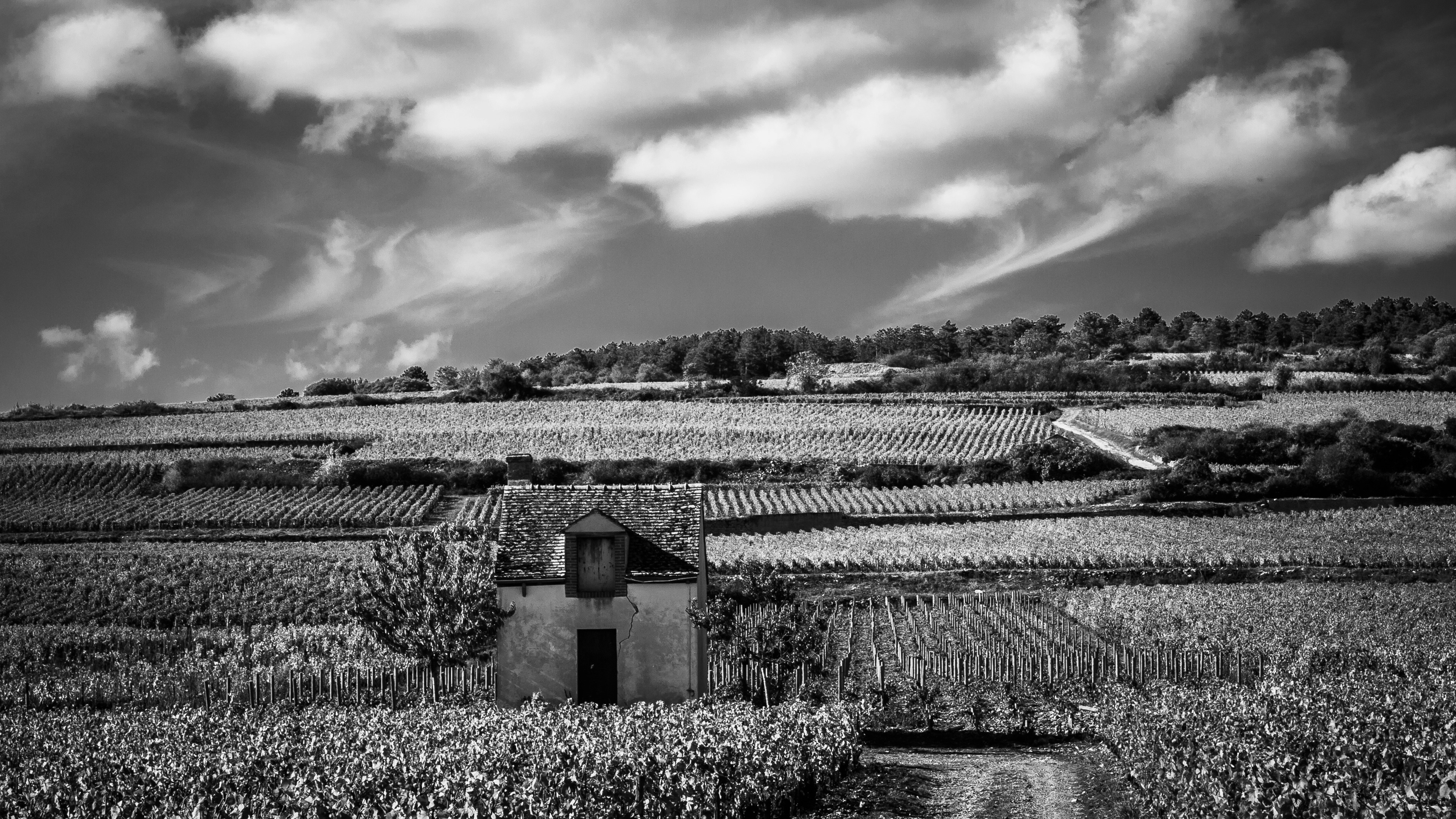
Domaine Faiveley built its reputation on a strategy that is straightforward to describe and difficult to execute: buy the right parcels, hold them across generations, and let the vineyards prove the point. After 200 years, the domain owns 125 hectares across the Côte d'Or and possesses one of only two Burgundy Grands Crus to carry the owner's name.
Pierre Faiveley established the house in Nuits-Saint-Georges in 1825. The town was already synonymous with Pinot Noir, and the family spent the following decades expanding systematically into premier cru and grand cru land. The first major defining acquisition — Corton Clos des Cortons in 1874 — set the direction for everything that followed: not négociant volume, but parcel ownership with the intent to express the land specifically.
Domaine Faiveley
Clos des Cortons Faiveley is the domain's signature, and its distinction is unusual. It is one of just two Burgundy Grands Crus to carry the producer's name — Romanée-Conti being the other — a classification that reflects both ownership continuity and the quality demonstrated under a single hand across 150 years. Built from Pinot Noir on Corton's hill, the wine is structured for aging; the Grand Cru designation certifies the land, the monopole certifies the commitment.
Erwan Faiveley took over management in 2005 and brought in technical director Jérôme Flous two years later. The shift under their direction moved the wines toward greater aromatic lift and textural finesse without sacrificing the structure that Faiveley's best sites deliver. Acquisitions since then have added parcels in Charmes-Chambertin, Musigny, and Chablis, building a white wine dimension to what had been primarily a red Burgundy house.
What separates Faiveley from a single-village domain is the map: 125 hectares running from Gevrey-Chambertin in the north through Nuits-Saint-Georges, Corton, and south toward Mercurey. A wine drinker wanting to understand Burgundy's north-to-south variation has a reliable way to follow it through a single producer's range. Clos des Cortons is what anchors the argument.