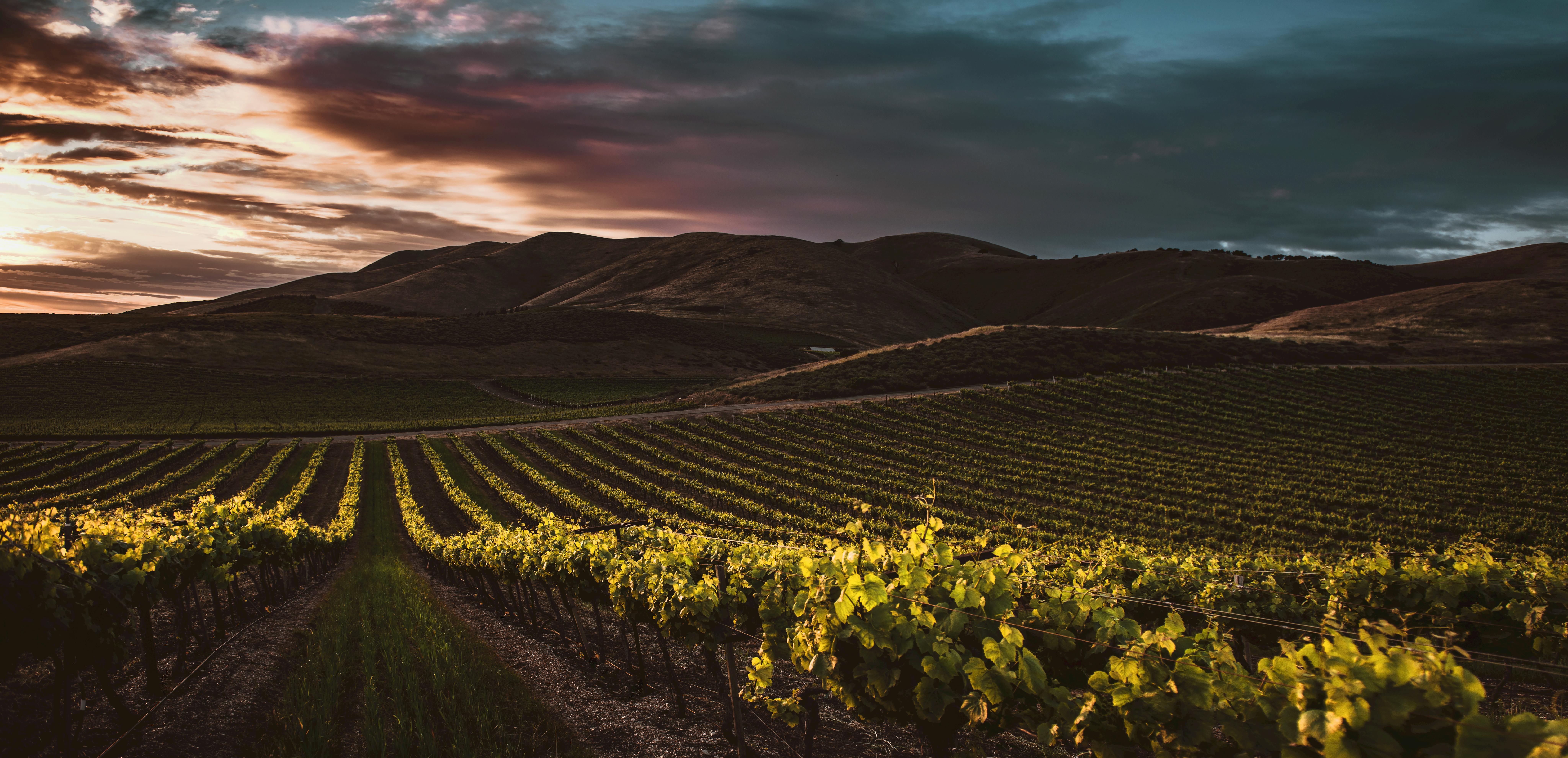
Inglenook is the historic Rutherford Napa estate that the Finnish sea captain Gustave Niebaum founded in 1879. For nearly a century it was one of the most important wineries in California: the producer of some of the longest-aging Cabernets in the country, and one of the few Napa estates that survived Prohibition continuously. In the 1960s and 70s it was sold off and broken up. In 1975 Francis Ford Coppola bought the original Niebaum house and a small portion of the surrounding vineyards. Across the next four decades he and his family acquired the rest of the historic property piece by piece, eventually buying back the Inglenook trademark itself in 2011. The estate has been operating under its original name again since.
This is not the same producer as the larger Francis Ford Coppola Winery in Sonoma. The Sonoma estate is the commercial operation; Inglenook is the prestige Cabernet project. Both are Coppola-owned. Both are in our index. They have very different scoring profiles.
The portfolio
58 wines sit in the Femente index under Inglenook, a smaller catalog than most large California producers, reflecting the estate's focus on a tighter range of serious bottlings. Thirty-five are red (60% of the catalog), fourteen are white, six are rosé. The grape distribution leads with Cabernet Sauvignon (by a wide margin), then Zinfandel, Syrah, Merlot, and Chardonnay.
The estate's identity is the Rubicon, a Bordeaux blend that Coppola first released in 1978, named for the river Caesar crossed. The wine is the producer's flagship and has been since the start of the modern era. Around it sits the regular Cabernet Sauvignon, the single-vineyard Cabernets (the "Cabernet Sauvignon Four" is one of these), and a smaller white range led by Blancaneaux (a Rhône-style white blend) and a barrel-fermented Sauvignon Blanc.
The reception
The Femente FEM score sits at 92, well above the Robert Mondavi / Stag's Leap Wine Cellars / Francis Ford Coppola Winery tier (all FEM 85-88) and inside the upper prestige bracket. The 92 is built from 65 prestige-critic ratings, a smaller sample than some of the Napa names but consistently in the high 90s.
Critic distribution: Wine Enthusiast leads, then Wine Advocate, then Decanter. All three of the prestige American critics rate Inglenook in the same upper-90s tier. This is a producer that the prestige hand has converged on.
The flagships
Five Inglenook wines have scored 93 or higher from a prestige critic.
- Rubicon: 97 from Wine Enthusiast. The Bordeaux blend, the producer's defining wine, made every vintage since 1978.
- Cabernet Sauvignon: 96 from Wine Advocate. The regular varietal Cabernet, separate from Rubicon's blend.
- Cabernet Sauvignon Four: 95 from Wine Enthusiast. A single-vineyard Cabernet from a specific block.
- Blancaneaux: 94 from Decanter. A Rhône-style white blend (typically Marsanne, Roussanne, Viognier), unusual in a Cabernet-led house.
- Sauvignon Blanc: 93 from Decanter. Barrel-fermented in the Mondavi Fumé Blanc tradition.
The signature
Across the 58 wines, the strongest tasting descriptors are Oak, Vanilla, Blackberry, Cherry, Leather, Chocolate. The Leather note in position five is the giveaway. Leather appears with extended bottle aging on Cabernet, and Inglenook's house style favours longer barrel time and slightly more aged character than the modern Pritchard Hill cult tier. The result is wines that drink more like classified-growth Bordeaux than like the Howell Mountain Cabernet idiom: denser, more savoury, less immediately fruit-forward.
This is consistent with the historical Inglenook reputation. Pre-Prohibition Inglenook Cabernets were among the longest-aging American wines on record, with several documented bottles still drinking well 50+ years after vintage. The modern restoration appears to have preserved that lineage on the data.
Where they sit
Compared to the Napa Valley prestige tier, where the top sixteen estates clear FEM 97, Inglenook at FEM 92 sits in the upper-mid prestige bracket. Below the Pritchard Hill cult tier (Ovid, Colgin, Dana, all FEM 98-100), but well above the Stag's Leap Wine Cellars / Robert Mondavi 88-tier and the Francis Ford Coppola Winery 85-tier.
The most informative comparison may be to the historic Bordeaux first growths. Inglenook is, on the data, in the same scoring band as Mondavi's To Kalon Reserve (98 Decanter) and CASK 23 (99 WE), a small handful of wines that establish the upper limit of what classical-style Napa Cabernet can achieve at this scale of production.
Where to start
Three Inglenook entry points.
For the canonical: Rubicon, 97 from Wine Enthusiast, the Bordeaux blend that defines the modern estate. The wine to drink to understand what Inglenook is now.
For the varietal: Cabernet Sauvignon, 96 from Wine Advocate, the regular Cabernet (not the single-vineyard Four), more accessible than Rubicon and almost as well-rated.
For the surprise: Blancaneaux, 94 from Decanter, the Rhône-style white blend in a Cabernet-defined house. The wine that proves the estate isn't a one-grape specialist, even if Cabernet is the centre of gravity.