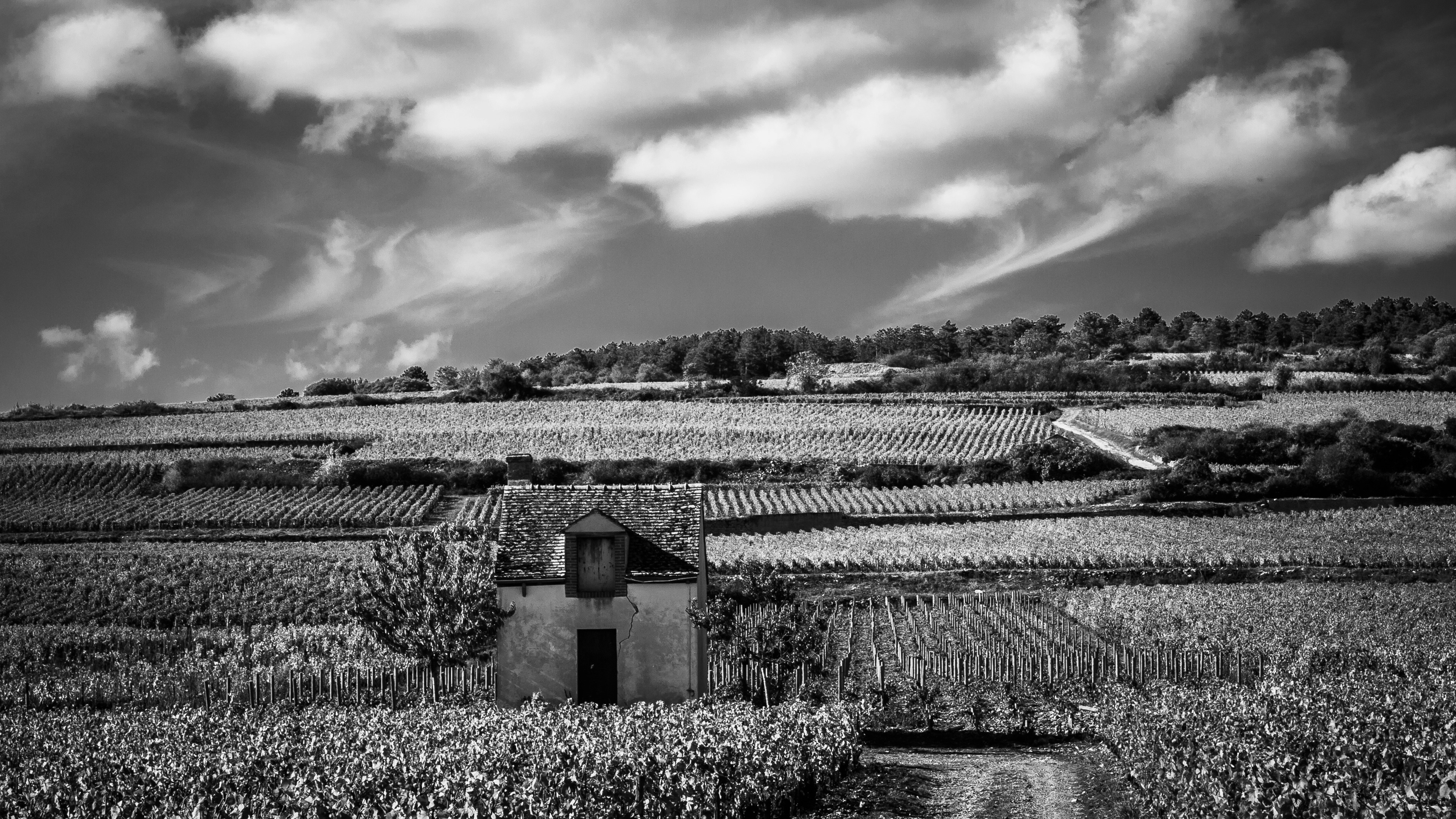
Lucien le Moine occupies a strange position in Burgundy: a micro-négociant run by an outsider couple, working out of a medieval Beaune cellar, that consistently out-scores most of the domaines whose fruit it buys. Every vintage, the wines argue that the "domaine vs. négoce" line in fine Burgundy is mostly a marketing distinction, not a quality one.
Mounir Saouma and Rotem Brakin do not own vineyards. They buy small parcels of must or grapes from Premier and Grand Cru sites — almost nothing village-level or below — and handle the entire élevage themselves. Their model inverts the usual négoce logic: big houses buy volume and blend at scale, while le Moine buys narrow and finishes each parcel like a domaine would.
Cellar work is the signature. Fermentations run slow in deliberately cold cellars, and wines stay on full lees for the full élevage — often ten months before fermentation even finishes. Fining and filtration are minimal or absent. Resulting bottles carry an unmistakable density and a long, late-arriving finish in both Pinot and Chardonnay.
Lucien le Moine
Femente's graph data shows what that translates to on a tasting sheet. 2020 stands as the operation's strongest recent year at an average critic score of 94.8, with top cuvées like Romanée-Saint-Vivant Grand Cru and Criots-Bâtard-Montrachet hitting the 98-point band. Catalogue stays Burgundy-only, split between serious Pinot Noir and serious Chardonnay.
For buyers, the practical takeaway is to stop reading "négociant" as a downgrade in this corner of Burgundy. What happens between harvest and bottling matters more here than who farmed the row. Label says négoce; the wine in the glass tells a different story.