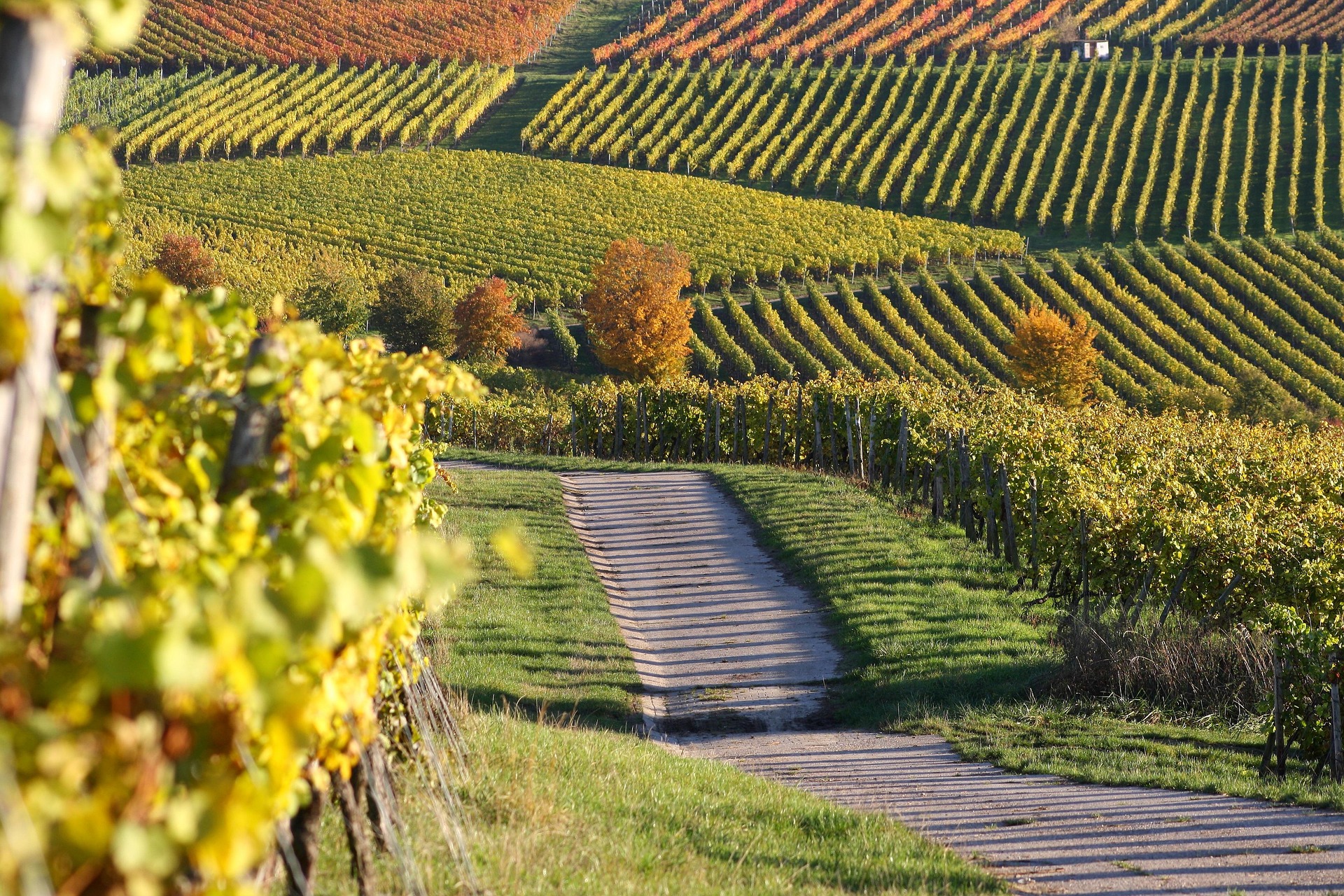
Rheinhessen has done what no other German wine region managed: it remade its reputation in a single generation. For most of the late twentieth century it was the engine behind Liebfraumilch, the sweetish blended white that became Germany's largest export and its most dented quality reputation. The same region today produces the country's most expensive dry Riesling, and most of that change traces to one corner — the Wonnegau, in the southwest, where a small cluster of estates rewrote what Rheinhessen could mean on a label.
The pivot has a date. In 2002, Philipp Wittmann and Klaus Peter Keller — neighbours in the Wonnegau — founded Message in a Bottle, an informal mentoring group that drew in a generation of young estates across the region. Wittmann had already converted his roughly 28 hectares to organic farming and would push on to Demeter biodynamic certification. Keller had begun bottling single-vineyard dry Rieslings at prices previously reserved for grand cru Burgundy. Their shared argument was unflashy: pick the right calcareous-limestone parcels, ferment dry, and sell by site name rather than ripeness category.
Weingut Keller
Riesling now anchors the portfolio. It appears in more Rheinhessen wines on Femente than any other grape — roughly twice the count of Spätburgunder, the regional Pinot Noir. Silvaner still works the lighter soils and Dornfelder runs the everyday reds, but the wines that now define what Rheinhessen means at a tasting are dry, single-vineyard, and white.
Critics have ratified the shift. The 2022 vintage averages a 91.81 score across Femente's critic ratings for Rheinhessen — the kind of consistency that used to belong only to Bourgogne and Mosel in a generous year. Wittmann's Morstein GG and Kühling-Gillot's wines off the Roter Hang sit at the top of the pile. The appellation does less work here than the village does. The Gemeinde is the wine.
Weingut Wittmann
For a buyer scanning a German wine list, that means Rheinhessen on a label has flipped from caution to opportunity — but only with a second cue alongside it. The word to look for is Wonnegau, or one of its villages. Rheinhessen alone still buys you anything from a six-euro semi-sweet to one of Germany's hardest-to-find dry Rieslings. Rheinhessen plus a village name buys you the revolution.