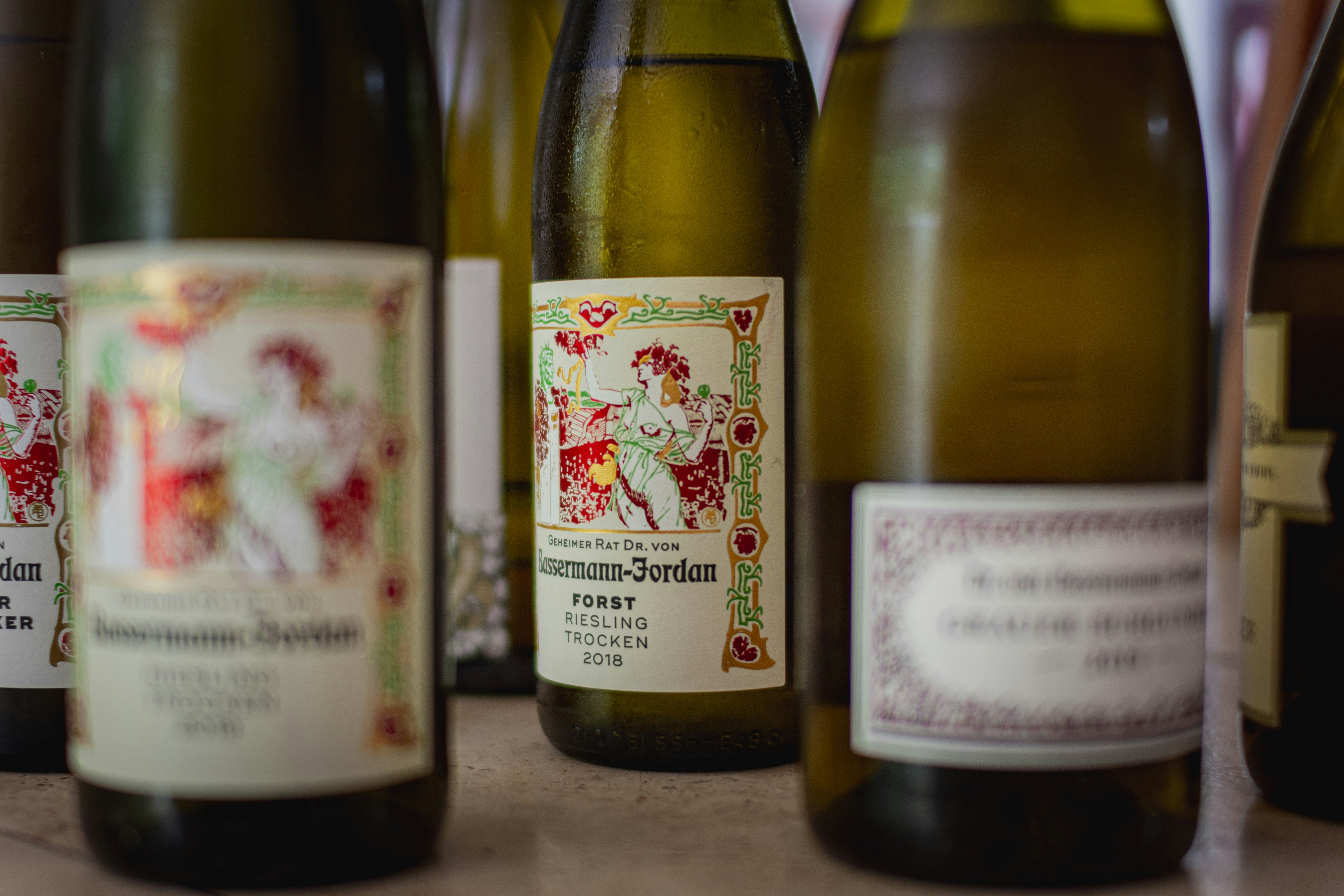
That faint kerosene note in old Riesling — the thing tasting notes politely call "petrol" — is real, has a chemical name, and is not a flaw. It is a compound called TDN, and it shows up in old Riesling for the same reason it does not show up in old anything else. The smell is the signature of a grape behaving the way only Riesling does.
TDN — short for 1,1,6-trimethyl-1,2-dihydronaphthalene — is not in the grapes themselves. It builds up in the bottle over years, formed by the slow breakdown of carotenoid pigments the vine accumulates while ripening. Researchers have measured detection thresholds around four micrograms per litre and rejection thresholds above seventy; the band in between is what aged Riesling drinkers learn to read as complexity rather than fault.
Other white wines accumulate carotenoids too, but they rarely live long enough for the breakdown product to register. Riesling stays alive in bottle because its acid backbone holds — the average Riesling on Femente sits well above the acidity of the other major whites — and that same acidity catalyses the conversion to TDN as the wine ages. The grape's defining structural trait and its defining aging note come from the same chemistry.
Climate has joined in. Sun-exposed warm-climate Rieslings produce more carotenoid precursor, so Australian wines already taste petrol-noted in their youth — what the Mosel takes twenty years to develop, the Clare Valley delivers at five. As northern Europe warms, the line moves with it; growers there now talk openly about how to manage canopy to keep TDN under the rejection threshold.
Mosel
That is the misconception worth correcting. A petrol note is not a fault in the bottle or a problem in the cellar. It is the only obvious aging signature most white drinkers will ever encounter, because it comes from a grape sturdy enough to wait that long. Walking past it because it smells unfamiliar is walking past the entire reason Riesling matters as an aging white in the first place.