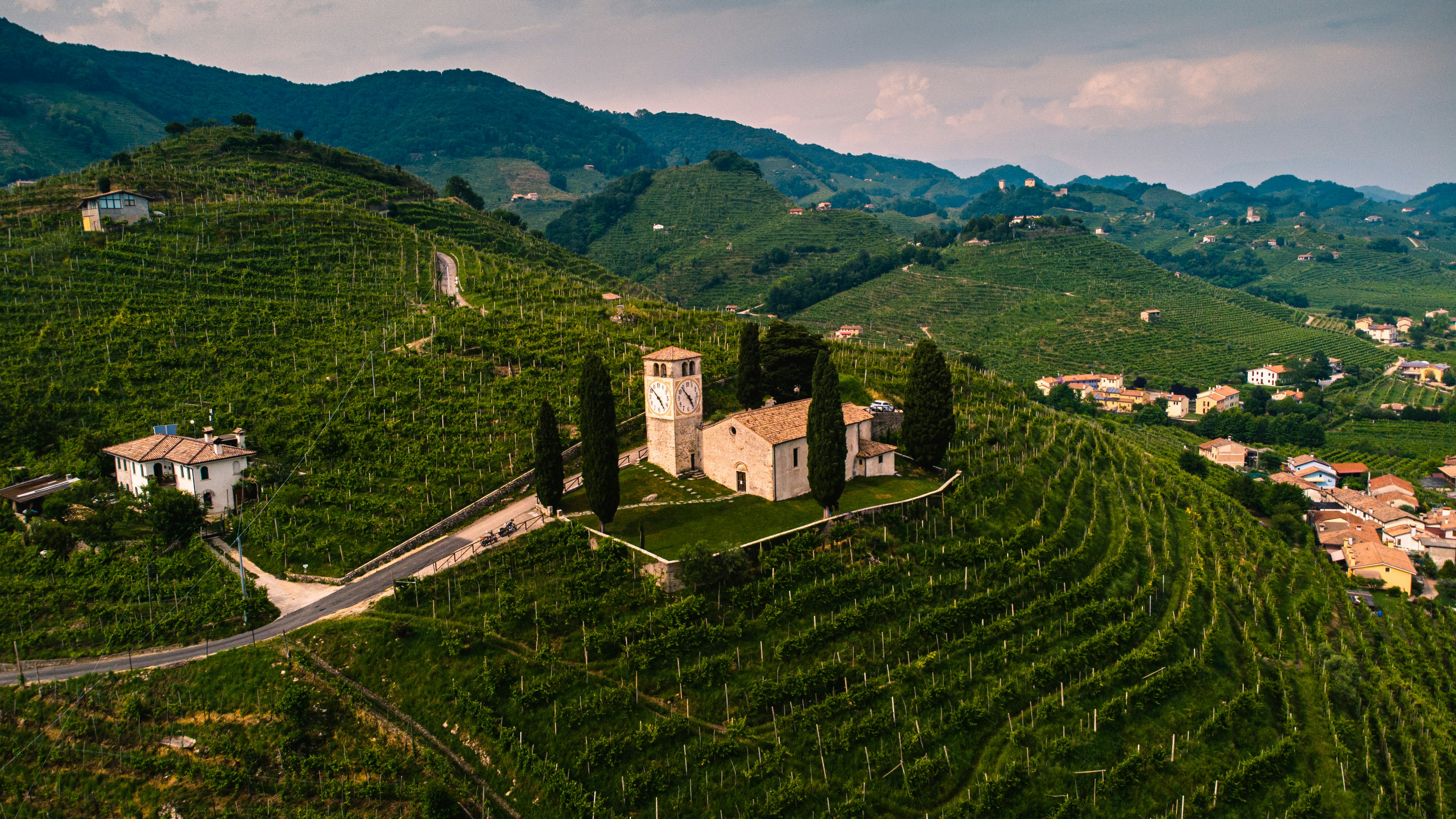
Amarone is younger than your grandparents, but Italian wine merchants describe it as if it dates from the Roman Republic. What actually happened in the Veneto is that one cellar master in the 1930s let a barrel of sweet Recioto ferment too long and got a dry red instead. Producers spent the years after the war working out how to repeat the accident on purpose.
Drying the grapes is older than the dry wine, and not unique to Amarone. Appassimento is the Veneto trick of laying harvested grapes on racks in a ventilated barn called a fruttaio until they lose enough weight that the sugars concentrate. Recioto is made the same way. So were the sweet wines Romans actually drank. Inside the berry, slow water loss does two things at once: the juice gets more sugar per millilitre, and the chemistry shifts — acidity falls, glycerol builds, phenolic compounds rearrange. What Amarone added was the decision to ferment all the sugar through to alcohol, leaving the dried fruit's intensity on a dry skeleton instead of a sweet one.
Credit for the discovery goes to the Cantina Sociale di Negrar in 1936, when a cellar master named Adelino Lucchese opened a forgotten Recioto barrel and found that the yeast had eaten through the residual sugar. Wine merchants now call the wine he tasted Amarone della Valpolicella. Bolla took it commercial in the 1950s; the appellation rules came a generation later.
Valpolicella
Grapes are the same as for the rest of Valpolicella — Corvina, Corvinone, Rondinella, sometimes a little Oseleta. What you pay for in an Amarone is the air-time in the fruttaio, the labour of turning the racks, and the juice the grape loses as the skins go from plump to leathery. One litre of Amarone takes roughly twice the grapes a litre of regular Valpolicella does — which is also why the wine carries sixteen percent alcohol and ages on a clean dry edge instead of a sweet one.
Marketers like to call Amarone 'ancient.' Appassimento is — but the dry-fermented red in the glass is essentially a postwar Italian invention, made out of one accident and a hundred subsequent decisions to make the accident on purpose. Reading the bottle is easier once you know which half of that lineage is doing the work: the drying, the patience, and the costly grape weight you cannot see in the glass are old. That decision to push the wine all the way dry is what changed Amarone from a curiosity into a category.