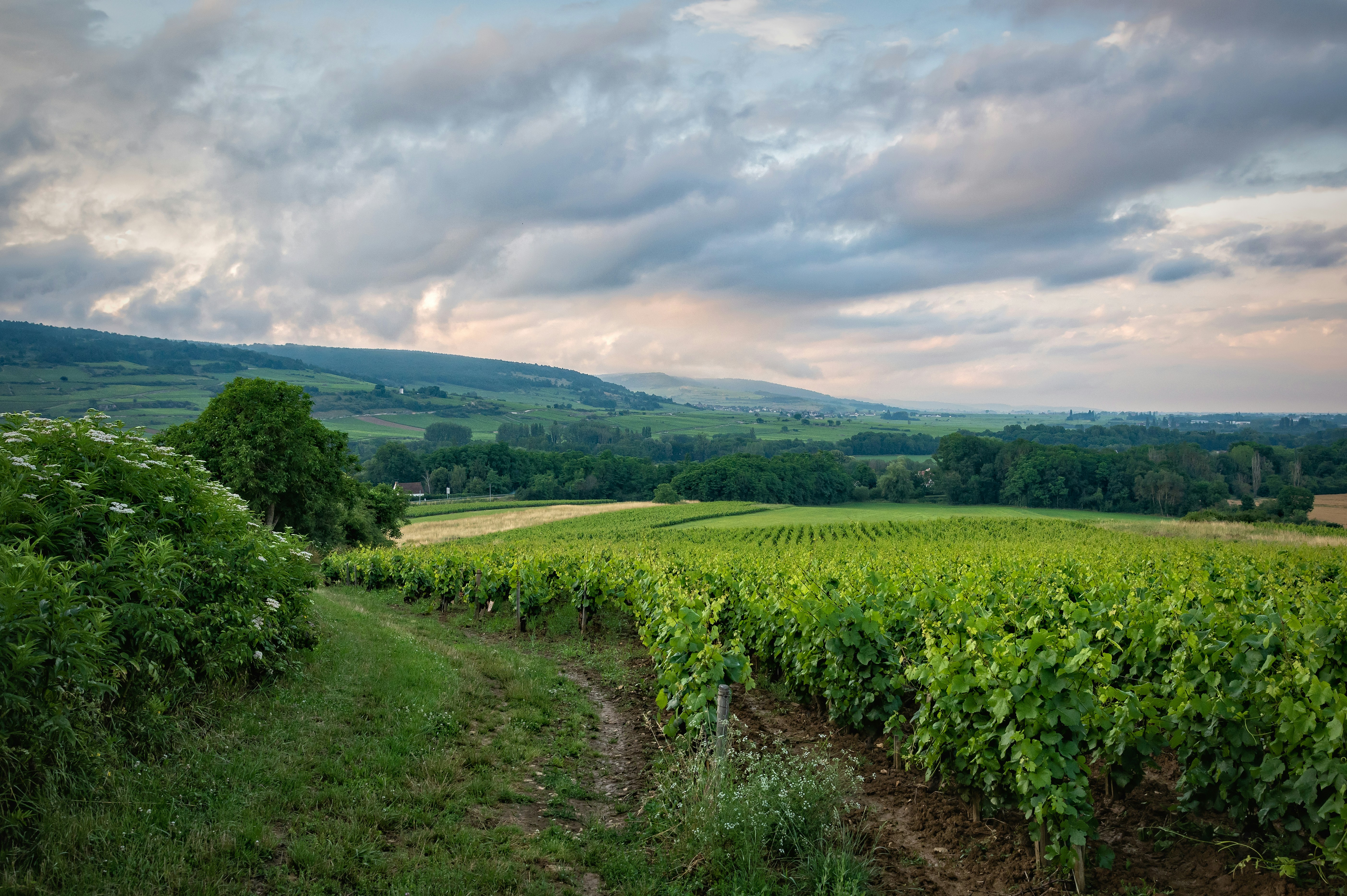
Domaine Armand Rousseau holds a strange position in Burgundy: a family estate that became the reference for Grand Cru Pinot Noir without ever turning into a brand. Its authority in Gevrey-Chambertin rests on what the family refused to change, not on anything it invented. Four generations in, the method in the cellar has barely drifted, and that is exactly the point.
Armand Rousseau, born in 1884, inherited vineyards and a house in the village as part of his 1909 wedding, and spent the next two decades quietly buying parcels of grand cru land around the appellation. The decisive move came in the 1930s, when, on the advice of Raymond Baudoin of La Revue du vin de France, he became one of the first growers in Burgundy to bottle and sell his own wine rather than ship it in cask to a négociant. Almost every modern Burgundy estate now does this. Almost none can claim a ninety-year run of doing it.
Domaine Armand Rousseau
Eric Rousseau took over from his father Charles in the late 1980s and is the dynamic-but-quiet middle of the story. He tightened the viticulture — short pruning, green harvesting, yields held to 30 to 40 hectolitres per hectare — but the cellar is still recognisably old-school: roughly ninety percent of the fruit destemmed, fermentation in open-topped vats, oak used sparingly. There is no whole-cluster experiment, no biodynamic certification, no signature new-oak regime. His daughter Cyrielle joined in 2014 after work in Oregon and the southern hemisphere, and the line continues.
What the discipline buys is consistency at the very top of the appellation. The flagship Chambertin Grand Cru has been rated to a perfect score by the critics tracked here across more than a hundred separate vintage-and-critic combinations, and Chambertin Clos de Bèze is right behind it. Beneath those two sit the 1er Cru Clos St Jacques and a small group of other Gevrey grand crus, all from a single estate of roughly fifteen hectares, more than half of it grand cru.
The recent vintage run reads like an argument for the approach. The 2015s average 94.5 across critics in the catalogue, the high water mark of the last decade. The 2020s, from a much warmer growing season, still land at 94, which is the more telling number — when heat is supposed to flatten classical Pinot Noir, Rousseau's wines hold their shape. The estate that stopped updating its method now serves as the control sample for everyone else's experiments.