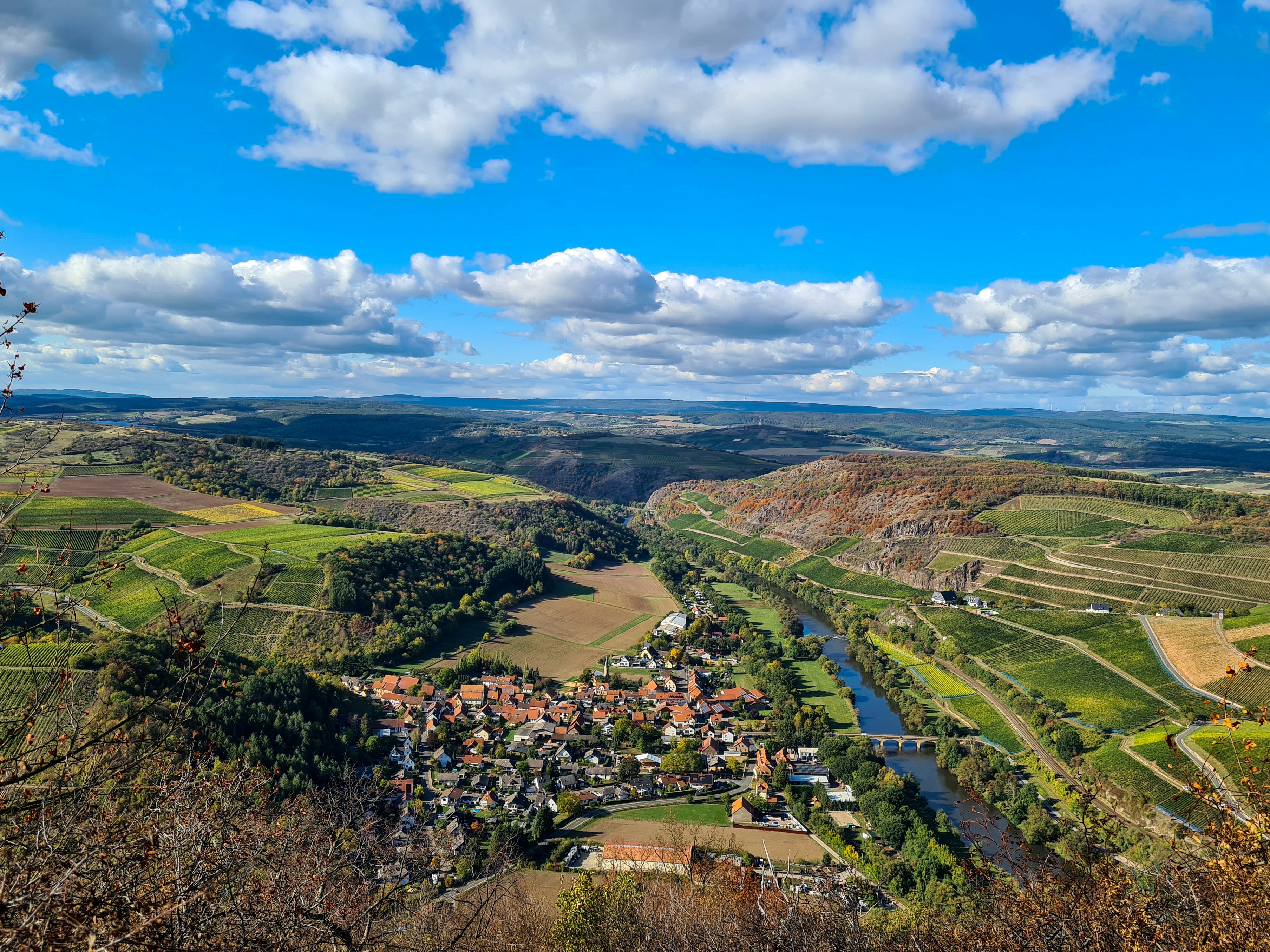
Dönnhoff is the producer that taught the wine world to take the Nahe seriously, and that the Nahe is not a smaller Mosel. Its Rieslings hold the chalky, mineral cut of cooler slate sites alongside the broader texture of volcanic stone, and the trade now uses the estate's wines to define what the region actually offers.
Helmut Dönnhoff inherited a small estate in 1966 and spent the rest of his working life reshaping it around the Niederhäuser Hermannshöhle, a south-facing slope of slate and porphyry that already had a long local reputation but no international profile. He handed the cellar to his son Cornelius in 2007. Both generations have insisted on dry-leaning Rieslings — the Grosses Gewächs bottlings labelled GG — alongside the long-traditional sweeter Spätlese and Auslese, refusing to choose between them.
Geology is what makes the Nahe hard to summarise. Reports identify more than 180 distinct soil types compressed into a short stretch of river — slate, quartzite, volcanic porphyry, limestone — and producers who try to make a single house style end up flattening the differences. Dönnhoff went the other way: a separate bottling for each great site, vinified with the same restrained hand so the soil could do the work of distinguishing them.
Nahe
Critic scores caught up later. Hermannshöhle and Oberhäuser Brücke bottlings have both pushed into 100-point territory with the prestige press; sweeter Beerenauslese and Spätlese from the same sites sit a step behind, which in Nahe terms is the rest of the top shelf. Critics now follow the estate by vineyard rather than by sweetness level, and the wines are bought that way too.
Newcomers to Dönnhoff often arrive expecting another sweet Riesling and find dry GG bottlings that taste of salt and stone before they taste of fruit. Reading the label is the trick: vineyard first, then ripeness — Hermannshöhle GG and Brücke GG for the structured, savoury wines; Auslese and Beerenauslese for the long-ageing sweet end; both sides made by the same hand from the same slate.