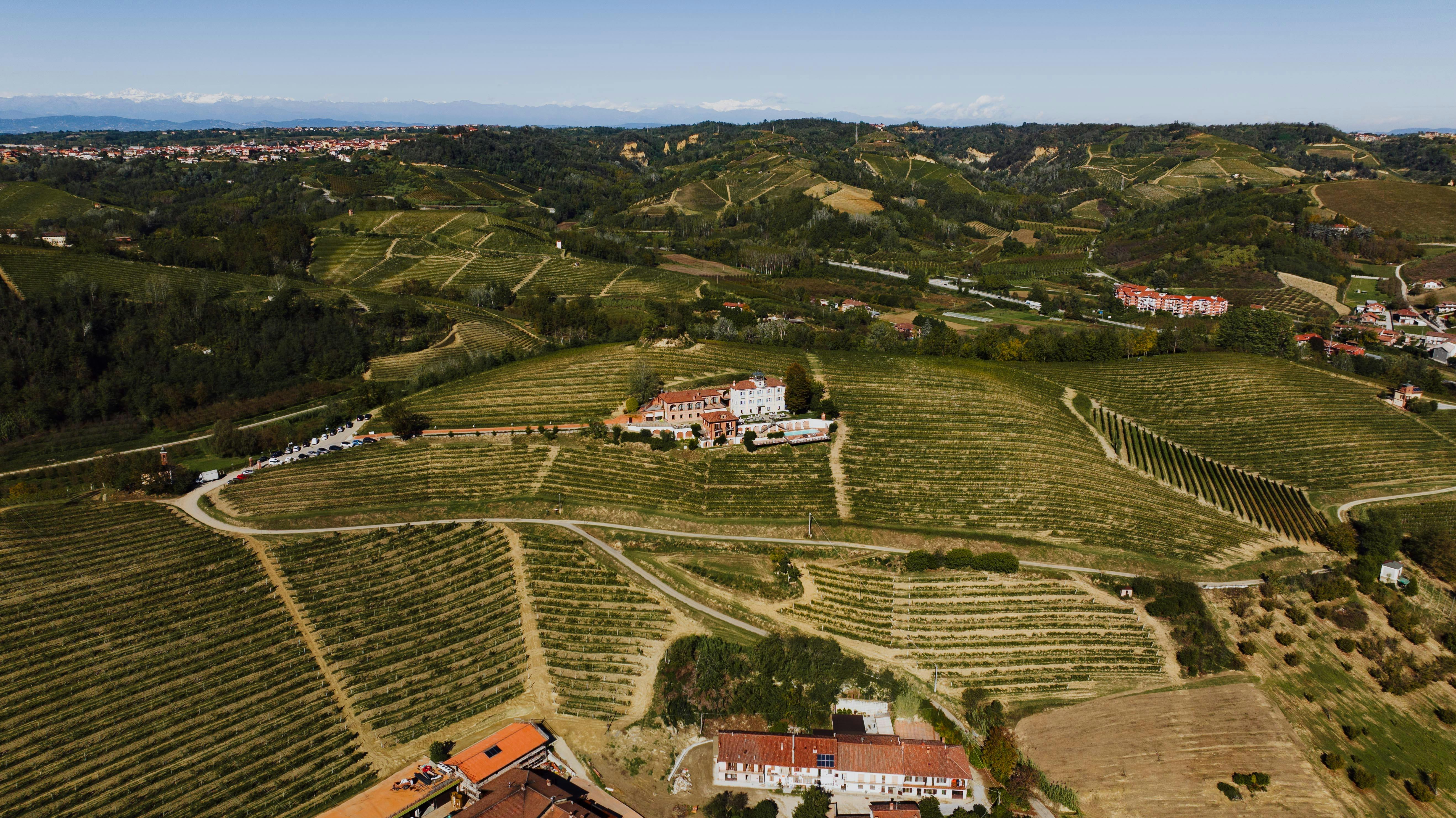
Angelo Gaja's contribution to Italian fine wine was a single idea: that the slope's name matters more than the appellation's. Until he bottled it, Barbaresco was sold as Barbaresco and that was that. He turned the village into a map of named crus and pulled the whole Italian fine wine canon along with him.
Gaja was founded in 1859 and ran for four generations as a respected Barbaresco producer before Angelo took over full-time in 1970. His first move was the 1967 release of Sorì San Lorenzo — a wine made only from one south-facing parcel, labelled and sold as such. Sorì Tildìn followed three years later, Costa Russi in 1978. None of this had been done in Piemonte before. Barolo's grand crus weren't formally mapped until the late 1990s.
Gaja
Angelo's father Giovanni was unimpressed by his son's other innovation: planting Cabernet Sauvignon in vineyards that had grown Nebbiolo for two centuries. Darmagi — 'what a pity' in Piemontese — first appeared in 1985, said to be Giovanni's reaction to the arrival of Bordeaux grapes. Alongside Cabernet came shorter macerations, French oak barriques and tighter yields, all borrowed from Bordeaux and California. Critics divided. Sales did not.
Reading a Gaja label today means reading like a Burgundy buyer. Sperss Barolo, Conteisa, Sorì Tildìn — these are slope names doing the work that 'Cru' does in France and 'Vigna' was supposed to do in Italy. Bigger than the Cabernet experiment is the idea, now ordinary in Italy, that a Barolo or a Barbaresco needs a hillside on the label.