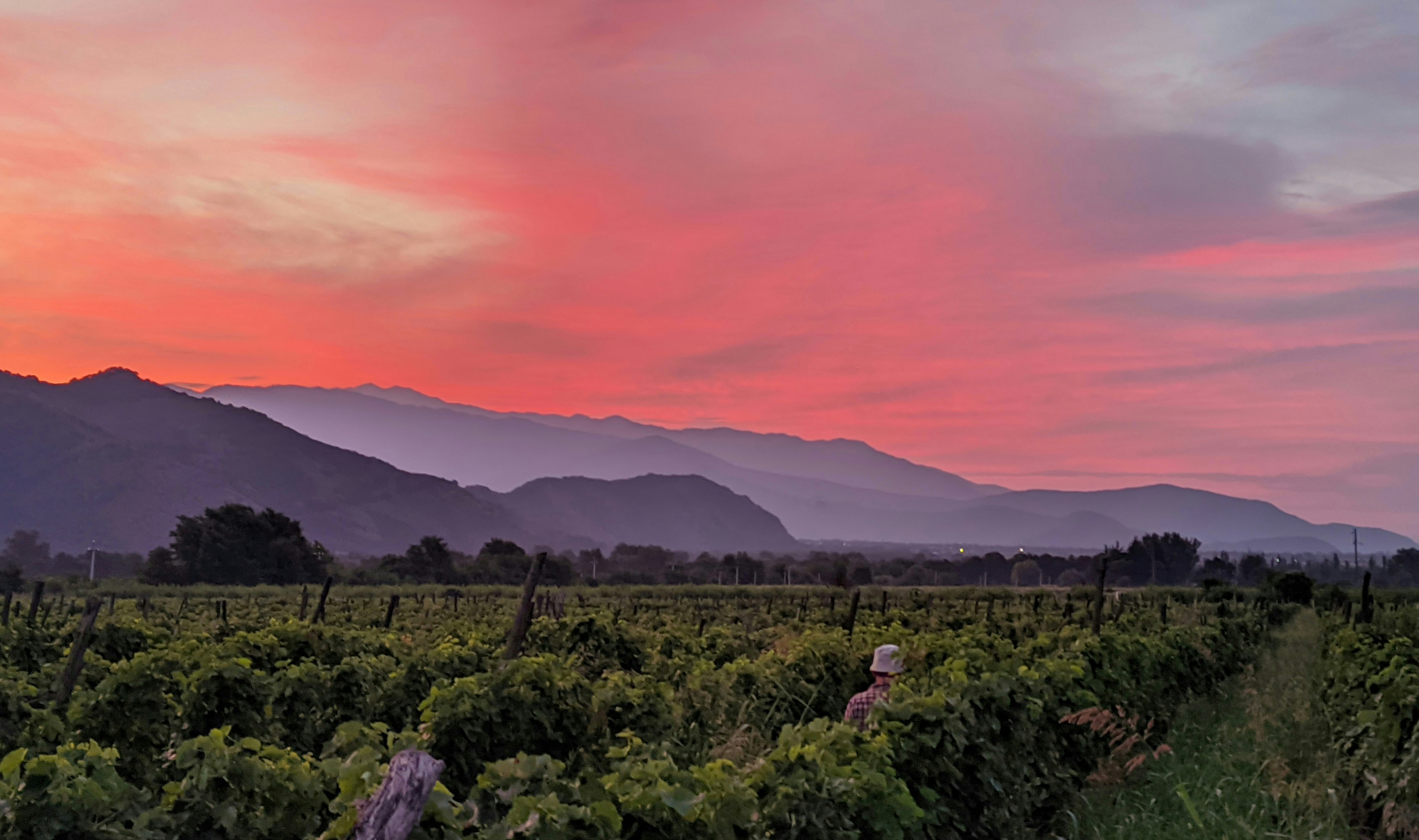
Kakheti treats its white grapes the way most regions treat their reds, and the wine comes out the color of amber. The method is the qvevri, a beeswax-lined clay vessel buried to its neck in the cellar floor, where the juice ferments on its skins, seeds, and stems for months rather than the few hours a white normally gets. That long skin contact is what sets a Kakhetian white apart from almost any other white made anywhere.
Rkatsiteli is the grape that carries the trick. Left on its skins the way a red would be, it turns from gold to deep copper, takes on grip from the tannins in the pips and stalks, and tastes of dried apricot, walnut, and honey instead of fresh lemon. Femente lists it in more than 1,200 Kakhetian wines, behind only the region's signature red. Poured blind it tends to fool people, because the color suggests one thing and the texture another, and both readings are correct.
Kakheti
Saperavi is the same region's opposite instinct. It is a teinturier grape, red in the flesh as well as the skin, so the juice runs dark before anyone works the skins, and the wines finish almost black with the acidity and tannin to age a decade or longer. It is Georgia's most planted red and the backbone of Kakheti's cellars, turning up in more than 2,300 wines here. Rkatsiteli is a white behaving like a red; Saperavi never had to pretend.
None of this is a revival. UNESCO added qvevri winemaking to its register of intangible cultural heritage in 2013, recognizing a practice that had run without a break for thousands of years while much of the wine world moved on from clay. What has shifted is that Kakheti now works in two modes at once. A cellar that buries qvevri for a skin-fermented amber will also run its Saperavi through steel tanks to keep the fruit clean and the tannins in check.
For anyone picking up a Georgian bottle, the useful word on the label is qvevri. When it appears, the wine spent months underground on its skins and will taste savory and tannic in a way the grape name alone would never warn you about. When it is absent, expect the cleaner modern style. Same soil, same grapes, two different drinks, and Kakheti is one of the few places that never had to choose between them.