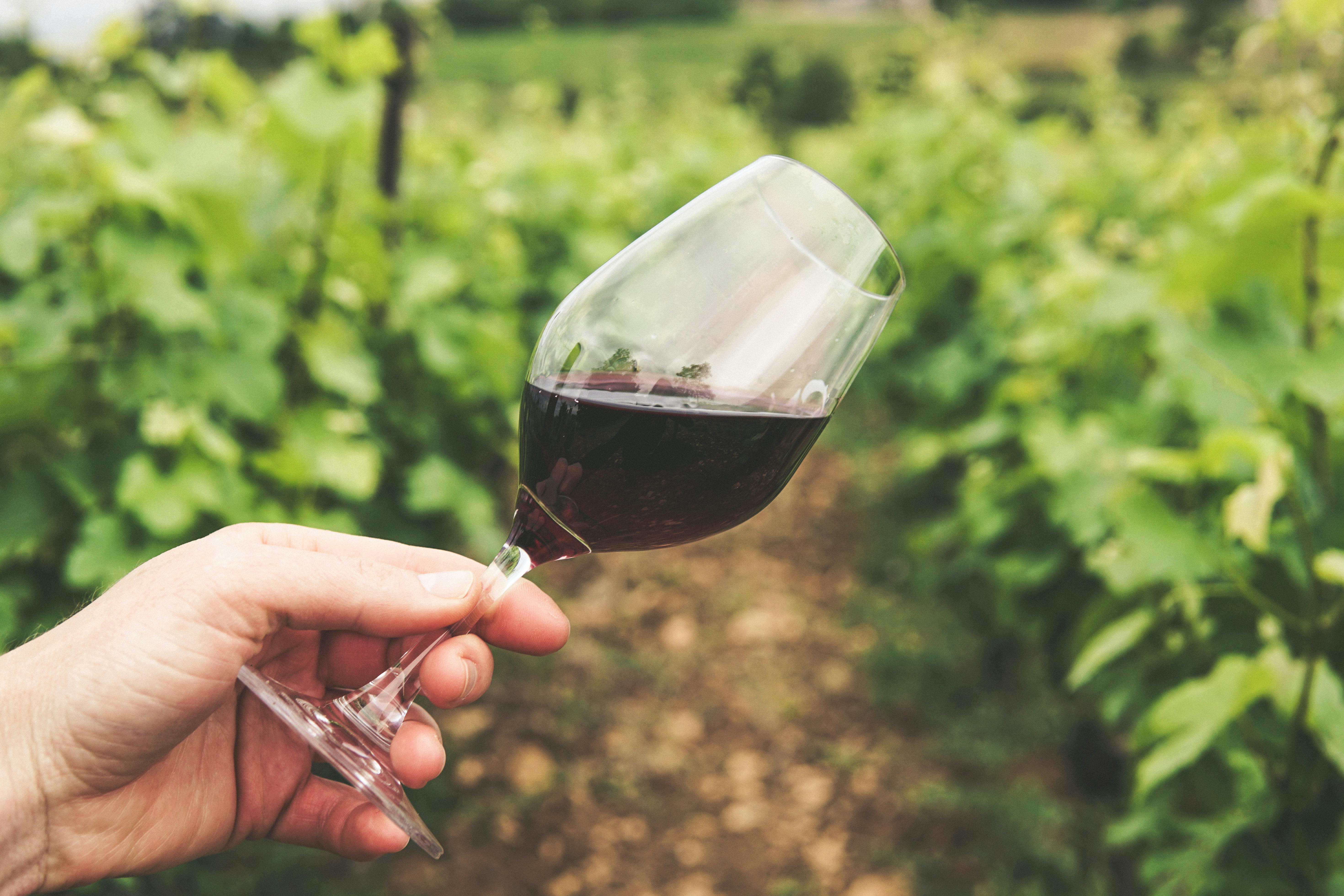
Côte-Rôtie was a footnote appellation through most of the last century, a stretch of granite slopes a short drive south of Lyon. Then E. Guigal — a négociant in Ampuis with no aristocratic pedigree and no Burgundy-style prestige — bought a parcel on its slopes and started bottling it under its own name. That parcel became La Mouline, and over the next two decades the family added two more single-vineyard cuvées that did not exist as a brand before they did. Côte-Rôtie's 'La La' trilogy was built, not inherited.
La Mouline came first, with the 1966 vintage. Its parcel sits inside the Côte Blonde, the lighter, more granitic side of Côte-Rôtie, and the wine carries a splash of Viognier co-fermented with Syrah — the trick that gives it the aromatic lift the La La's became known for. Romans planted vines on this hill; Marcel Guigal was the one who decided that one specific corner of it deserved its own label.
E. Guigal
La Landonne joined the line-up in 1978, made from a steep Côte Brune slope and bottled as pure Syrah — the tannic, structured counterweight to the first cuvée's perfume. La Turque followed in 1985, smaller in production and split stylistically between the two. Across the trio the logic is symmetrical: a feminine cuvée, a masculine cuvée, and the bridge. Each from its own parcel, each tracked through Femente at 100-point ratings from the critics who follow the appellation closely.
What launched the project into orbit was Robert Parker's coverage in the 1980s. He treated the La La's as the equivalent of Burgundy Grand Crus, and the market followed. Single-vineyard bottling — one parcel, one wine, lieu-dit on the label — is now standard at the top of the appellation. Before Guigal, it was not.
What complicates the prestige story is that Guigal never stopped being a négociant. Guigal still bottles a Côtes-du-Rhône built from purchased fruit, sells it by the boatload, and uses the revenue to underwrite the La La's. Most readers can buy the Côtes-du-Rhône or the Crozes-Hermitage; almost none will ever afford the single vineyards. Both halves of the business are real, and neither would exist in its current form without the other.