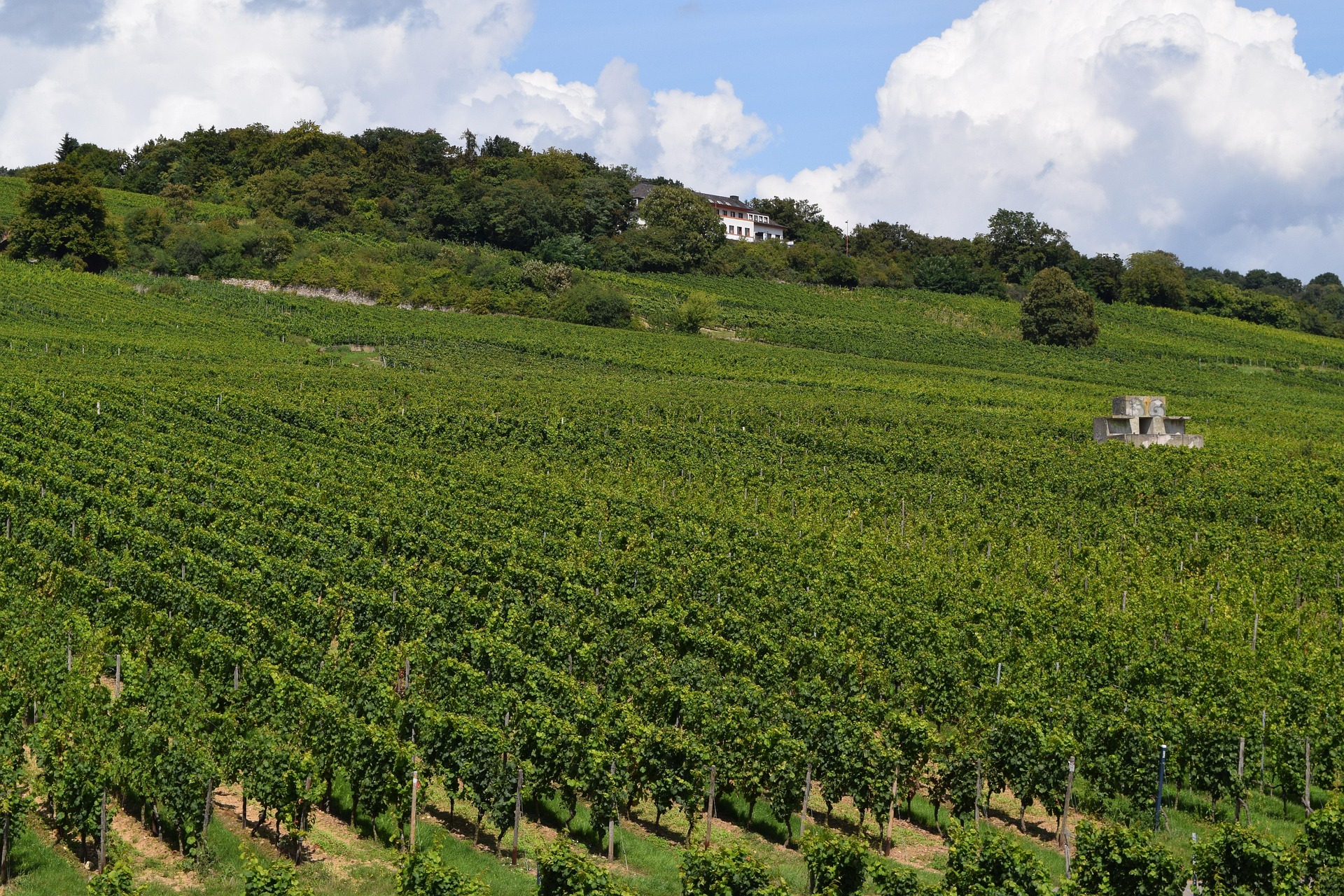
Kloster Eberbach is the kind of place wine historians describe as foundational and drinkers largely overlook. Cistercian monks began planting its Steinberg vineyard in 1170 and enclosed it with a stone wall that created the world's oldest monopole. More than eight centuries of unbroken cultivation later, the Steinberger Riesling from inside those walls has earned a perfect 100 from Wine Spectator — one of a handful of German wines to reach that mark. The monks chose the right piece of land.
Riesling commands the portfolio — the estate makes everything from bone-dry GG expressions through Auslese, Beerenauslese, and into the concentrated Trockenbeerenauslese that earns the highest scores. Over 30 hectares of Steinberg produce most of this range, a monopole large enough to express different harvest conditions clearly across styles from year to year. Marcobrunn, a separate vineyard on the estate, adds a second chapter in Eiswein and Riesling GG that Decanter has rated at 96.
Kloster Eberbach
State ownership since 1945, when the property passed to the State of Hesse, sounds like it should have produced bureaucratic mediocrity. In practice it preserved the monopole structure and allowed systematic replanting that would have been unfinanceable for a private operation. Kloster Eberbach is now Germany's largest vineyard owner at 220 hectares — a scale that has funded sustainable farming research and kept old-vine parcels that smaller producers would long ago have pulled out.
What the monastery's wines argue — and have argued for eight centuries — is that Riesling on slate and schist in the north-facing Rhine valley is capable of producing wines that age as well and reward attention as carefully as anything in France. Rheingau's reputation in international markets has faded since German wine's 1970s peak; the Steinberger scores suggest the underestimation is the market's problem, not the wine's.