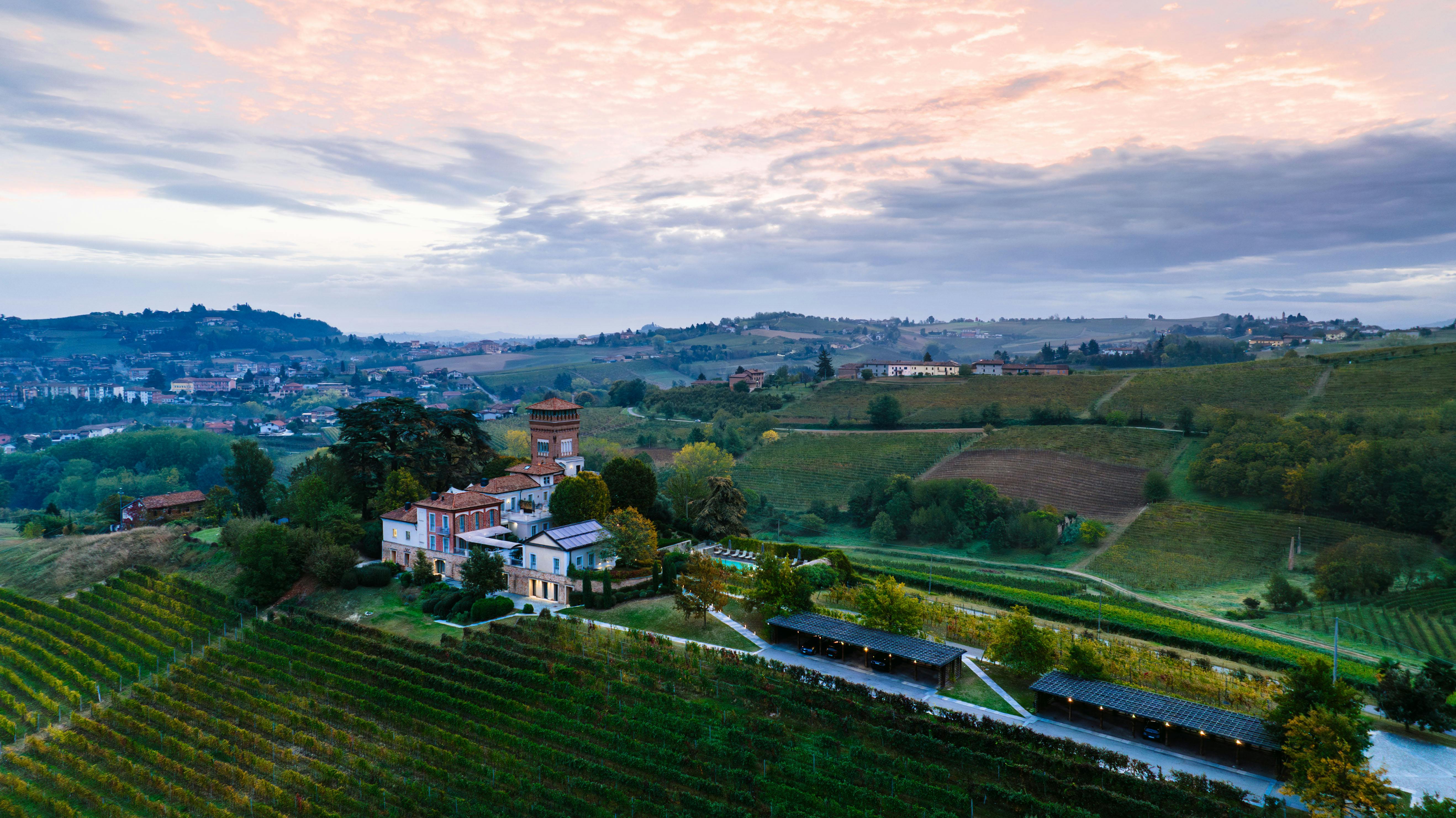
Modern Barolo wasn't born in a tasting room — it was reverse-engineered in a cellar on the village square, with a French oenologist and a Marchesa who'd married into the Falletti title. That cellar still operates under the name it was given when the conversion was finished: Marchesi di Barolo.
Giulia Falletti — born Juliette Colbert in France — and her oenologist Louis Oudart spent the 1830s converting the local Nebbiolo from a sweet, lightly sparkling wine into something dry, structured, and built to age. King Carlo Alberto received a sample and declared it the "king of wines, wine of kings." Every modern Barolo proceeds from that conversion.
Marchesi di Barolo
Falletti's heirs handed the cellars to a foundation that ran them until 1929, when Pietro Abbona and his siblings bought the operation outright. His descendants still own it, now in their fifth generation. Their landholding is the part that matters most: close to two-thirds of the Cannubi cru — the single Barolo vineyard most often cited as the appellation's reference site, and the one whose name on a label still moves the most product.
Cannubi sits at the centre of the lineup, released as its own bottling since the mid-1970s; on Femente the highest-rated cuvée comes off a single-vineyard Barolo, with the estate's Barbaresco range close behind. In 2016 the family expanded across the Tanaro into older-vine Nebbiolo in Barbaresco. What the Abbonas inherited from Falletti isn't a recipe. It's the dirt that recipe still argues over.
Barolo