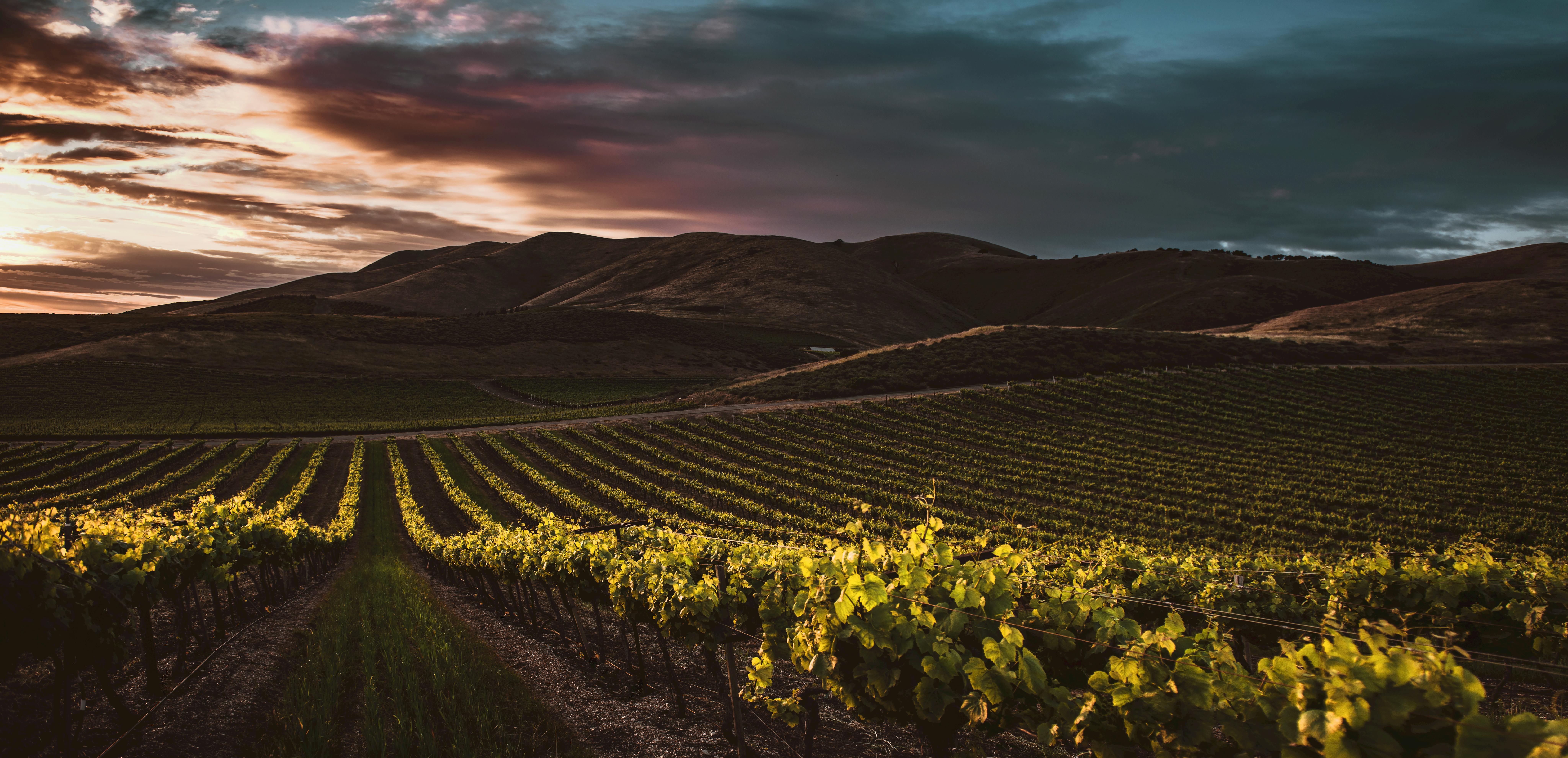
Michael David Winery sits in California's Lodi appellation, the inland-valley region between San Francisco and the Sierra Nevada foothills that grows roughly 40% of California's wine grapes by volume. The Phillips family has farmed the surrounding land since the late 19th century; the modern winery has built its reputation on accessible, dark-fruited reds with a marketing line that's clever even by Californian standards (the Seven Deadly Zinfandels), backed by critic ratings that tend to land in the high 80s and low 90s. Here's the data version.
The portfolio
Sixty-seven Michael David wines sit in the Femente index. Forty-nine are red, almost three-quarters of the lineup. Eleven are white, three are rosé, three are sparkling, and one is a sweet wine. The grape distribution leans hard toward Zinfandel (24 wines, the most of any grape), then Cabernet Sauvignon (20), Syrah (15), and Merlot (11). Twelve grape varieties total, a wider range than most cult California producers, who tend to specialize in one or two.
The winery's identity, on the data, is a Zinfandel and Petite Sirah specialist who also makes serious Cabernet, with a smaller Chardonnay and Pinot Noir presence on the white-and-cool side. The reds account for 73% of the catalog. The Lodi appellation is historically known for old-vine Zinfandel (many of California's oldest planted vines are within a 30-mile radius of Michael David's cellars), and the producer's emphasis on the grape reflects that geography.
The reception
The Femente FEM score for Michael David sits at 88, solid, consistent, comfortably above the prestige threshold but well short of the Napa cult tier. The score is weighted across 191 prestige-critic ratings and 546 total ratings.
The breakdown by critic is worth looking at because it reveals who actually pays Michael David serious attention:
- Wine Enthusiast: 150 ratings, average 89
- Wine Advocate: 39 ratings, average 89
- Decanter, Falstaff, Vinous: 1 rating each, all at 90
- Vivino: 342 ratings, average 4 out of 5 (consumer crowd)
Wine Enthusiast is the dominant prestige-critic relationship: three-quarters of the prestige ratings on this winery come from a single American magazine. Wine Advocate is the second voice. The European critics (Decanter, Falstaff) have rated only one Michael David wine each. This is a US-domestic prestige profile, not a global one, which makes sense for an inland California producer with strong restaurant distribution but limited European export.
The flagships
Eight Michael David wines have scored 93 or higher from a prestige critic. The shape of the list tells the story of the winery's strengths.
- Petite Sirah: 94 from Wine Enthusiast. The straight varietal Petite Sirah, the deepest expression of the grape Michael David has made the most progress on.
- Gluttony Zinfandel: 94 from Wine Advocate. Part of the Seven Deadly series, the highest-scored member of that lineup.
- Inkblot Petite Sirah: 94 from Wine Enthusiast. Single-vineyard Petite Sirah, a denser and more concentrated take on the Petite Sirah flagship.
- Rapture Cabernet Sauvignon: 93 from Wine Enthusiast. The top-of-line Cabernet, made from estate fruit and aged in new French oak.
- Earthquake Petite Sirah: 93 from Wine Enthusiast. The Earthquake series is Michael David's old-vine, high-extraction line.
- Lust Zinfandel: 93 from Wine Enthusiast. Another Seven Deadly bottling.
- Sloth Zinfandel: 93 from Wine Advocate. The lone Wine Advocate top-pick from the Seven Deadly series.
- Ancient Vine Cinsault (Bechthold Vineyard): 93 from Wine Enthusiast. The single-vineyard Cinsault from one of California's oldest planted blocks (the Bechthold Vineyard's vines date to the 1880s).
The pattern is unmistakable: Petite Sirah and Zinfandel dominate the top tier. Cabernet appears once. Pinot Noir, Chardonnay, and the white-grape lineup do not crack the 93+ list at all. Michael David is, on the critic data, a red-grape specialist with two varietal strengths.
The signature
The tasting profile across the portfolio reads: Oak, Blackberry, Vanilla, Plum, Cherry, Dark fruit, Chocolate, Pepper. This is the textbook California warm-climate red-wine fingerprint: dark fruit, ripe extraction, new American or French oak adding vanilla and chocolate undertones, the spicy pepper note that Petite Sirah and Syrah typically contribute.
The descriptors do not include Earthy, Mushroom, Leather, or Tar, the savoury notes that Burgundy or Barolo bring forward. Michael David is built for fruit-first drinking, not the slow-cellar austere tradition. This is a wine to drink with grilled meat, barbecue, ribs, mushroom risotto, food that meets the wine's full-bodied richness on equal footing.
Where they sit in the California landscape
Compared to the Napa Valley prestige tier we recently profiled (where the cut-line for the top sixteen estates is FEM 97), Michael David at FEM 88 sits a clear tier below the cult Cabernet producers. That's the right comparison, though, only if you're trying to find the highest-scoring wines per dollar of cellar real estate. Michael David operates in a completely different bracket: high-volume, restaurant-and-supermarket-distributed Lodi reds at price points that the Napa prestige tier doesn't touch. A Michael David Petite Sirah is sub-$30 retail almost everywhere; the equivalent score from a Napa cult Cabernet is 5-10× the bottle price.
For the Lodi appellation specifically, Michael David is one of the most rated estates in our index: 191 prestige ratings on a single producer is a substantial corpus by California standards, and only a handful of Lodi wineries clear that threshold.
Where to start
Three Michael David entry points, three different angles.
For the Seven Deadly: Gluttony Zinfandel, the highest-scored member of the series at 94 from Wine Advocate, available widely under $25.
For the varietal flagship: the Petite Sirah, 94 from Wine Enthusiast, the wine the critic data shows Michael David handles best.
For the upgrade: Inkblot Petite Sirah, 94 from Wine Enthusiast, the single-vineyard expression of the same grape, with the additional concentration that the price tier above the entry-level Petite Sirah buys you.
Three reds. One producer. The Lodi old-vine catalog at the prices the rest of California's wine industry has stopped offering.