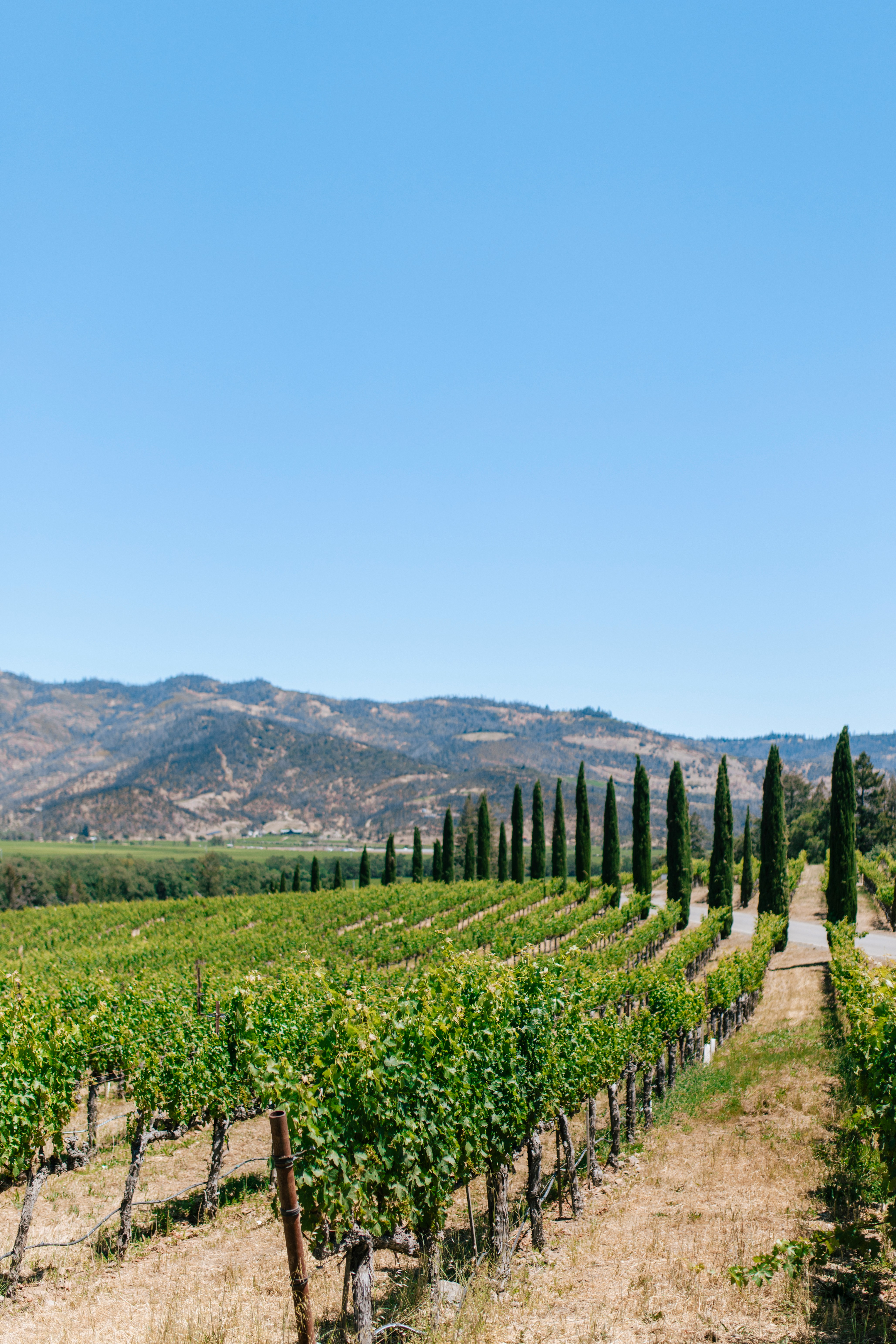
Napa Valley's last wildfire vintage and the one that followed it sit on shelves now as near-opposites, and the gap between them is the most useful thing a buyer can read about Cabernet right now. The 2020 harvest is a near-absence — many of the valley's most decorated estates bottled little or nothing — and 2021 sits beside it as the vintage that put the muscle back into Napa Cabernet.
2020 was a wildfire vintage. The LNU Complex fires arrived in August during veraison, and the Glass Fire followed in late September, leaving growers facing a slow, uncertain test for smoke taint. Many producers chose discipline over volume. Nickel & Nickel bottled six of its usual twenty-plus vineyard-designate Cabernets that year, and peers made similar calls. On a wine list, the vintage now reads like a typo: skipped, half-skipped, declassified.
2021 inherited empty barrels and a dry, cool spring. Vines stayed dormant through March, then ripened under steady summer days and notably cool nights — the rhythm Cabernet wants. Yields were small but berries were concentrated. From the alluvial valley floor up to the cooler slopes of Howell Mountain, the picture was similar: low water, low yield, long phenolic ripening.
Napa Valley
The Femente graph carries the contrast plainly. 2021 sits at an average critic score of 93.4 — the highest of the last decade for the valley — while 2020 has roughly a quarter of the rating volume of surrounding years, because so much of the wine was never bottled. At the cult end, producers like Abreu show their tightest scores in 2021, with conspicuous gaps where the prior year should be.
For a buyer, the practical move is to read these two years as a pair. A 2020 Napa Cabernet from a top estate is either an act of conviction — a small lot the winemaker stood behind — or a value play from a producer with deep enough cellars to dilute the risk. A 2021 from the same shelf is, on current scoring, the most age-worthy Napa vintage since 2016, built for the patient cellar rather than this weekend's dinner.