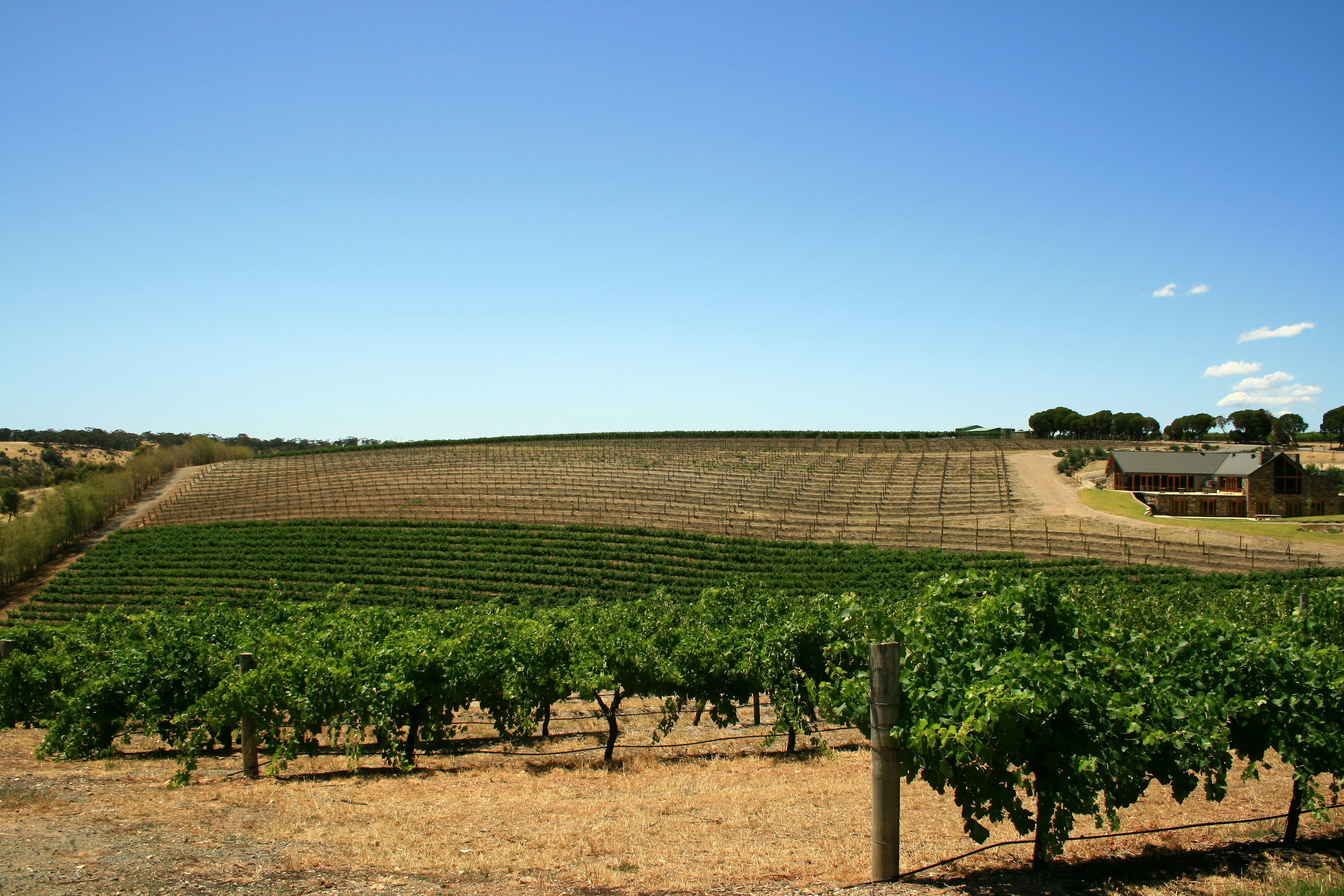
Most of the wine world counts its old vines in decades. South Australia counts them in lifetimes, and that gap is the whole story. A quarantine line drawn in the nineteenth century kept phylloxera — the root louse that destroyed most of Europe's vineyards — off the state's soil, so vines planted by the first settlers were never torn out and replanted. What grows in the Barossa today is, in many places, the original planting.
Two of those plantings make the point better than any statistic. One Barossa block has been yielding Shiraz since the 1840s, old enough to rank among the oldest producing vines of the variety anywhere. Nearby, a stand of bush-vine Grenache went into the ground in 1848 and has cropped every vintage since. Roots that deep carry almost no fruit, which is why the wine arrives concentrated rather than merely ripe.
Age became a marketing word everywhere, so the region wrote rules around it. The Barossa Old Vine Charter, drawn up in 2009, sorts vineyards by documented planting date instead of vague phrasing on a label, with its top tier reserved for vines past a hundred and twenty-five years. Shiraz benefits most: it dominates the state's plantings, and old-vine Barossa Shiraz is the wine the region is known for abroad.
Barossa
Reducing the state to warm-climate Shiraz misses half of it. On the Limestone Coast, Coonawarra grows Cabernet Sauvignon on a narrow strip of red soil over limestone, and the wine comes out leaner and more savoury than anything the warmer north aims for. The same southern latitude that bakes one district keeps the hills behind it cool enough for taut, age-worthy whites.
The deeper value of these vines is genetic, not sentimental. Phylloxera erased the pre-1860s vine material of France and most of Europe, leaving growers to graft survivors onto American rootstock; what stands in South Australia is a living archive of the era before that rescue. A glass of century-old Barossa Grenache is one of the few ways left to taste a vineyard the way the nineteenth century did.