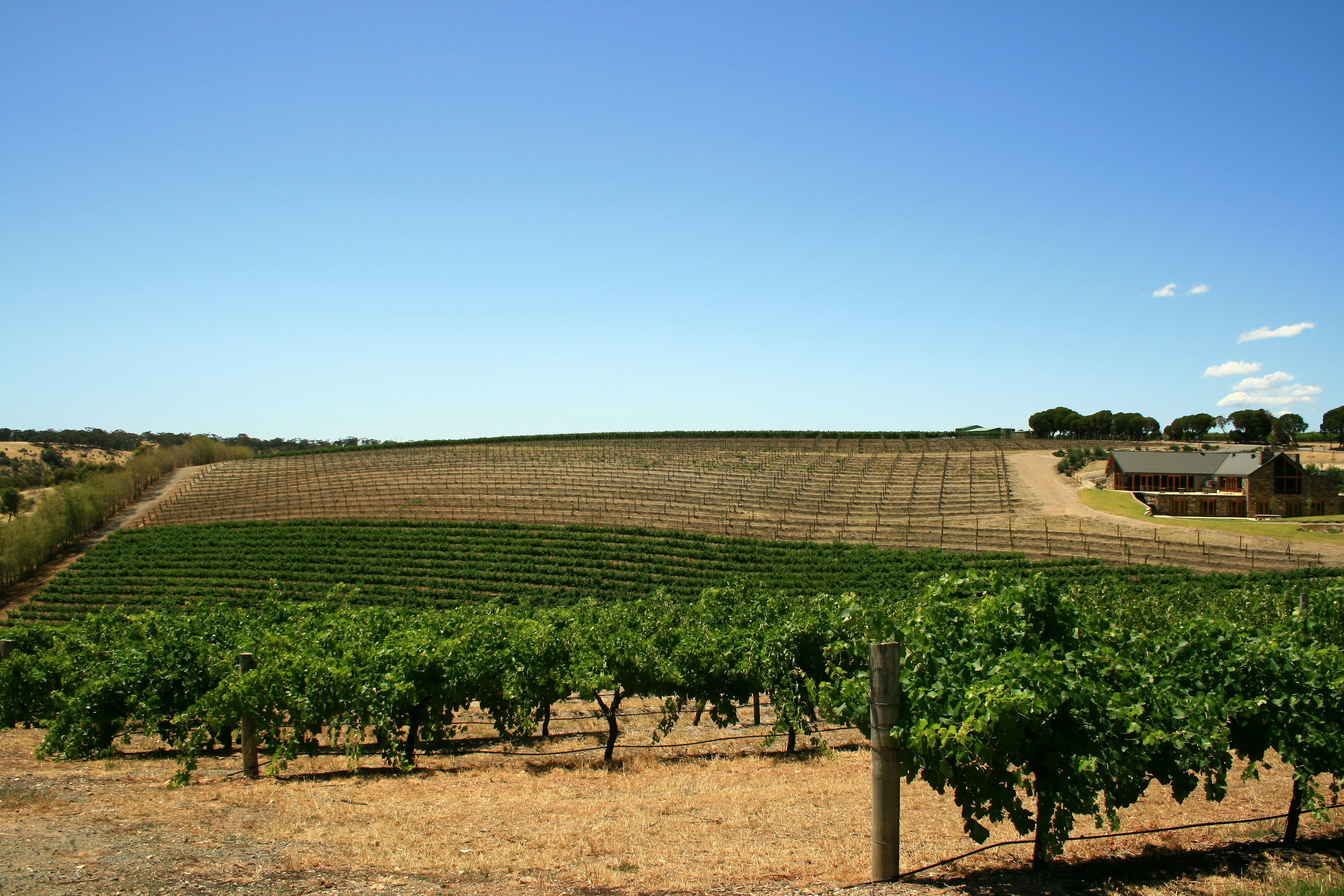
Yalumba's reputation rests on the wrong grape — or rather, on grapes Australia wasn't supposed to be known for. Samuel Smith bought the land in 1849 and named it Yalumba, the Pangkala word for "all the land around." Six generations of his descendants have run the place, and the wines that anchor its name now are mostly grapes the Hill-Smiths chose to bet on long before anyone else did.
Viognier is the clearest case. In 1980 the family planted it at Eden Valley elevations when the grape was barely planted outside Condrieu and almost unheard of in Australia. By 1998 they were releasing The Virgilius as a single-vineyard cuvée; it became the bottle Australian sommeliers used to argue that the country could make Viognier worth opening at all. Most other Australian Viognier today still measures itself against that wine.
Yalumba
Eden Valley Riesling is the second bet. In 1961 the family bought Pewsey Vale, a vineyard with vines planted in 1847, sitting at altitude above the Barossa floor. They were arguing then that cooler, slower-ripening hill country would make better Riesling than the flats below it. Most of Australia's premium dry Riesling now comes off those hill blocks, and Pewsey Vale's old plantings are part of why.
None of this means Yalumba doesn't make Shiraz — it makes a lot of it, and Eden Valley Syrah moves more volume than the singular wines. But the stubbornness shows up in the production line too: an on-site cooperage running since the early 1900s, and an early push to put premium Australian wine under screwcap. Every generation backs the unfashionable choice and waits.
South Australia