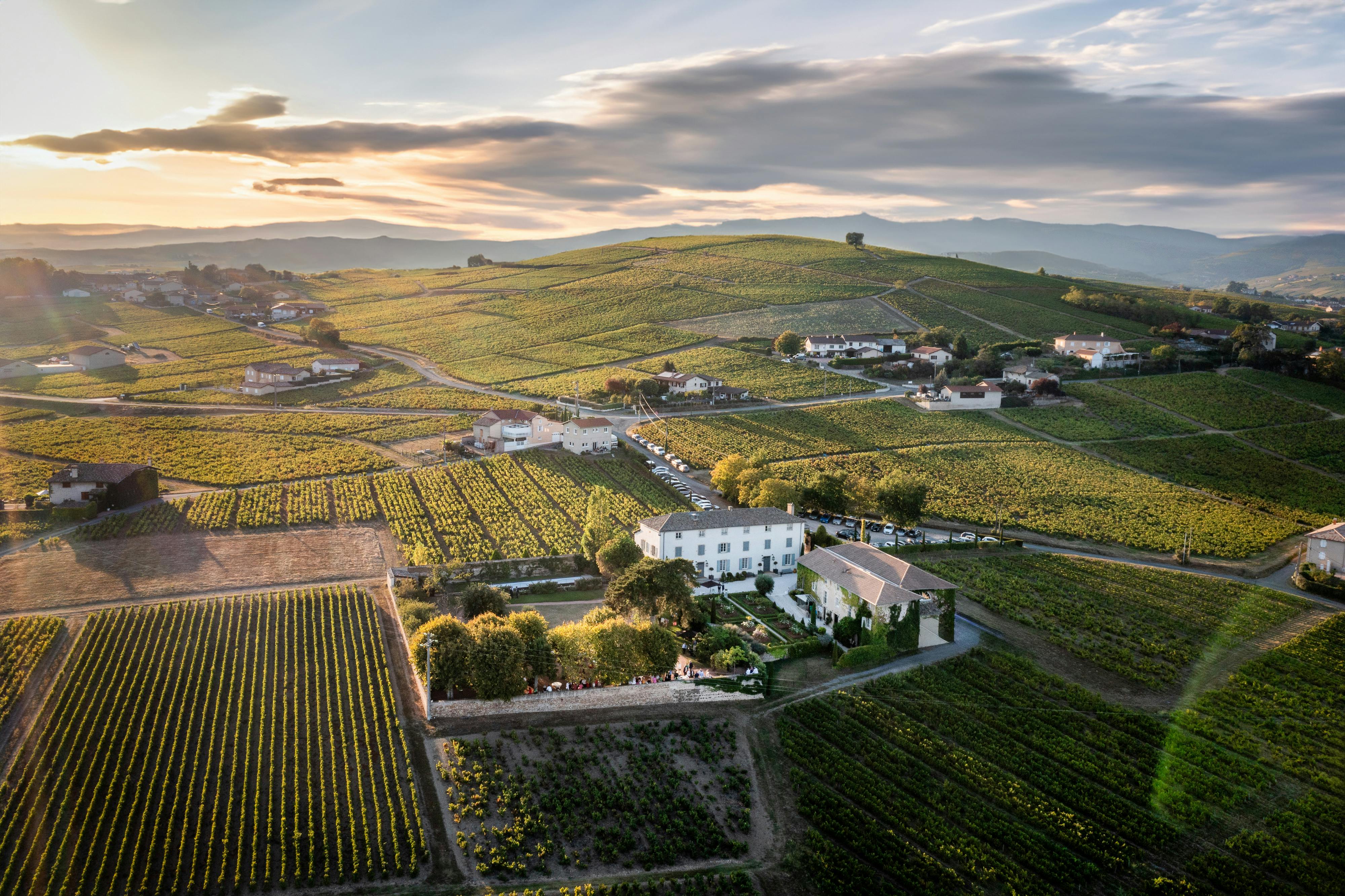
Beaujolais spent a generation as a punchline, and then the people who never agreed with the joke quietly put it back on serious wine lists. Most retellings open with Beaujolais Nouveau — the third-Thursday-of-November release that turned the region into a shipping campaign and a parody. Beneath that noise, in a few cellars north of Lyon, a different Beaujolais was being rebuilt, and it is the reason cru Beaujolais is now the bottle a sommelier reaches for when a guest wants Burgundy without paying Burgundy money.
Its intellectual godfather was Jules Chauvet, a Beaujolais négociant and trained chemist who spent the post-war decades arguing that the region's wines tasted better when the fruit was clean enough to ferment without sulfur dressing. Marcel Lapierre took the lab notes into the vineyard in the early 1980s — no herbicides, late picking, long maceration, almost no SO₂ — and pulled three friends alongside him. American importers later sold them as the Gang of Four; what they actually were was a working bench, and what they worked against was everything the négoce had taught Beaujolais to do.
Marcel Lapierre
Geography is why the bet paid off. Beaujolais has ten named crus running north up the granite shoulder above Lyon, each sitting on a different patch of weathered pink granite, blue volcanic schist or alluvial sand. Morgon's Côte du Py lieu-dit — hard, smoky, slow to open — produces wines that taste nothing like its cru neighbours a few villages south, and the difference holds vintage after vintage. Those are real terroir distinctions, not marketing copy, and they only became visible again once growers stopped picking early and bleeding the colour out of the wine for the nouveau ships.
Critics caught up slowly. Marcel Lapierre's wines from the early-2010s ran above 92 critic points on average — the kind of score sommeliers had reserved for Burgundy. Decanter's 2022 panel of cru Beaujolais found a deep bench of wines in its Outstanding tier. Bottles are no longer cheap, but they remain cheaper than the Burgundy they keep replacing on by-the-glass lists.
Chauvet's lesson for anyone buying a bottle this month is to read past the regional name. Wine labelled simply 'Beaujolais,' without a cru and without a grower, is still mostly négoce work on the same machinery that built the nouveau habit. Bottles naming a specific cru, with a domaine you can look up, are the inheritance — and at thirty euros, very often the best red in the shop.