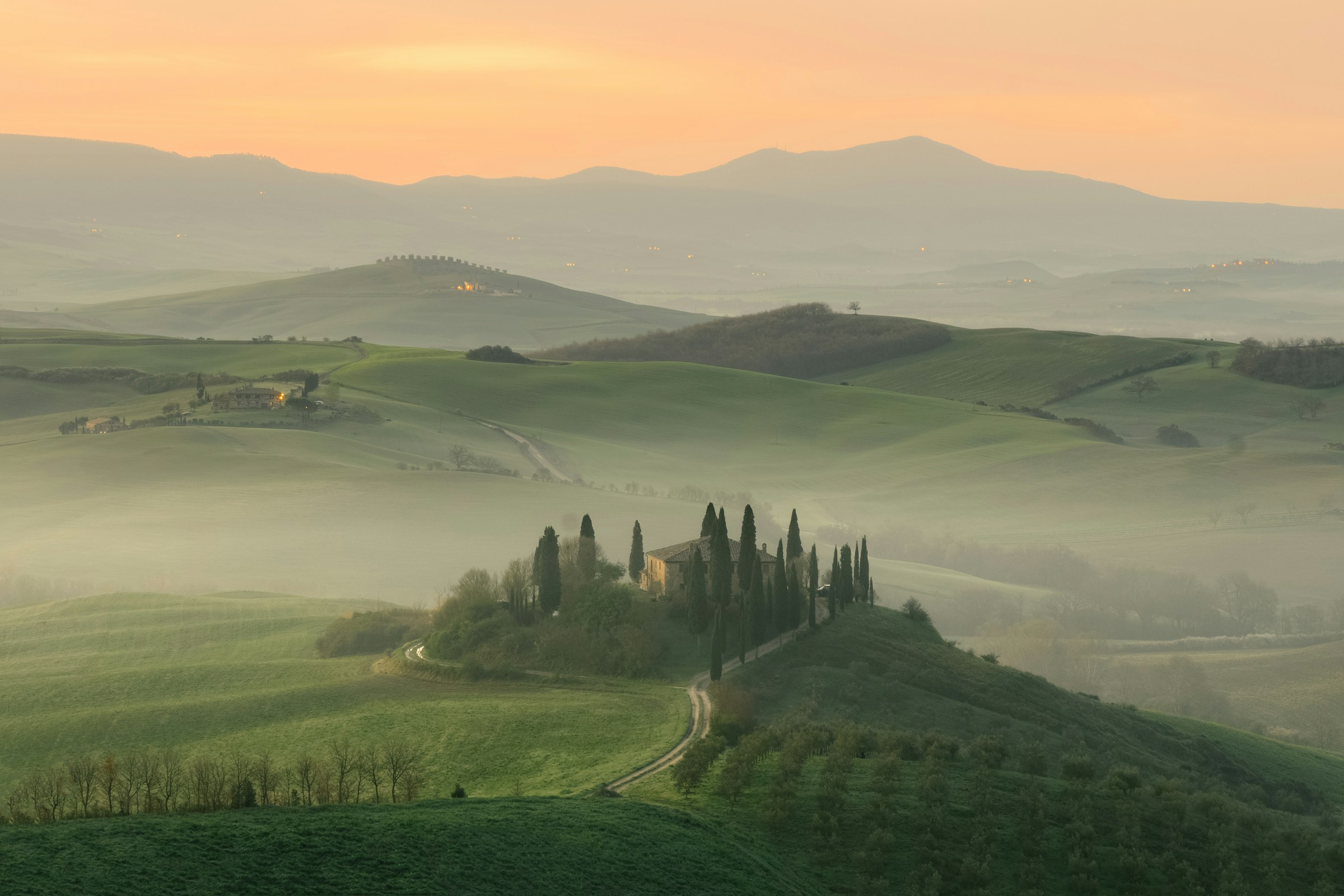
Brunello di Montalcino exists because one estate decided Sangiovese could age like great Bordeaux, and Biondi-Santi has spent the years since guarding that idea against every fashion that tried to improve it. Where other producers chased darker color and riper fruit through the 1990s, the house at Il Greppo kept making the same pale, high-acid, slow-maturing wine it always had.
Ferruccio Biondi Santi bottled the first wine sold as Brunello in 1888, aging it in large neutral oak casks at a time when central Italy drank its reds young. His gamble defined the template the entire DOCG still follows: pure Sangiovese, long cask aging, structure over softness. His descendants added one more discipline. Riserva is bottled only in years the family judges exceptional, and skipped entirely in the rest.
Age is the estate's proof. Wine Spectator scored the 1955 Riserva at 99 points, and Wine Enthusiast gave the 2012 a perfect 100, a spread of nearly six decades between two wines from the same slope. Few producers anywhere can show that kind of run, and none in Montalcino. The portfolio behind it stays deliberately narrow: five wines, from the Rosso di Montalcino up to the Riserva.
Biondi-Santi
Ownership finally changed in the 2010s, when the French group EPI took control from the family, the kind of transition that usually ends in bigger volumes and rounder wines. So far the opposite has held: production has tightened, and the house style has stayed stubbornly pale and slow. Whoever holds the deed, the estate's real asset is its habit of saying no.