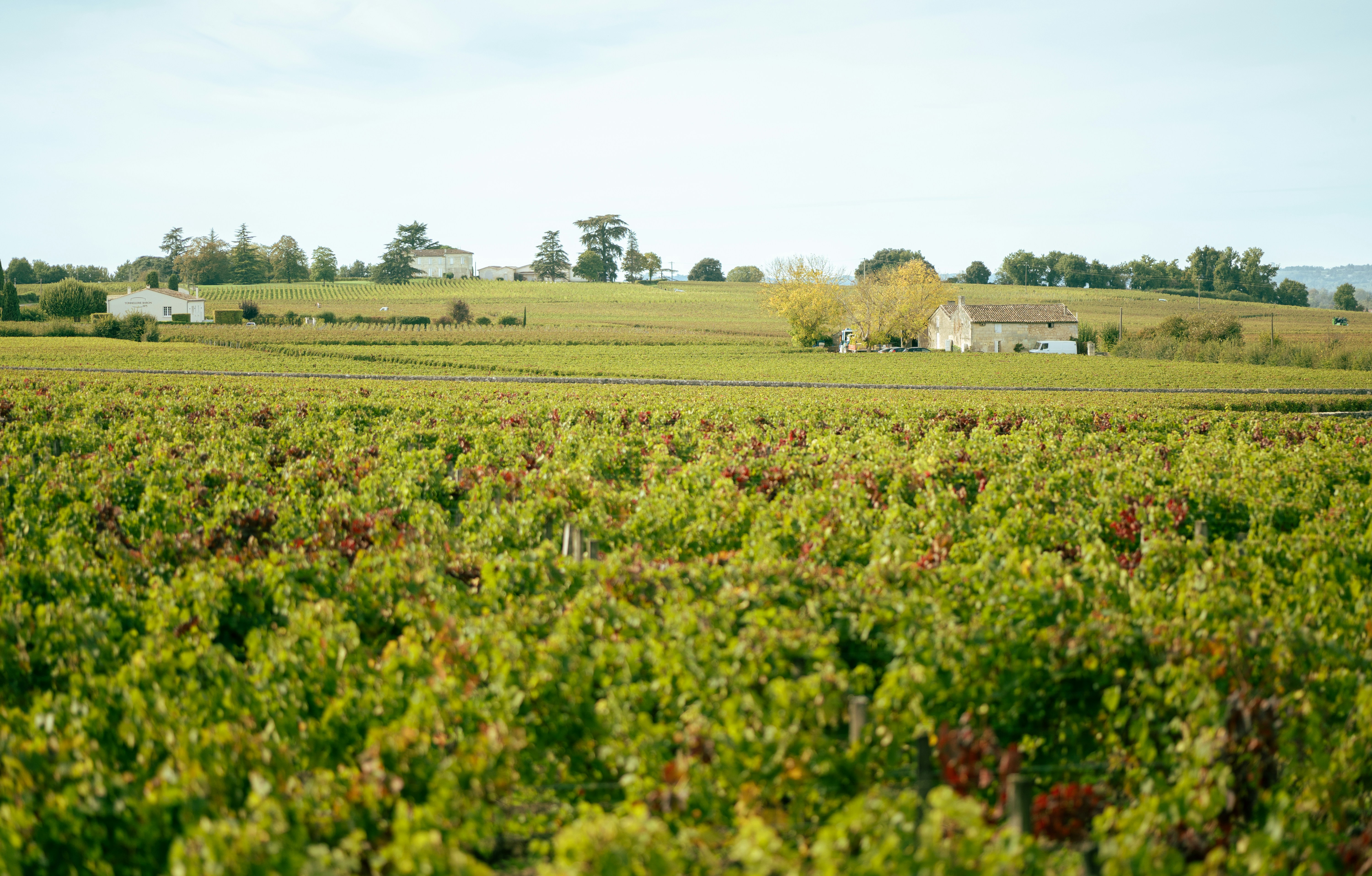
Cabernet Sauvignon has the world's largest vineyard footprint of any single wine grape — and almost none of its mythology survives close inspection. People talk about it as if it's ancient and noble. It is neither. Cabernet Sauvignon is, by modern science, a spontaneous accident that occurred in a Bordeaux vineyard in the seventeenth century, when two unrelated parent grapes cross-pollinated and nobody noticed.
Parents were eventually identified as Cabernet Franc — Bordeaux's older red — and Sauvignon Blanc, planted across the same country. Both were already widespread. Nothing about the cross was sought. One Cabernet Franc vine produced pollen, a Sauvignon Blanc vine produced a seed, the seed grew into a vine that made an interesting wine, and someone with a vineyard decided to keep propagating it.
Bordeaux
None of this was known with certainty until 1997. Carole Meredith's DNA-typing team at UC Davis confirmed the parentage by genetic match — four centuries after the cross actually happened. Before that, the relationship had been guessed from grape names and the family resemblance audible in the wine: blackcurrant from one parent, grassiness from the other. Most of Cabernet Sauvignon's literary and cultural baggage predates the proof.
Bordeaux ran with the accident. Eighteenth-century plantings in the Médoc kept the vine alive long enough to ride out of France with Bordeaux's later export economy. By the time DNA testing confirmed the parentage, Cabernet Sauvignon was already the planet's most-planted red, with Femente holding more than a hundred and fifty thousand distinct wines built primarily on the grape.
What that means is straightforward and slightly humbling. World's most-planted wine grape doesn't have an ancient pedigree to invoke. It has an unobserved cross, a Médoc winemaker who liked the result, and four hundred years of marketing built over the top of both. Had those two vines stood three rows further apart, the modern wine map would not look the way it does.