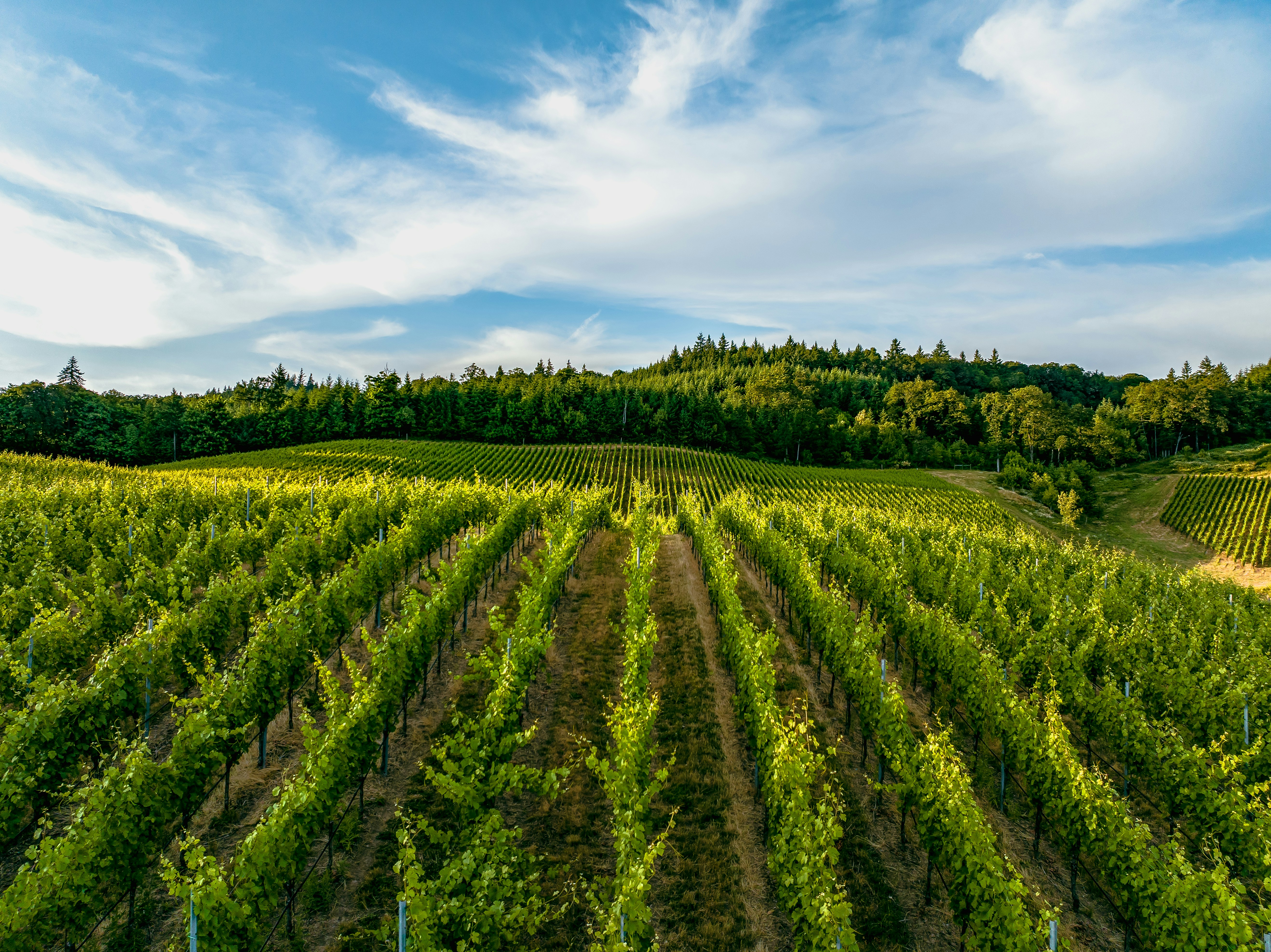
Oregon's reputation for Pinot Noir was not handed down from Burgundy. It was won in a Paris tasting room in 1979, when a bottle from a young Willamette Valley producer named Eyrie went out blind against the grandest names in France and landed in the top ten, ahead of Burgundies that cost many times more. David Lett had planted those vines in 1965, back when accepted wisdom held that Pinot Noir could not ripen this far north.
Robert Drouhin, whose family had sold Burgundy since the nineteenth century, did not wave the result away. He ran the tasting again the next year using his own cellar, and Eyrie's Pinot came second by a hair to a Chambolle-Musigny of his own. Rather than argue with the verdict, Drouhin bought land in the Dundee Hills and founded Domaine Drouhin Oregon in 1987. One of Burgundy's oldest houses had decided the valley was worth a vineyard of its own.
What convinced him was underfoot. Willamette Valley now holds eleven official sub-appellations, and the two that shape its Pinot Noir most sit on opposite ground. Dundee Hills, the first corner of the valley planted to vines, rests on Jory, a red iron-rich clay weathered from old basalt lava. Just west, Yamhill-Carlton runs on marine sediment left by an ocean that is no longer there. Same grape, but it reads differently across the two soils, firmer over sediment and rounder over clay.
Willamette Valley
Drouhin was not the last to come. In 2013 Maison Louis Jadot bought the Resonance vineyard in Yamhill-Carlton, its first ground outside Burgundy, and handed the fruit to a Burgundian winemaker. Latitude is the quiet reason the houses keep buying here. Willamette sits close to the 45th parallel, in the cool band that lets Pinot ripen slowly, and slow ripening is the very thing warmer summers have started to strip from Burgundy itself.
For a drinker, that is the useful part. Willamette Pinot is not a cheaper Burgundy or a copy of one. It is the same grape read through colder wind and younger rock, more openly fruited and often firmer than its French cousin. Burgundy's houses did not come to Oregon to rebuild home. They came because the valley still offers a ripening curve their own summers no longer guarantee.
Argyle