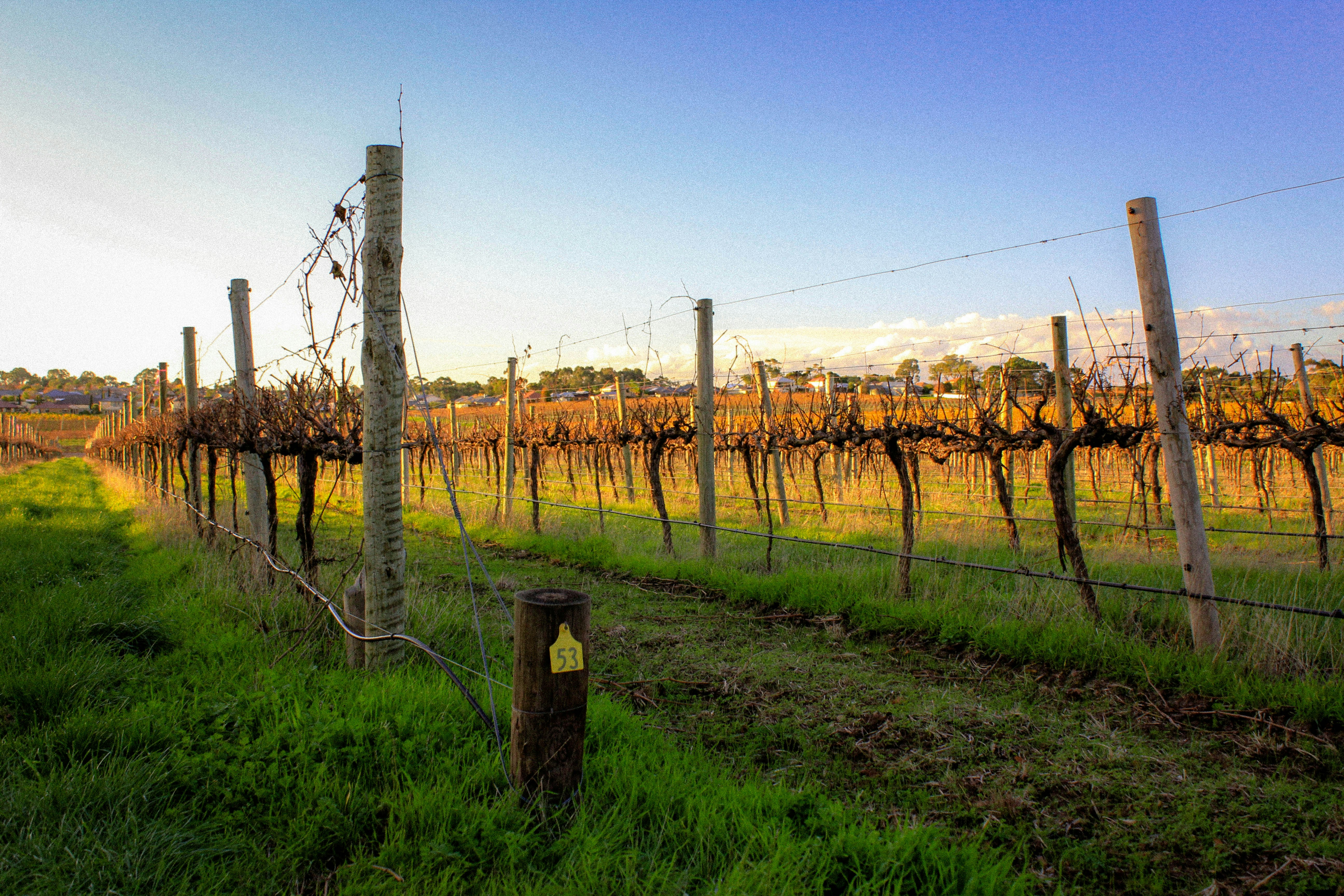
Australian wine industrialized in the late twentieth century around stainless steel, pneumatic presses, and refrigeration. d'Arenberg in McLaren Vale skipped most of it. Chester Osborn — fourth-generation Osborn running the cellar — still presses every wine through a hydraulic basket dating to the 19th century. From the cheapest Hermit Crab to the iconic Dead Arm, every red ferments on foot-trodden grapes. No other Australian producer at this scale does it.
Both choices have consequences in the bottle. Basket pressing extracts more slowly and less brutally than the pneumatic presses that became the industry default, and foot treading preserves whole-berry pockets in the must. Wines come out with denser tannin, more lifted aromatics, and a structure closer to old Châteauneuf than to modern South Australian Shiraz.
McLaren Vale
It also makes the wines polarizing. Dead Arm Shiraz, named for the vine disease that halves a vine's wood and concentrates the surviving fruit, is the house signature: a 14-to-15% alcohol monolith that critics either rate around 95 points or write off as overripe. Splits like that are consistent vintage to vintage, which suggests it is not really a vintage problem.
Chester also built the Cube, a tasting pavilion shaped like a Rubik's Cube mid-rotation. Architecture had nothing to do with the wine and everything to do with refusing to do the conventional thing — exactly the same instinct that keeps the basket press running for entry-level wines no other winery would bother with. Both the building and the wine are an argument against blandness.
McLaren Vale spent the last decade moving toward finer, fresher Grenache and earlier-picked Shiraz. d'Arenberg has not. Whether that reads as anachronism or as conviction depends on the buyer, but it is no longer accidental — it is the entire bet.