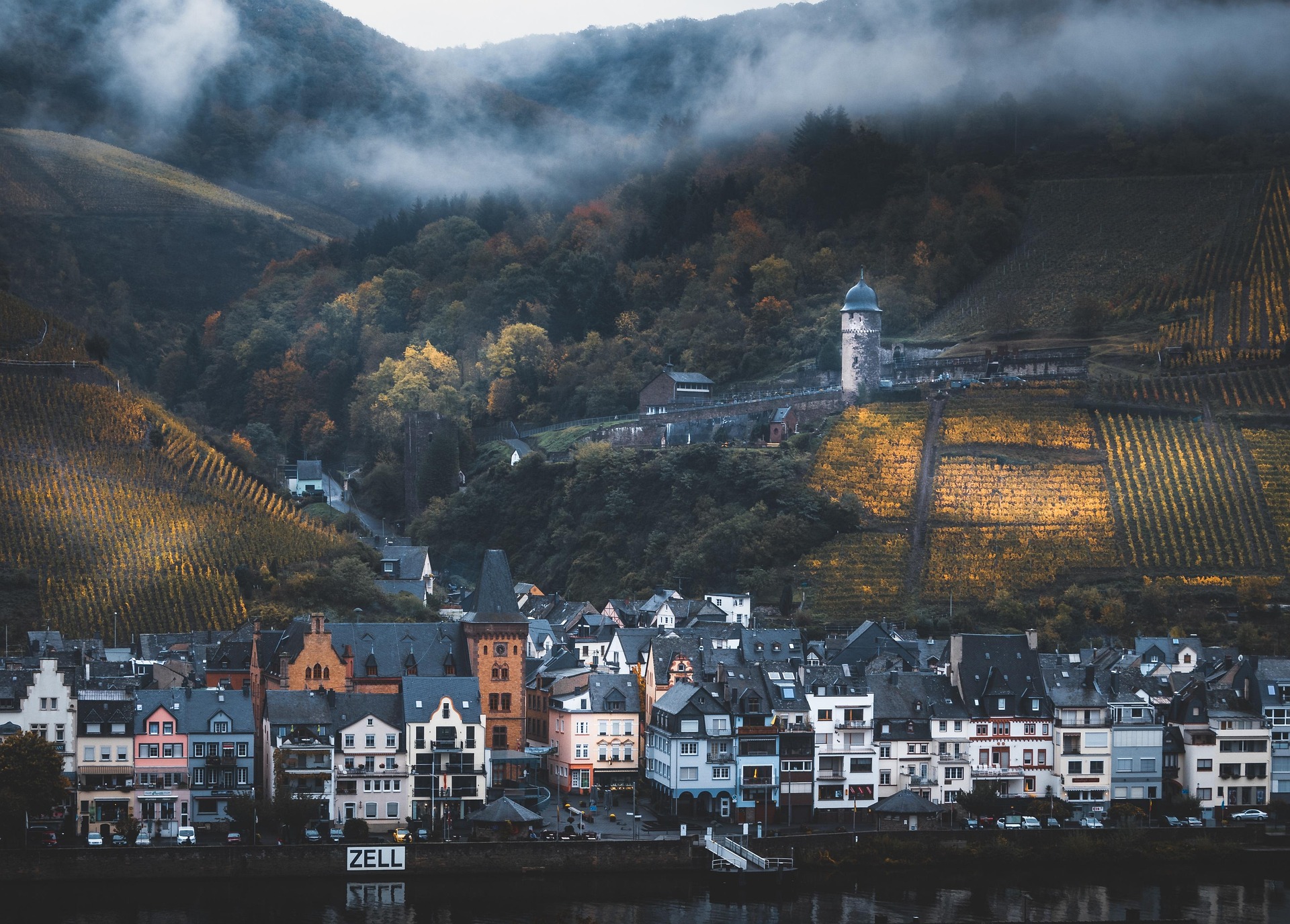
Mosel labelling has a reputation for being the most baffling in serious wine. Prädikat tiers signal grape ripeness at harvest, not sweetness in the glass, so a Spätlese can taste bone-dry or syrupy depending on the producer's choices. Markus Molitor's answer to that confusion is, by Mosel standards, almost rude in its directness: a coloured foil capsule that tells you, before you read a single word of German Gothic script, how the wine drinks.
White capsule means dry. Green means off-dry. Gold means properly sweet. Stars stacked above the vineyard name signal increasing concentration within a tier. The whole catalogue from estate-level to Trockenbeerenauslese sits on the same legend, and nothing on the bottle requires translation to navigate. It is the kind of customer-facing decision most German producers have spent a generation arguing about and not making.
Molitor took over from his father in 1984 and spent the decades since assembling parcels along the Mosel's grand-cru ridge — Zeltinger Sonnenuhr, Wehlener Sonnenuhr, Bernkasteler Doctor — and working each as an exposure problem to be solved row by row. The wines that result are unfashionably patient. He bottles late, ages on lees longer than is required, and lets the sweet styles sit for years before release. Wine Advocate has rated his Auslese-tier whites at the maximum score more often than any other German producer.
Mosel
For a reader who has never bought Mosel Riesling confident in what they were getting, Molitor is the producer to start with. The capsule colour decides the style; the vineyard name decides the character; the stars decide the price. A Wehlener Sonnenuhr Spätlese with a green capsule is a textbook off-dry Riesling, slate-driven and tightly wound. The same vineyard in gold-capsule Auslese form is a different wine entirely — sweeter, denser, aimed at a long cellar. Same name, same slope, decoded for you.