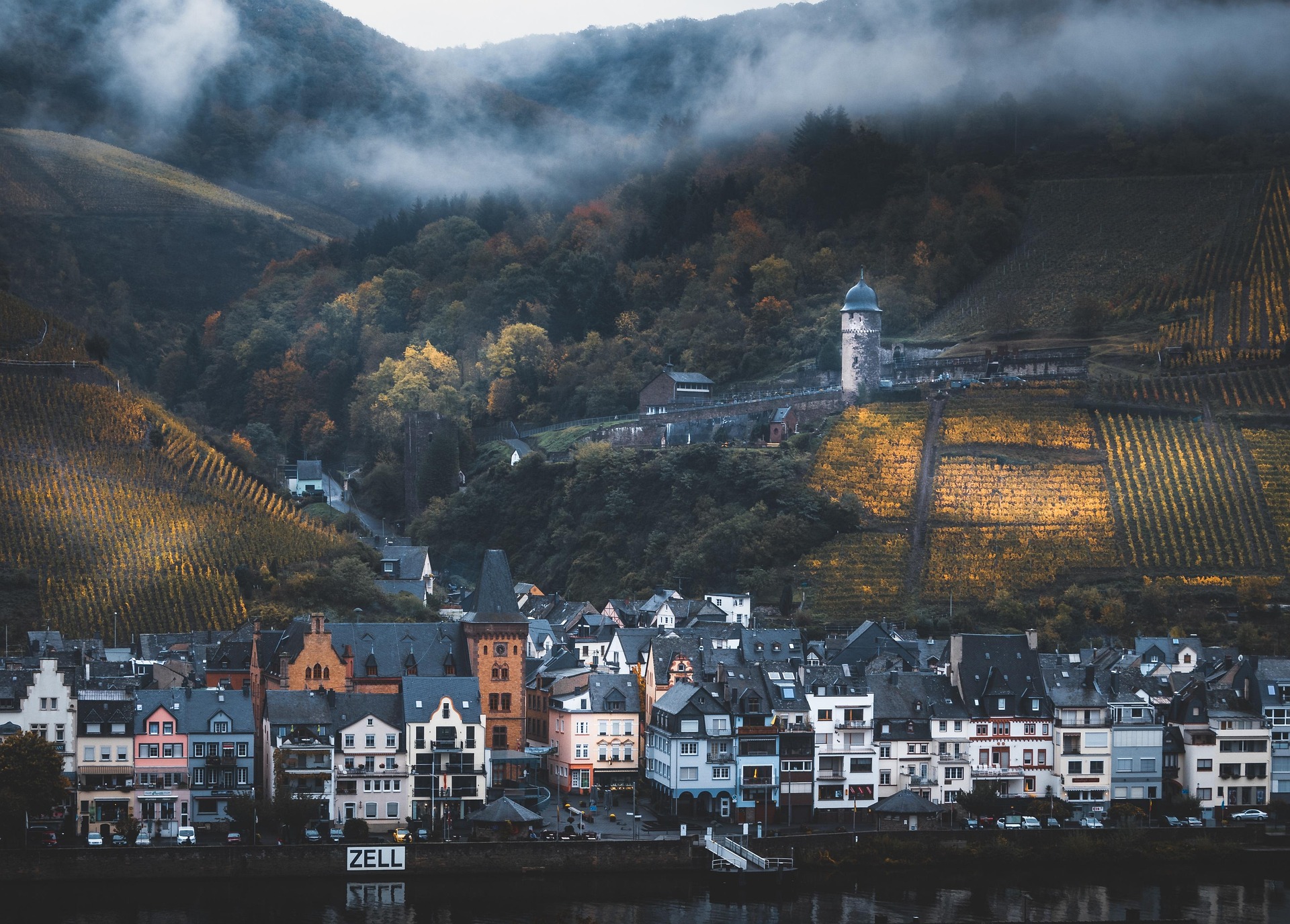
Mosel labels used to read as a sweetness ladder, each rung — Kabinett, Spätlese, Auslese — describing how late the grapes had been picked. Climate change loosened every rung at once. Producers spent the last two decades quietly rebuilding their identity around something the labels never used to emphasise: the vineyard itself.
Slate is the constant. Mosel's steep, dark slopes catch the low northern sun and hold its warmth into the night, which is what allows Riesling — the grape behind roughly six in every ten bottles here — to ripen at all on a river this far north. Pradikat, with its Kabinett, Spätlese and Auslese rungs, once told you in a single word how high the sugars had climbed at harvest. In cool decades that was useful. In warmer years it stopped meaning much: a modern Spätlese reaches what Kabinett used to mean without trying, and many producers now pick earlier and label lighter just to land where their style demands.
Mosel
Newer language is geographic. VDP, the German fine-wine producers' association, formalised Grosses Gewächs — the dry single-vineyard tier — as Mosel's grand cru equivalent. Each GG bottling tells you the wine came off a classified site and was fermented dry, regardless of how ripe the fruit was. Names like Brauneberger Juffer, Wehlener Sonnenuhr and Erdener Treppchen now carry the weight that 'Auslese' once did. Markus Molitor, Mosel's most-reviewed producer on Femente, built his reputation labelling every bottle with a coloured capsule for sweetness and the vineyard name for everything else.
Markus Molitor
Climate has not made the region easier, only different. February 2024 ran warm, the vines budded early, and a late April frost destroyed roughly a third of the crop on the steepest, most prized sites. Producers like Heymann-Löwenstein and Van Volxem made small, crystalline wines from what was left and called the vintage 'small but fine.' Variability is the new constant; the response has been to commit harder to where the grapes grew rather than how sweetly they finished.
For a buyer this means the old rules of thumb need updating. Reading a 2018 Auslese as automatically sweeter and richer than a 2018 Spätlese can mislead — both producers may have picked at similar ripeness and finished the wine wherever they wanted on the sugar dial. Better shortcut now: the vineyard name and the producer's house style. Riesling kept ripening. Labels finally caught up.