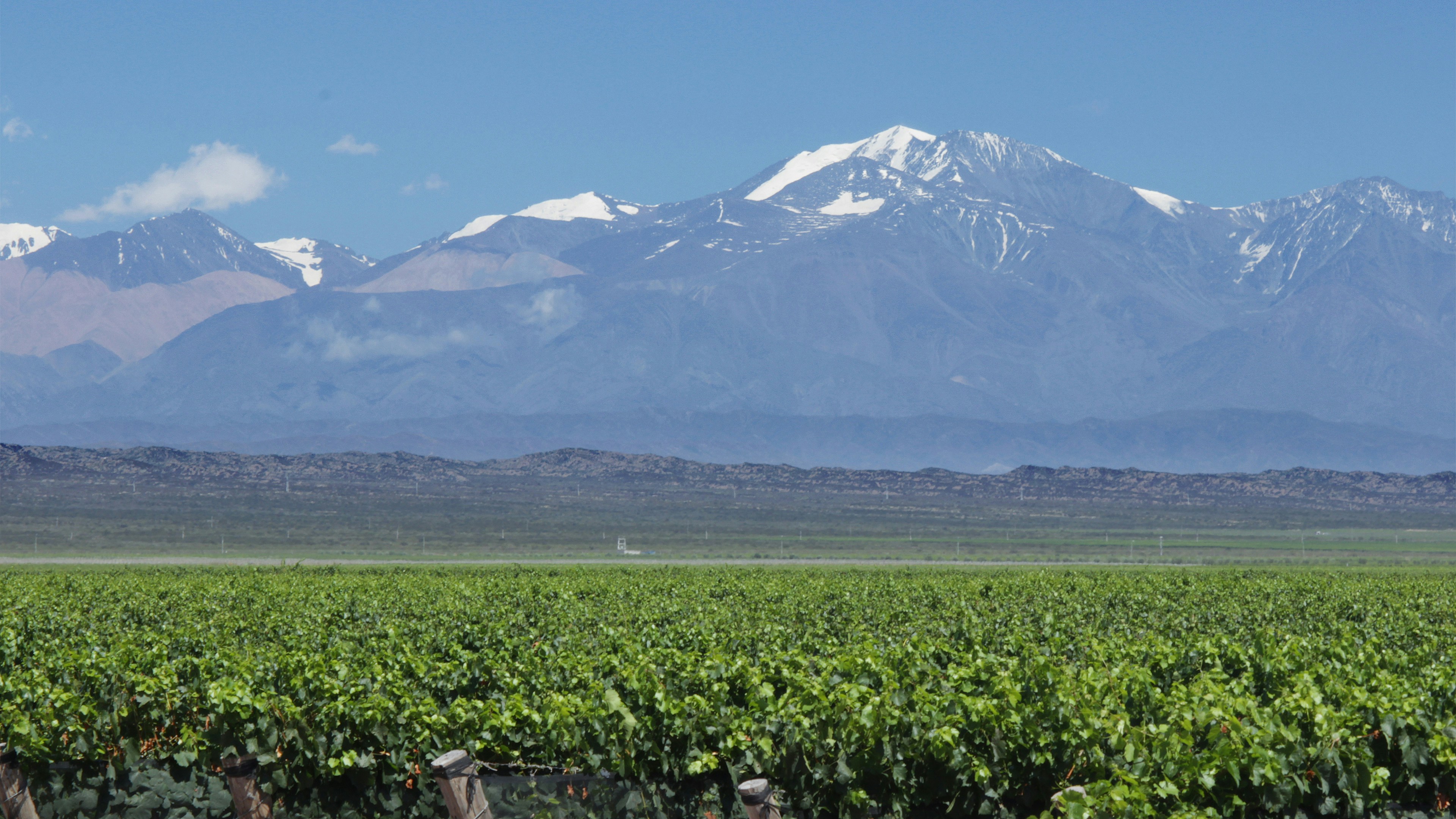
Mendoza's identity was built on Malbec at one altitude — and then quietly rebuilt at another. The valley-floor wines that made Argentina recognisable on export shelves were grown at 650 to 850 metres, producing the soft, plummy style that the world came to expect. What changed the conversation was the Uco Valley, where vineyards sit between 1,000 and 1,500 metres, and where Malbec stops being easy and starts being interesting.
Altitude in the Uco Valley does two things simultaneously. Intense high-altitude sunlight gives the grapes deep colour and concentrated phenolics; the 20°C swing between day and night temperatures forces them to retain their natural acidity instead of cooking it off. The resulting wines have a tension that valley-floor Malbec rarely achieves — freshness without thinness, structure without hardness. The alluvial soils, a stony sandy surface over clay and rock, add a mineral thread that persists through the fruit. Salentein and other established producers now report picking fruit up to a month earlier than they did a decade ago, reaching for that edge rather than waiting for full phenolic ripeness.
The contrast matters because Mendoza's 3,130 wineries cover an enormous range of elevations and intentions. Luján de Cuyo, at 900 to 1,100 metres, occupies the middle ground — warmer than the Uco Valley, cooler than the eastern lowlands — and produces Malbec with darker fruit and more generous tannin. It was the founding appellation for serious Argentine Malbec, and the wines from its oldest vine sites (some planted in the 1940s and 1950s) carry a concentration that higher-altitude youth cannot replicate.
The highest Uco Valley plantings are still young by vineyard standards, reaching into zones above 1,500 metres where viticulture was considered implausible two decades ago. What those sites eventually produce — how the vine roots settle, how the yields stabilise — is still being worked out. Mendoza's altitude story is less about a settled hierarchy and more about an ongoing experiment in where the grape's ceiling actually sits.
Mendoza