Pfalz spent generations being Germany's warm region while everyone praised Mosel for being cool. About 1,800 hours of sunshine a year, plus the rain shadow of the Haardt mountains — the northern lip of France's Vosges — let the Riesling here ripen fully enough to ferment all the way to dry without losing the spine. The rest of Germany only got there in the last two decades, when warming made dry Riesling possible across the country. That head start is what Pfalz spent the late twentieth century building on, and what defines the region now.
Walk the Mittelhaardt and the case writes itself. Forst and Deidesheim anchor it — eastern foothills where limestone meets basalt. Both villages have shipped fully fermented, age-worthy Rieslings from their top vineyards for decades, back when 'trocken' was still a defensive label elsewhere. Growers there didn't pivot to dry Riesling; they wrote the modern German version of it.
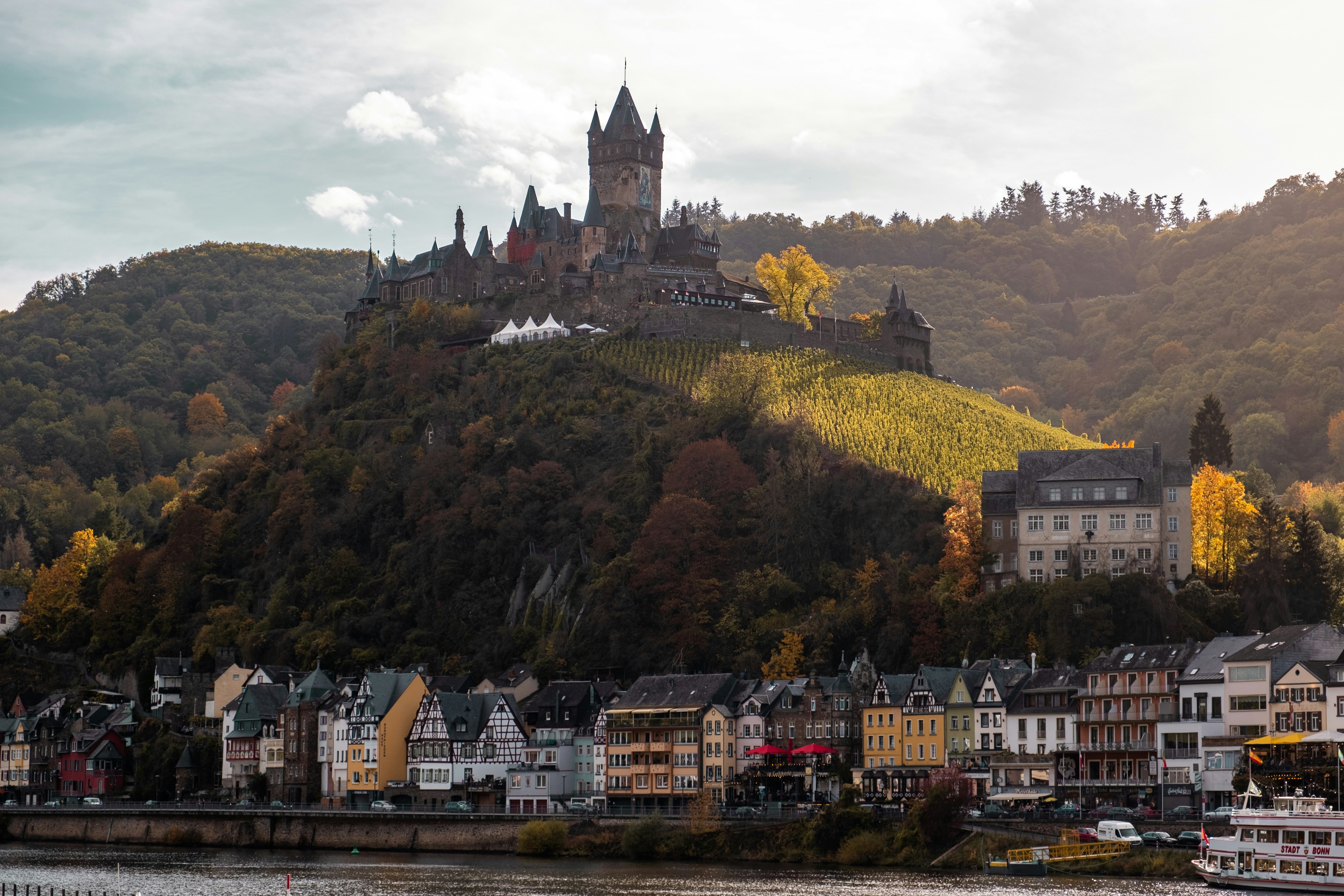
Mosel had to change. Its blue slate slopes ripen slowly, and for most of the twentieth century the answer was to leave the sugar in — Spätlese, Auslese, the famous sweetness ladder. As the climate warmed, Mosel producers started fermenting drier and rebuilding the audience for it. Pfalz never made that transition because it never had to. Its growers had been making dry wine the whole time.
Dr. Bürklin-Wolf
What's changing now is the ceiling. Weingut Andres's 2022 Ruppertsberger Riesling drew 93 points from major US critics, and older GG benchmarks from Bürklin-Wolf reach similar marks. The same warmth that made the Rieslings dry-friendly is now pulling Spätburgunder up with it. Pfalz Pinot is no longer an experiment — just a younger story than the Riesling one.
For a reader picking up a bottle, the practical guide is short. A dry GG from one of the Mittelhaardt villages — Forst and Deidesheim still at the top — is a German Riesling that doesn't apologize: full body, real grip, a long shelf life. The dry-Riesling argument is over; Pfalz won it before it started.
Pfalz