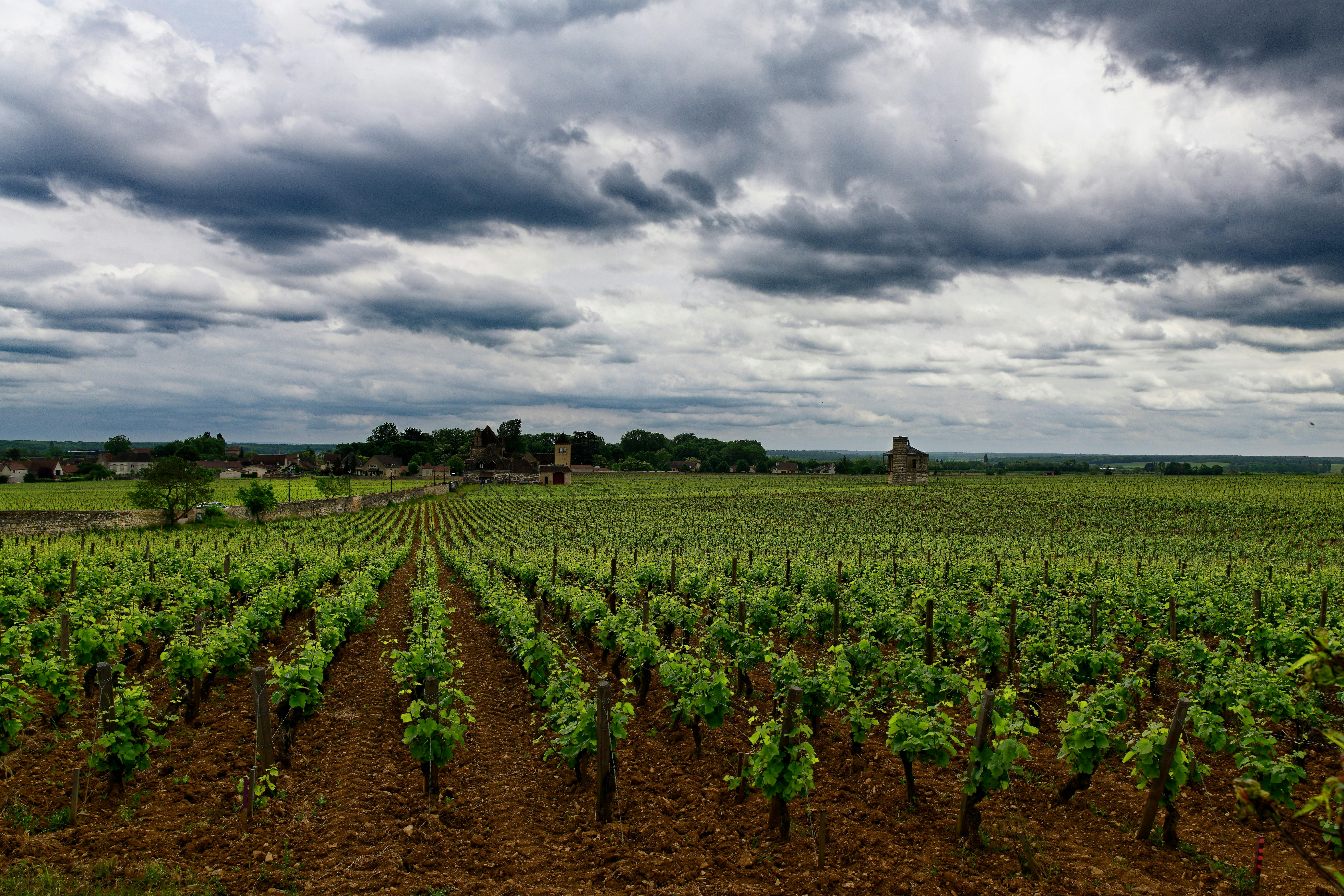
Domaine de la Romanée-Conti runs on a contradiction that gets sharper every year. Inside the gate, it is one of the most disciplined farming operations in serious wine — biodynamic, ploughed by horse, run by a family that has stewarded the same plots for generations. Outside the gate, it is a financial market. Most of the bottles DRC makes will never be opened by the people who bought them.
Scale is the first thing to understand. Romanée-Conti, the grand cru that gives the estate its name, is a 1.81-hectare monopole on the slope above Vosne-Romanée — a parcel smaller than many city blocks. From it, DRC bottles around 6,000 of the flagship each year. Add the other six grand crus the family owns — La Tâche and Montrachet among them — and the entire annual output of the world's most-watched winery fits inside a single shipping container.
Aubert de Villaine ran the place for more than fifty years before stepping back in 2022, handing day-to-day stewardship to his cousin Bertrand de Villaine and a winemaker, Alexandre Bernier, who arrived from Domaine Leflaive. Under Aubert, the estate converted to organic farming in 1985 and to biodynamics in 2006 — early for a domaine that could have coasted on reputation. House instinct is conservative in the right way: change the farming, not the wines.
Côte de Nuits
Demand for the wines became its own market decades ago, and shows no sign of cooling. One bottle of Romanée-Conti from a respectable vintage trades for more than $15,000 at auction; mature bottles from the great years climb past that by an order of magnitude. Most of those bottles never reach a table. Legend lives in the resale market — which means the only thing actually keeping the price up is the small, unglamorous work that still happens on Vosne's most famous slope every spring.
Romanée-Conti's prestige rests on a fragile bargain: the world keeps paying for a wine whose value is increasingly disconnected from drinking it, and the estate keeps farming as if drinking it were still the point. As long as the second half of that bargain holds, so does the first. When the wines stop justifying the prices, the auction market goes home — and so does the legend.