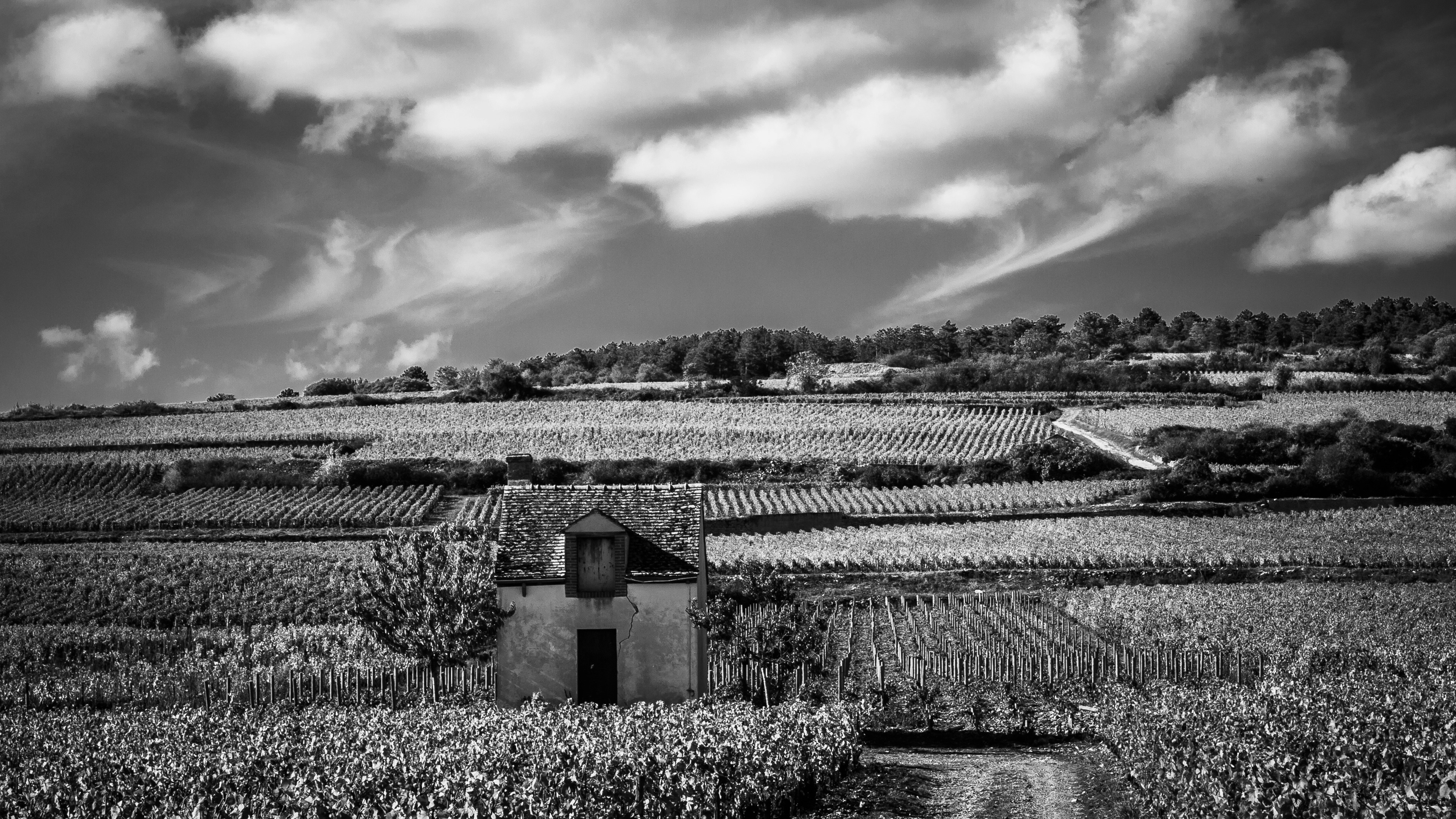
Domaine Dujac built its reputation on a decision most of Burgundy has spent the last decade walking away from: keeping the stems in. Whole-cluster fermentation is a signature so consistent that a Dujac wine is often identified on the nose before the label.
Founded by Jacques Seysses in 1968 and now run by his sons Jeremy and Alec, the estate sits in Morey-Saint-Denis with parcels in several of the village's grand crus and holdings stretching north into Chambertin and Romanée-Saint-Vivant.
Whole-cluster fermentation means leaving grape bunches intact, stems and all, during fermentation rather than destemming first. Jeremy Seysses has said neither approach is intrinsically better, but Dujac's house taste leans firmly toward the stem — slightly riskier, more demanding of fully ripe lignified stalks, but yielding a signature stemmy-floral, almost spicy aromatic edge. Extractions stay deliberately gentle; wines age long in cask.
Domaine Dujac
Femente's data tracks the consistency. Critic averages cluster tightly across the estate's strongest years of the past decade, with 2010 and 2020 narrowly leading. At the top of the cellar, the Romanée-Saint-Vivant has earned a perfect 100-point score.
For drinking, Dujac's wines reward a reader who can recognise the technique. Stems show up as a floral lift, a faint cedary green note, and tannins that feel more linear than plush. If those signals read as flaws, the bottle is wrong for the table. If they read as identity, the family has been quietly proving you right for decades.