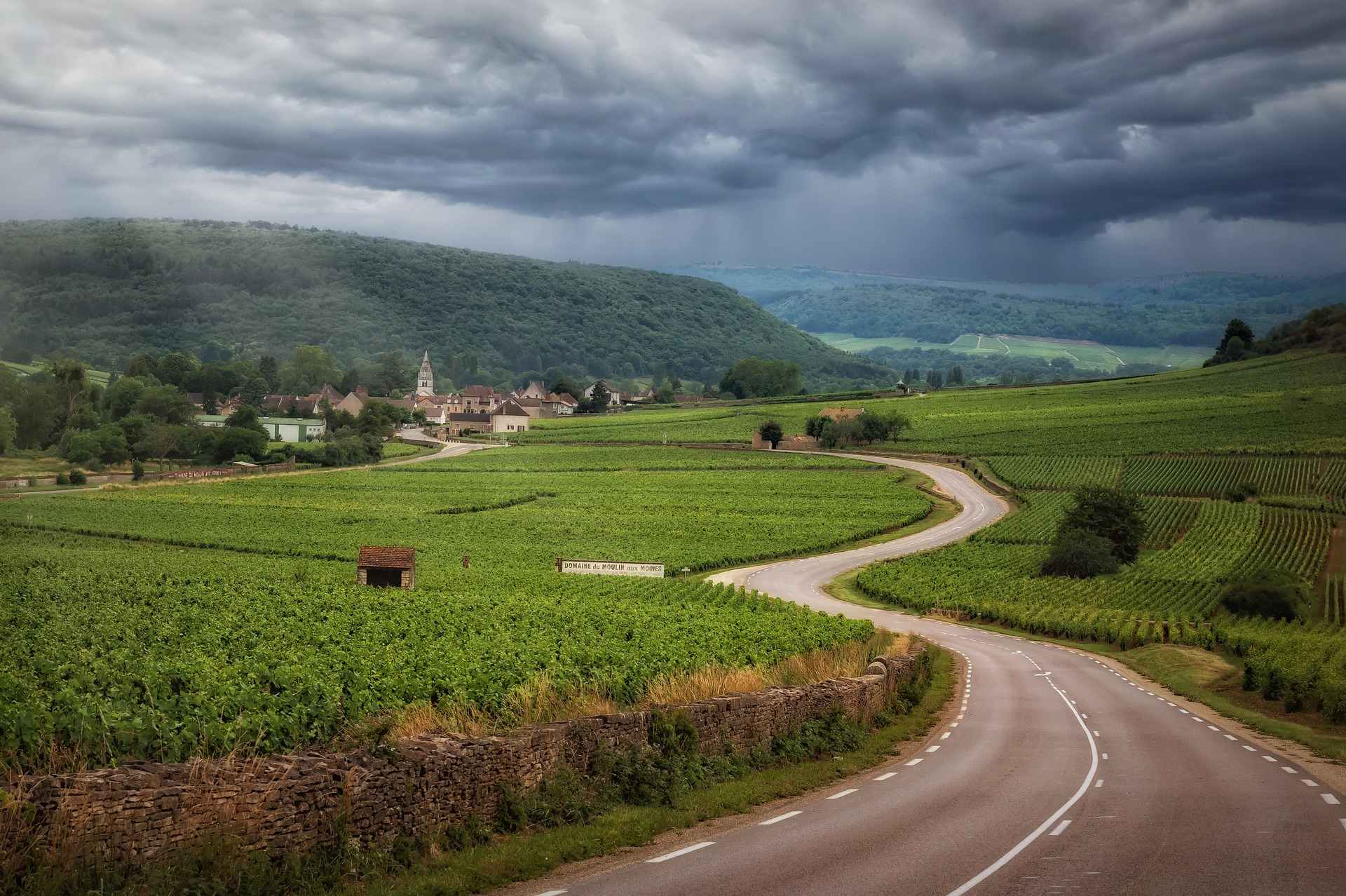
Bourgogne is built on a paradox that becomes more interesting every year: the grape and the soil here were tuned for cool, late, marginal ripening — and the climate keeps making the region less marginal. Critic scores from the last decade tell the story plainly. Cool, classical years still post the highest averages; hot years sit beneath them. Buying Burgundy now is partly a question of how you read that pattern.
It comes down to Pinot Noir's biology. Thin skin and aromatic structure punish heat and reward slow, late ripening. Bourgogne's calcareous slopes — north-facing, drained, cool at the surface — give the grape exactly that. Across the last decade, 2016 sits at the top of the combined Vinous and Wine Advocate critic average at 92.6 — a cool, late year growers describe as classical in temperament, where the harvest came on its own schedule and the wines built tension instead of weight.
At the other end of the thermometer, the pattern holds. Warm, uneven years like 2017 and 2020 — celebrated in Bordeaux for ripeness — settle around 90.7 on the same scale. In a region where the difference between a great bottle and a good one hides inside a single point of structure, that gap counts. Pinot Noir grown in heat loses what makes it Burgundian: the lift, the cool red-fruit register, the long evolution toward forest floor and leather rather than the slide into raisin and alcohol.
Côte de Nuits
For the bottle in your hand, the implication is simple. Burgundy's critic class is voting for cool vintages over hot ones even as the cool ones grow scarcer. Producers like Domaine Dujac, on the Côte de Nuits, lean into that — the house style is restraint, lift, low extraction, the things a hot vintage flattens. Bottles from cool Bourgogne years are, in 2026, partly archives of what the region used to be allowed to do every harvest. That isn't to say warm years are unbuyable — many will drink beautifully young — but the long-cellar bets still belong to the cool ones.
Bourgogne's prestige is a story about doing the unlikely on purpose — a grape that punishes heat, a slope that produces just enough of it, a harvest that has to arrive at the right moment. As that calculation gets harder to make on schedule, the critic record is starting to look less like guidance for next year and more like a tally of what the region used to be able to deliver every harvest.