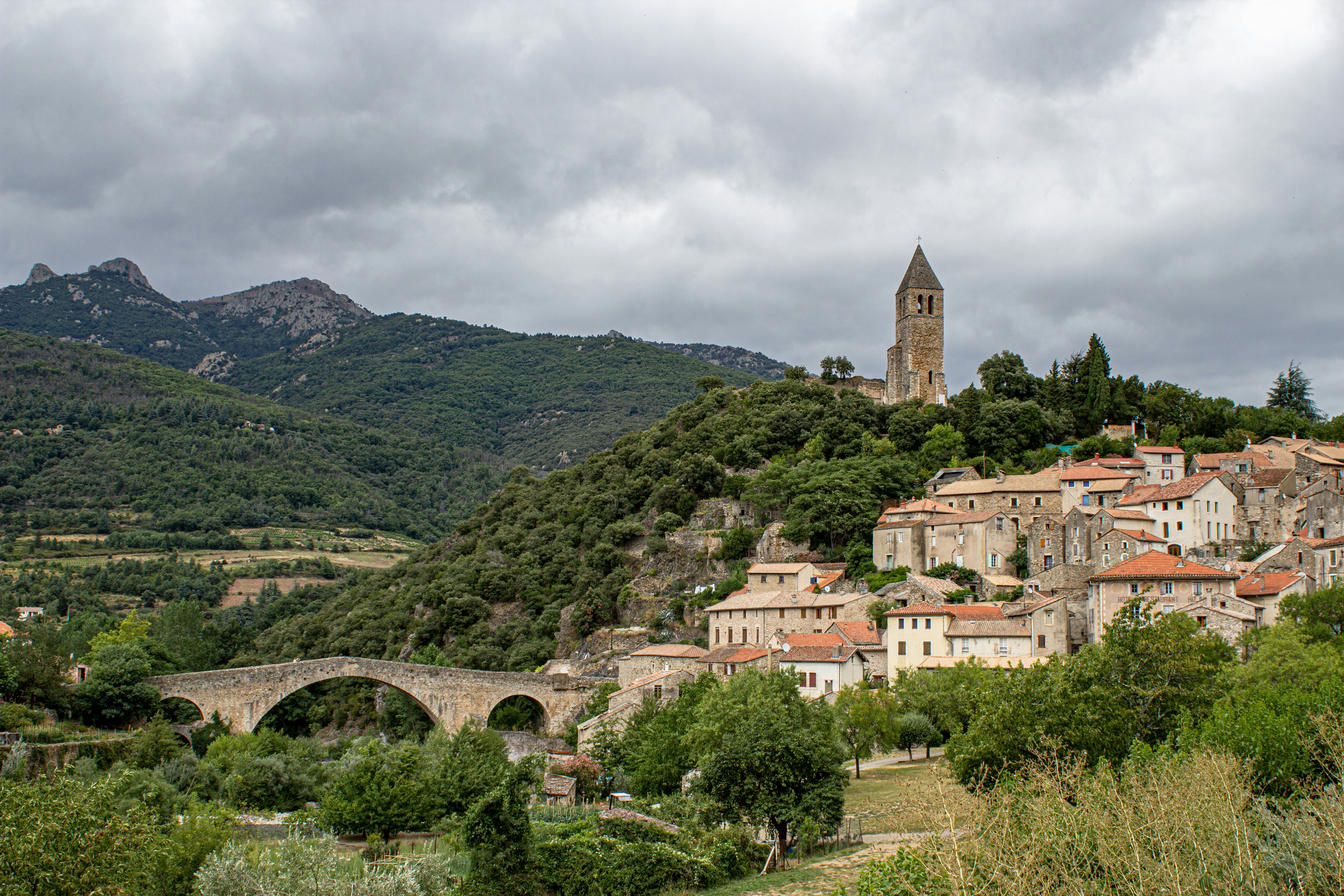
Most biodynamic estates are tiny by design — small parcels, one family, one tractor. Gérard Bertrand farms more than 800 hectares the same way. Across 17 estates in the Languedoc-Roussillon, he has spent thirty years proving that the moon-cycle rhythms and cow-horn compost preparations of biodynamic viticulture work as well across a portfolio as across a parcel.
Bertrand came to wine through rugby. He captained Stade Français and inherited the family domaine, Château de Villemajou, after his father's death. When he retired from the pitch in 1995, he turned to wine full-time and started buying. Estate by estate, he assembled a portfolio across the appellations of the Languedoc-Roussillon and converted each, methodically, to biodynamic certification.
Languedoc-Roussillon
Bertrand built the portfolio like a ladder. Volume bottlings sit at the bottom — Pays d'Oc reds, supermarket rosé, the workhorse blends. Single-estate cuvées climb the middle. Le Viala, a Minervois La Livinière, sits at the top — scores in the mid-90s from prestige critics. Same vineyard philosophy at every rung; the price moves with the precision of the parcel, not with the marketing.
For a region long dismissed as bulk-wine country, that ladder is the argument. Languedoc-Roussillon's rehabilitation has happened on two tracks: small bio domaines making one or two wines, and industrial négoce making oceans of value reds. Bertrand built a third path that refuses the trade-off. Rosé in the supermarket and Le Viala in the cellar share the same farming, just different vineyards. Start with whichever is in front of you.