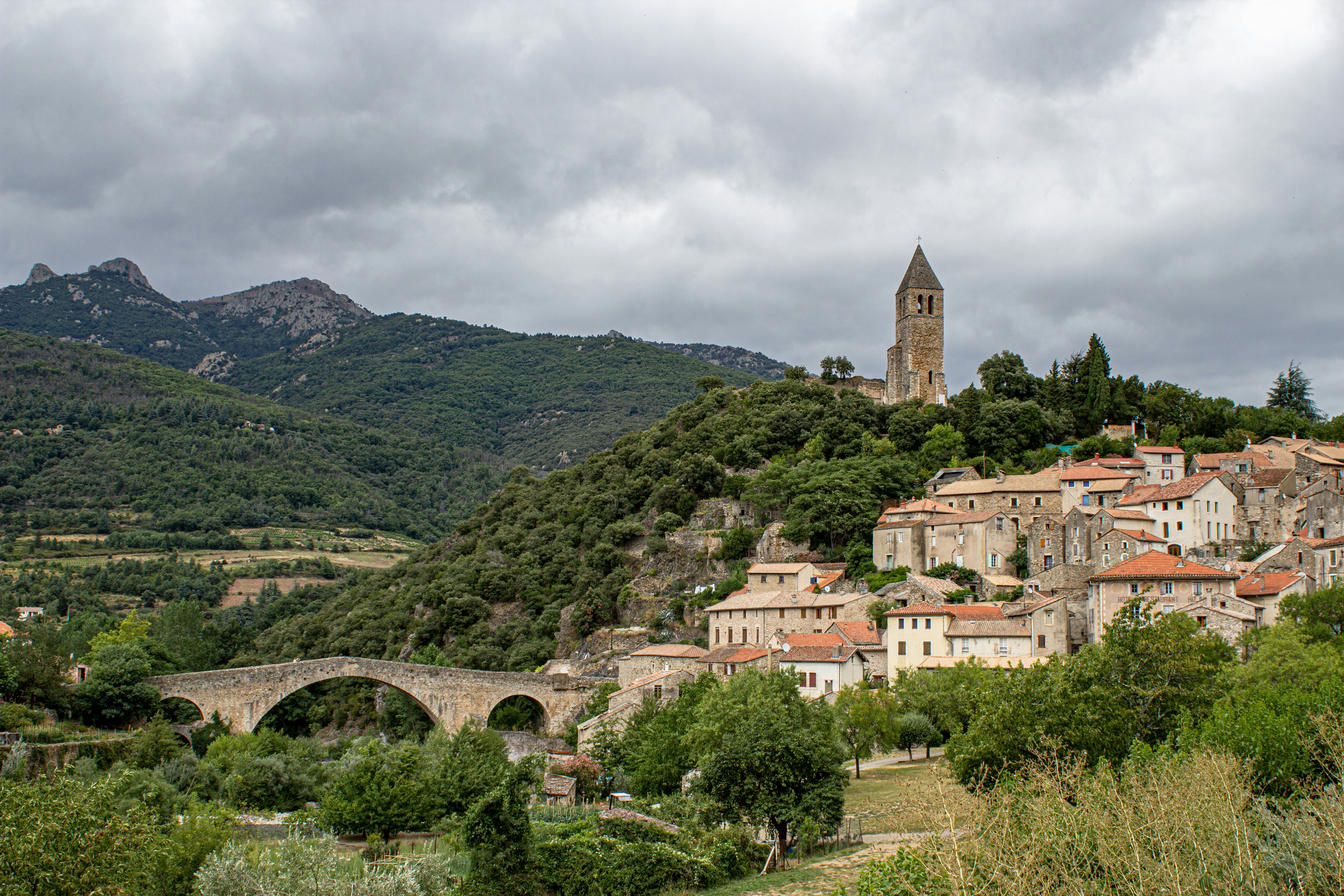
Languedoc-Roussillon is where French wine history went to embarrass itself — and where it came back. For much of the twentieth century, the sun-baked strip between Narbonne and the Pyrenean foothills filled Europe's notorious wine lake with volume and not much else. That story is now old enough to be misleading. What replaced it is a region that has remade itself around organic viticulture, Mediterranean blending varieties, and a mosaic of appellations producing wines that challenge the southern Rhône on quality and leave it behind on price.
Grenache and Syrah are the region's twin pillars, tracking nearly equal footprints across producers here — each anchoring close to 7,000 wines in Femente's catalogue. Both thrive under Mediterranean heat, and producers over two decades have learned to use that heat rather than fight it: earlier harvests, higher-elevation sites, farming for lower yields. Carignan completes the trio: dismissed for generations as a bulk workhorse, old-vine examples in Faugères now produce the region's most compelling age-worthy reds, with schist-driven mineral compression the grape's reputation never hinted at.
Faugères
Around 36% of all French organic wine now originates in Languedoc-Roussillon — a figure that reflects geography as much as ideology. Mediterranean summers reduce the fungal pressure that makes organic viticulture expensive and uncertain in cooler, wetter regions. Low humidity means fewer treatments; consistent sun means vines thrive under lighter intervention. A generation of producers who moved south specifically to work differently arrived into conditions that rewarded their convictions, and the conversion rates have followed.
More than 20 appellations now stake out distinct identities under the regional umbrella. Pic Saint-Loup, north of Montpellier, draws cooling air off the Cévennes that gives its Syrah-led reds a lift and structure unusual this far south. Faugères, built on Cambrian schist rather than the region's dominant limestone, produces wines with mineral tension that reward a decade in the cellar. These are not interchangeable postcodes — they are genuinely different soils producing genuinely different wines.
Languedoc-Roussillon
What the region offers in 2026 is the same thing it has offered for two decades: Mediterranean-climate wines from Grenache, Syrah, and Mourvèdre at prices that reflect a reputation still catching up to the wines in the bottle. The 2020 vintage drew top scores from Wine Advocate, yet bottles from the region's best addresses trade at a fraction of comparable Châteauneuf-du-Pape. For a buyer willing to look past the postcode, that gap is the value case — and it has been closing steadily.