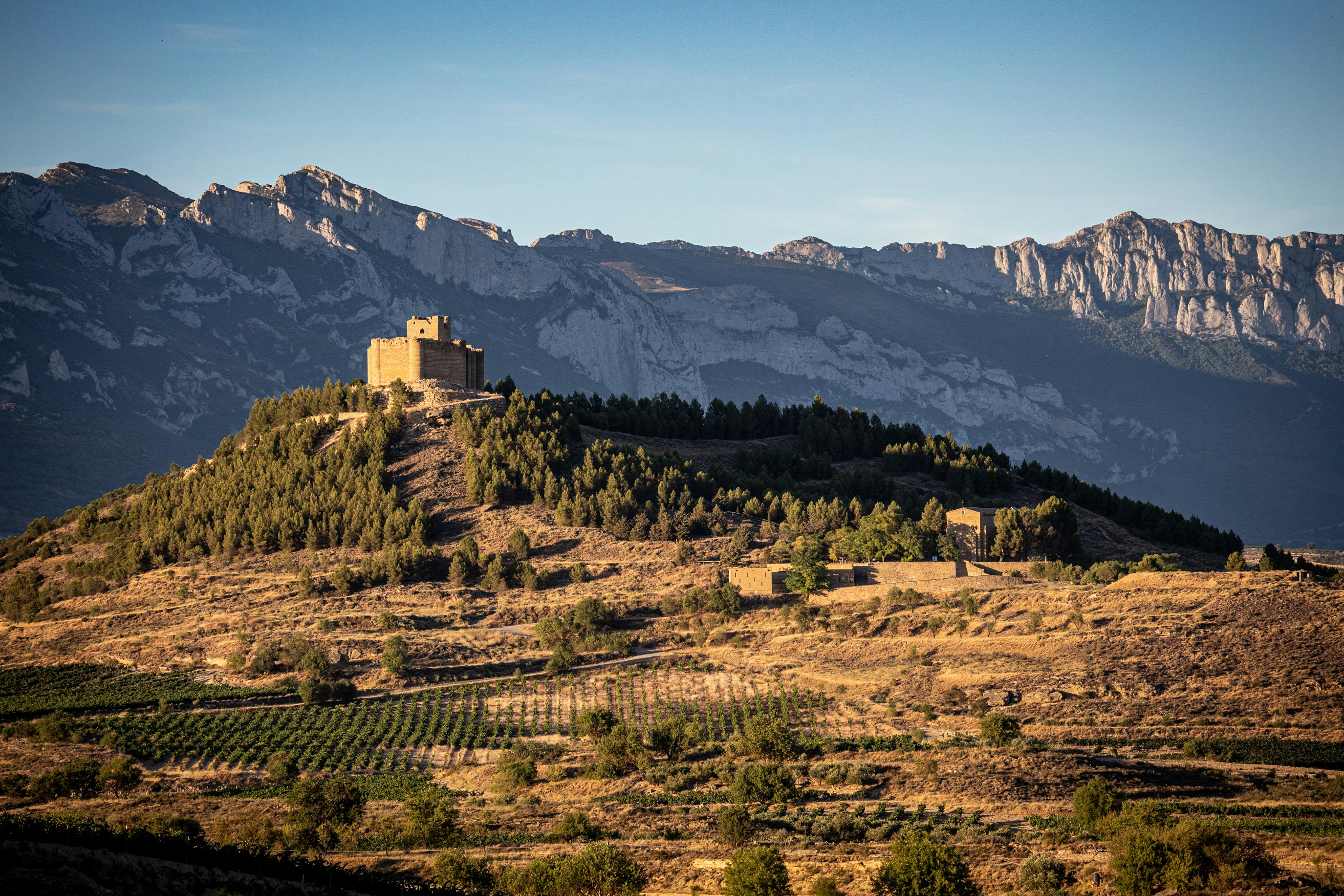
For decades, what Rioja printed on its labels — Crianza, Reserva, Gran Reserva — told you how long a wine had aged, not where it came from. In 2017, that changed. Rioja now has legal categories for wines that name their village or their specific vineyard, and for the first time, geography carries the same official weight as the clock.
Rioja Alta and Rioja Alavesa, the two cooler western sub-zones, have always produced wines with more structure and lift than the warmer, drier Rioja Oriental in the east. Before the reform, a blend drawing from all three could still call itself simply Rioja. New village-wine designations make that trade-off visible: a producer choosing to label under a single municipality is arguing that this particular place is worth more than the regional average.
That argument was already being made by Rioja's oldest houses. R. López de Heredia and Marqués de Murrieta have produced wines earning 100-point scores from multiple critics — not by chasing extract or fruit concentration, but by building around Tempranillo grown in specific parcels and aged on their own terms. What the reform does is extend that logic, and that language, to the rest of the region's nearly 2,000 wineries.
Viñedo Singular, the strictest new tier, requires vines of at least 35 years, hand harvesting, and yields well below standard DOCa limits. It creates a framework for separating the exceptional from the commercial — and it sits alongside the old aging categories rather than replacing them. Gran Reserva and declared single-vineyard wine can coexist on the same label; the systems are making different, compatible claims about quality.
Rioja
For the buyer, this changes what a Rioja label is willing to say. Gran Reserva from a named estate with a declared vineyard is not the same bottle as a category-labeled Crianza from a large blending house, even if both logged their legal minimum in oak. Rioja's geography was always there underneath; now the bottle is permitted to tell you about it.