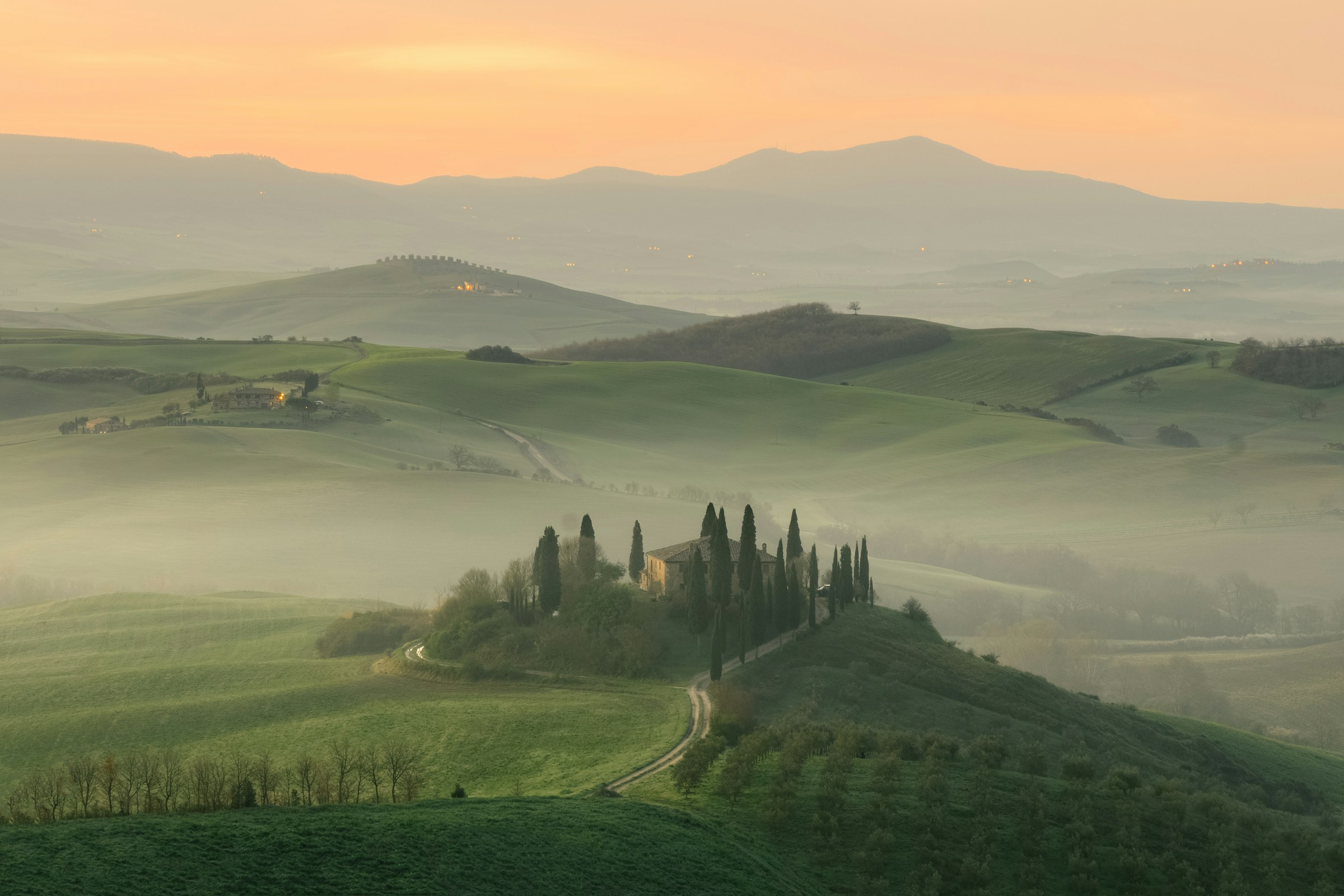
Tuscany has spent a decade quietly drifting toward riper, fleshier Sangiovese, vintage by vintage, as warmer summers pushed the harvest earlier and the fruit thicker. The 2021s now arriving on shelves break that pattern. The wines are lifted, fragrant, and built around acidity rather than weight — closer in character to the late-1990s reference vintages than to anything Tuscany has released since the mid-2010s.
The clearest signal is the new Brunello di Montalcino release, the first wines from the 2021 harvest to surface after five years of mandatory ageing. Decanter rated the vintage 4.5 out of 5 and reached for the same comparison most critics did: 1997, the era of fragrant, almost old-fashioned Sangiovese before the international-style push of the 2000s pulled the genre toward concentration and oak.
Toscana
What makes that surprising is that 2021 was not a cool year by any meaningful definition. It was warm and dry, with low yields and a slow, late ripening curve that landed the harvest in classical late-September territory rather than the August rush of recent hot vintages. The difference shows in the scores. Where the 2017 vintage averages 90.2 across the critics tracked here, 2021 lands at 91.2 — still half a step behind 2019's benchmark, but with a profile no recent vintage has matched.
Sangiovese is the spine of all this. The grape sits behind more than half of every Tuscan wine in the catalogue — 11,549 of them — and it is the variety most punished by heat. Its thin skin and aromatic top note flatten in hot years, which is why the rounder, jammier wines released since the late 2010s read as competent but anonymous beside the new bottles. The 2021 release shows that even a warm, dry growing season can keep the grape in its classical register if the ripening curve stays long enough.
The pattern is not confined to Montalcino. Chianti Classico and the other Sangiovese DOCGs show the same lifted aromatics and harder, finer tannins in 2021, which means the vintage logic carries across Tuscany rather than belonging to one appellation. For buyers facing a shelf with 2017s, 2019s, and 2021s side by side, the rule for the next two years is simple: 2019 for power, 2021 for fragrance, 2017 only from producers whose names you already trust.