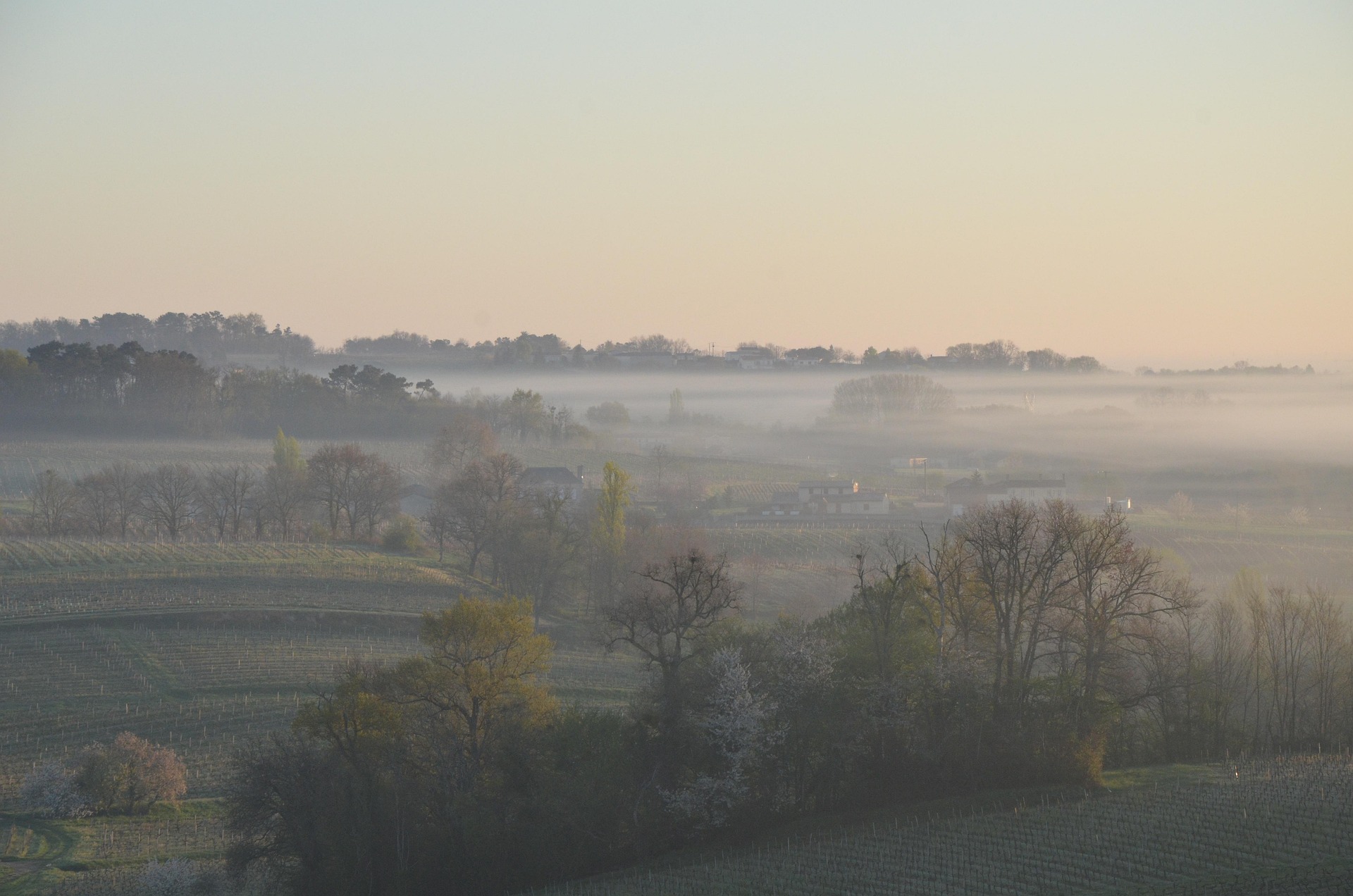
Bordeaux blends and Burgundy does not, and almost everybody files that under taste. It belongs under weather. Bordeaux sits on the Atlantic, where rain turns up at harvest without notice and a spring frost can strip a crop before anyone has picked a grape. Burgundy is continental and much further from the sea. One of those places needs a hedge and the other largely does not.
The hedge is built into what gets planted. Merlot flowers and ripens roughly two weeks ahead of Cabernet Sauvignon, so a wet September that ruins one has often spared the other. Petit Verdot ripens later still and only comes good in hot years, which is exactly why it survives in the blend at all. A grower who planted a single variety in the Gironde would be staking a full year's income on one fortnight of weather.
Bordeaux
Femente's own numbers show how completely that logic won. Across Bordeaux, 84 percent of wines carry more than one grape. Across Bourgogne the figure is 4 percent. Same country, same few centuries of winemaking, opposite answers, and the line between them is drawn by rainfall.
The blend also gets assembled after the fact, which is the part most people miss. Each variety is picked and fermented separately, and the decision about proportions happens the following spring, once the winemaker knows what every lot actually tastes like. That is why the ratio moves so much from vintage to vintage at the same estate: the proportions are chosen once the year is already known.
Which turns the usual comparison around. Burgundy's single grape is not a purer idea about wine. It is the luxury of a place where one variety reliably gets ripe. Bordeaux's blend is not a compromise on purity either. It is a working farmer's answer to an unreliable coast. Put the Atlantic off the Côte d'Or and Burgundy would blend too.