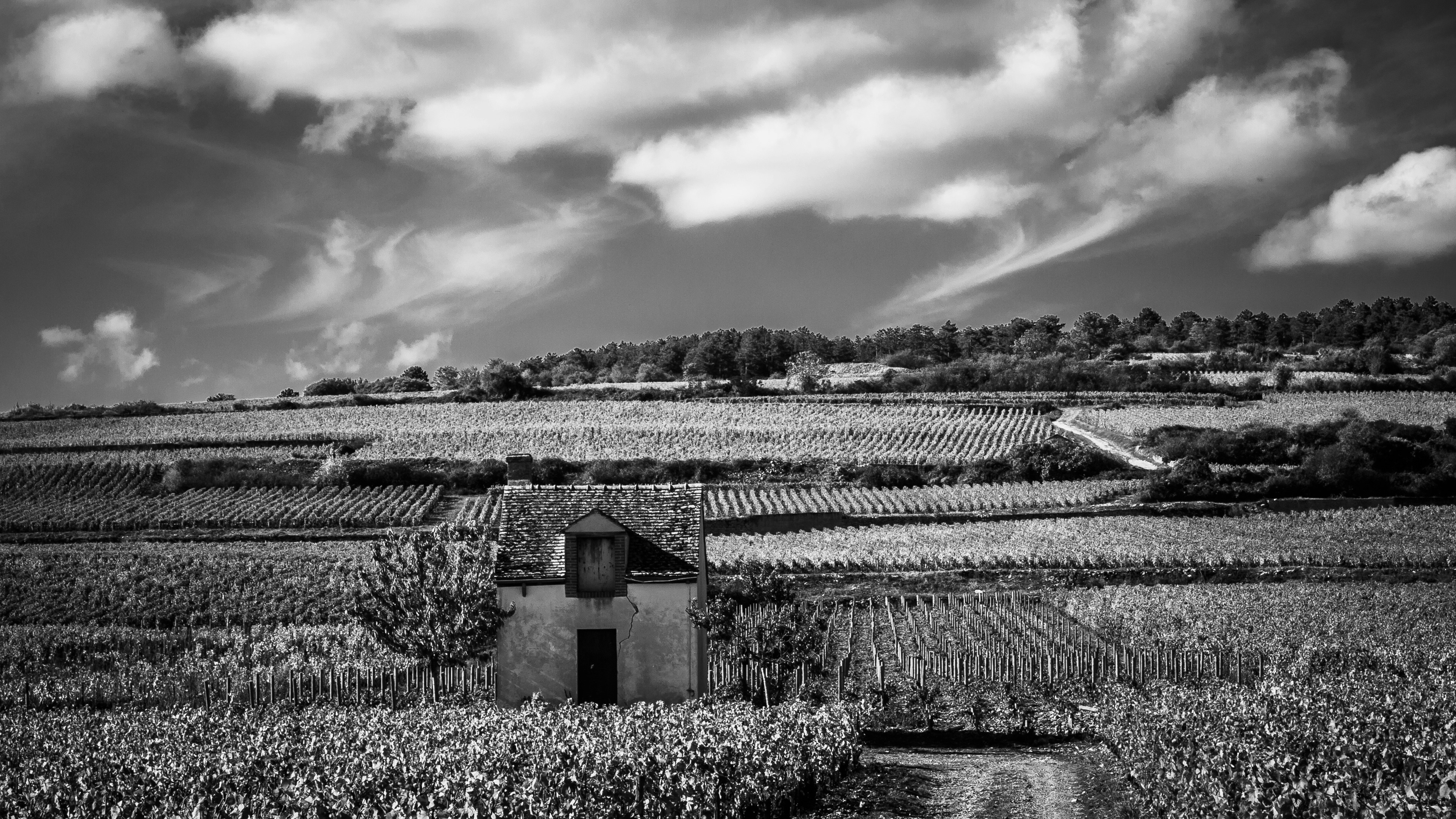
Grilled chicken is the test case for the "white or red?" question. Sommeliers split on it. The honest answer is that both work, but for different reasons and with different chicken. Grilled chicken sits in the middle of the pairing spectrum: leaner than steak, richer than fish, with smoke and char on the skin that need a wine with enough backbone not to disappear. Four directions handle the assignment: oaked Chardonnay, southern Rhône whites, light Pinot Noir, and chilled Gamay. Which one wins depends almost entirely on the marinade.
Oaked Chardonnay: for char and butter
When grilled chicken is the centrepiece of the meal (bone-in thighs over hot coals, basted with butter or olive oil, simple salt-and-pepper seasoning) the wine has to match the char without being overwhelmed by the protein. Oaked Chardonnay is the structural answer. The wood influence echoes the smoke from the grill, the wine's body matches the meat's protein density, and the malolactic richness reads as butter-on-butter.
From Bourgogne, Meursault is the textbook pick: rich enough to stand up to char, mineral enough not to flab out, with the producer infrastructure to deliver consistency at the village level. Domaine Coche-Dury is the prestige peak (Coche's Meursault routinely scores in the high 90s and ages 20+ years); Domaine des Comtes Lafon is the structural equal at slightly more accessible prices; Domaine Henri Boillot covers the Meursault-and-Puligny stretch at the high-end-but-available tier. Puligny-Montrachet is the lighter, more linear option; Chassagne-Montrachet sits between them. From the New World, Sonoma Coast and Russian River Chardonnay give a bigger, fruitier expression at lower prices: Aubert and Peter Michael are the prestige Sonoma names whose modern style has pulled back from the over-oaked 2000s norm, and the wines now genuinely pair with food rather than dominating it.
The trap is the over-oaked New World Chardonnay from before about 2015. If the wine smells of vanilla, popcorn, or coconut, it has too much wood to pair with subtly seasoned grilled chicken; the wine will eat the food. Stick to producers with restraint or to Burgundy.
Southern Rhône whites: for herbs and lemon
When the chicken is marinated (rosemary, thyme, oregano, lemon, garlic) the pairing pivots toward the southern Rhône blancs. Châteauneuf-du-Pape blanc, white Côtes du Rhône Villages, and the broader white-Grenache / Roussanne / Marsanne / Clairette family share an herbal garrigue character that maps directly onto Mediterranean marinades. The match isn't subtle: the same wild rosemary that grows in the vineyards is on the chicken.
These wines are structurally white-Rhône in style: medium-bodied, low to moderate acid, with stone-fruit and herb aromatics rather than citrus. They're built for food, not for sipping on their own, which is why they get under-ordered in restaurants, and why they're often the best value in any serious Rhône-region list. White Châteauneuf is the prestige play; white Côtes du Rhône Villages at €15-20 is the everyday version that does 80% of the same work.
Light Pinot Noir: for the red drinkers
If you want a red with grilled chicken, the question is which red. The answer is a light, fruit-forward, low-tannin Pinot Noir, and almost nothing else. White meat doesn't need tannin grip; it needs fruit and acid, and Pinot Noir is the only red grape that reliably delivers both without the structural weight of a Cabernet or a Syrah.
A village-level red Burgundy is the canonical pick. Mercurey, Givry, Marsannay, and Santenay are the value end of the Bourgogne hierarchy and the practical fit for grilled chicken. Premier Cru and Grand Cru Burgundy is structurally overkill for the food and an expensive way to pair down. Maison Roche de Bellene and Louis Jadot are the négociant names that produce serious village-level wines at the right price tier. The prestige play, when you want to drink up the hierarchy, is anything from Domaine Leroy, but you're paying Grand Cru money for grilled chicken food, which is the kind of thing you do once. Oregon Pinot Noir is the New World alternative; the Willamette Valley climate produces wines with a similar profile, generally riper but still in the low-tannin, fruit-forward family. Cristom, Bethel Heights, Patricia Green Cellars, and Martin Woods are the established names. We covered the cross-regional variation in Pinot Noir, Three Accents: the regional spread is the most useful axis to navigate this grape by.
Chilled Gamay: the BBQ wildcard
The wildcard pick: a Beaujolais cru (Morgon, Fleurie, Moulin-à-Vent, Brouilly) served slightly chilled, around 14°C. Gamay is the lightest serious red grape in the European canon, with high acid, soft tannin, and fruit that ranges from cherry through to dark berry depending on the cru. Slightly chilled, the wine refreshes between bites like a sparkling does for fried chicken; warm-room-temperature, it pairs more like a Pinot Noir.
The specific use case where Gamay wins is BBQ-style grilled chicken: sweet marinades, smoky char, sticky sauce. The wine's natural fruit lifts the food rather than fighting the sweetness, and the chilling keeps it refreshing through a long, casual meal. Morgon is the structural pick if you want a Gamay with some weight; Fleurie if you want the lighter, more aromatic style.
The marinade matrix
The cleanest decision framework for this pairing is the marinade, not the cooking method. A short matrix worth memorising:
- Lemon, herbs, olive oil (Mediterranean) → southern Rhône blanc
- Garlic, butter, salt (simple grill) → oaked Chardonnay (Meursault, Sonoma)
- BBQ, sweet glaze, smoke → chilled Gamay (Beaujolais cru)
- Soy, teriyaki, ginger → off-dry Alsace Riesling or Gewürztraminer
- Yogurt, spice, tandoor → fruit-forward Grenache (see our Indian food pairing piece)
- Plain salt and pepper, prestige meat → village or Premier Cru red Burgundy
This is more useful than the "white meat = white wine" rule, which is too coarse to predict what actually works.
Where to start
For the weeknight grilled-chicken-and-salad option: a white Côtes du Rhône Villages or a Mâcon-Villages Chardonnay, both €12-18, both built for casual dinner food. Either handles a herb-marinated chicken with no fuss.
For a step up: a Saint-Aubin or Saint-Romain Chardonnay (the value end of serious Burgundy, €30-50) for simple grilled chicken, or a Morgon Beaujolais for BBQ-style.
For the prestige meal: a Domaine Coche-Dury Meursault for plain grilled chicken with sides; a village-level red from Domaine Leroy or any of the named Willamette Valley producers above for herb-marinated.
For the cooking-method contrast, see Wines That Pair With Fried Chicken: same protein, completely different pairing logic. For the protein-density contrast, Wines That Pair With Steak shows where the heavier reds belong.