2018 is the year wine writers point at when they want to talk about climate change in concrete terms. It was the warmest growing season in living memory across most of continental Europe. Heat domes, drought, harvest dates a month earlier than the textbook. We pulled the climate record and the prestige-critic ratings for six regions (Burgundy, Bordeaux, Mosel, Tuscany, Rioja, Champagne) and walked the vintage end to end. The story is not what the headlines suggested. The heat hit unevenly. The bottles did too.
What 2018 actually was
Across the six regions, 2018 was the warmest growing season in five of them. The Mosel had its warmest summer in 80+ years of continuous record. Tuscany was the hottest of the six in absolute terms. Burgundy had its deepest drought of the modern era. Bordeaux ran two scorching days. Champagne we have no climate file for in 2018. A gap we'll come back to. The exception was Rioja, which barely registered the heat at all.
The prestige-critic averages (Wine Advocate, Decanter, Wine Spectator, Wine Enthusiast, Falstaff) landed within a tight band: 89.4 (Rioja, lowest) to 92.5 (Champagne, on a small sample). The biggest sample of all came from Tuscany: 37,517 prestige-critic ratings on 2018 wines, more than the other five regions combined.
Burgundy: the highest average
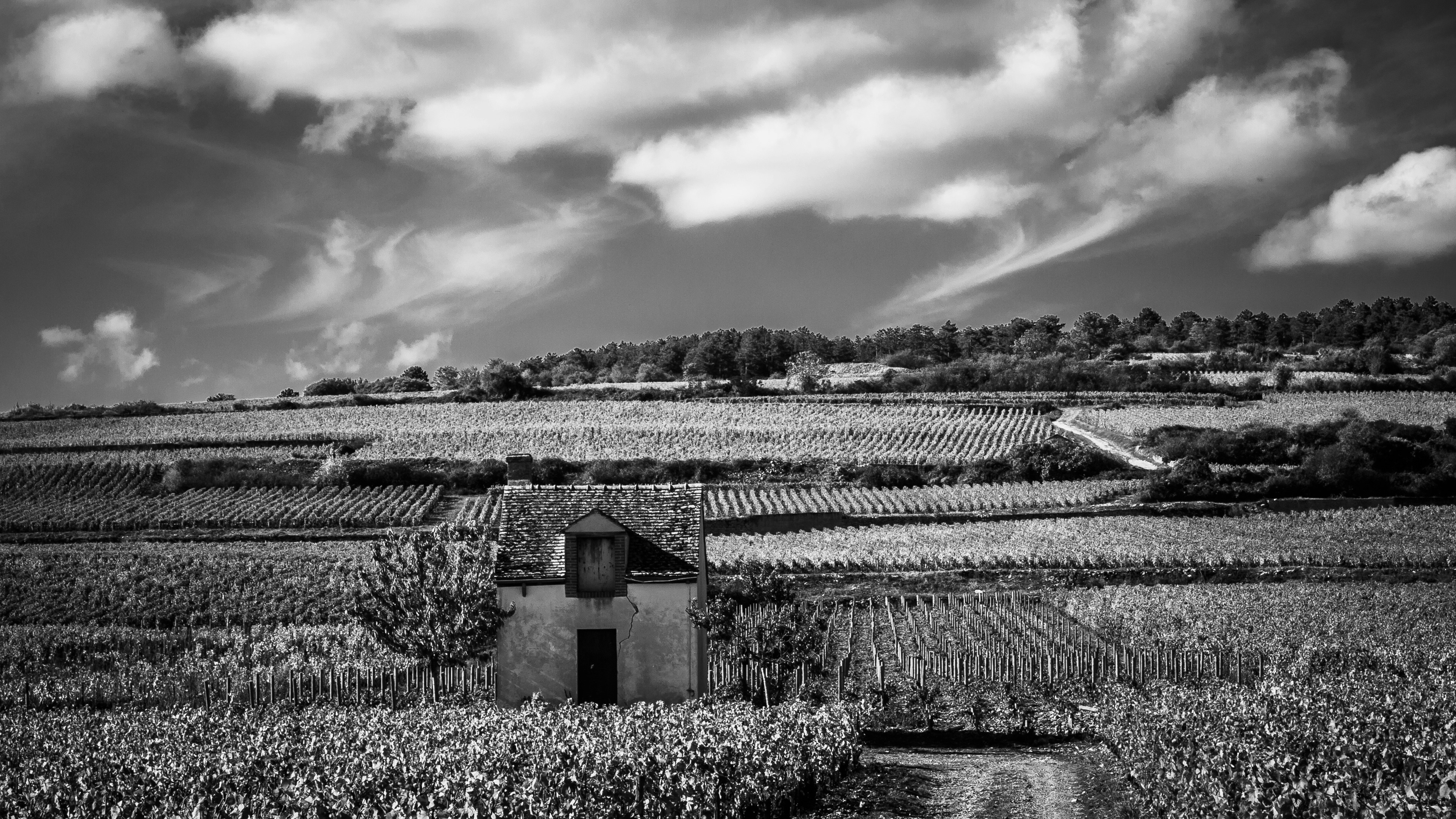
The big sample story belongs to Burgundy. 12,063 prestige-critic ratings on 2018 wines averaged 91.5, the highest of any region with a sample over a thousand. The summer was the warmest the region had recorded in our modern window, with the deepest drought to match. Pinot Noir does not love this combination on paper, and yet on the data it worked.
The standard-bearer at the top: Maison Roche de Bellene's Chambertin Grand Cru, scored 100 by Wine Advocate. The Burgundy producers who picked early enough to keep acidity intact were the ones who delivered. Late pickers got hot wines, the same producer-skill split we saw in the Mosel's 2003.
Bordeaux: textbook ripeness, two scorching days
Bordeaux had a notably warm summer for the region, well above the typical Bordeaux benchmark, but the rain pattern saved it. 404 mm of rainfall arrived between bud-break and harvest, a respectable total that softened what would otherwise have been a dry-stress year. Two days exceeded the heat threshold, but neither came at flowering or veraison.
Château Haut-Brion's 2018 Le Clarence de Haut Brion, the second wine of the First Growth, pulled 100 from Wine Advocate. The 2018 vintage prestige average for Bordeaux landed at 90.1 across 2,308 ratings: solid, classical, the kind of vintage Bordeaux's blending tradition is engineered to handle.
Mosel: warmest in 80 years, sweet wines on top
The Mosel's 2018 was its warmest growing season in eighty-plus years of continuous record, and its deepest drought ever. Riesling, the region's only serious grape, would historically have struggled: too much sugar, not enough acid, the structural identity of the region under threat.
The 2018 prestige average came in at 90.2 across 1,862 ratings, almost a full point above the 2000-2014 baseline. The vintage at the very top is a sweet wine: Selbach-Oster's Zeltinger Sonnenuhr Trockenbeerenauslese, scored 100 by Wine Advocate. The 2018 heat that should have wrecked the Mosel produced one of its most rated TBA bottlings on record. Late-harvest sweet Riesling needs the heat the region rarely gets; 2018 supplied it.
Tuscany: the hottest, the most-rated
Tuscany was the absolute hottest of the six: its growing season was the warmest the region had recorded in our window. Five scorching days, deep drought, sustained heat through August and September. Sangiovese is more heat-tolerant than Pinot or Riesling but not infinitely so.
The Tuscan critic sample for 2018 is enormous: 37,517 ratings, more than every other region combined. The prestige average landed at 90.1. Tuscany has by far the biggest indexed wine catalog in our six; the vintage simply produced a lot of wines, and most of them landed in the high 80s and low 90s. The top: Brancaia's Cabernet Sauvignon, a 99 from Wine Advocate. Notable that the top Tuscan 2018 in the prestige tier is a Cabernet, not a Sangiovese. The international varieties handled the Tuscan heat better than the native one.
Rioja: the region the heat skipped
The 2018 outlier. Rioja's growing season was cooler than its own historical average. Rainfall came in at 568 mm, the highest of the six. The vines almost matched evaporation, ending the year in near-balance. No scorching days. While the rest of Europe broiled, the wider Atlantic-influenced climate of northern Spain stayed measured.
The prestige average came in at 89.4 across 1,394 ratings, the lowest of the six, but for the opposite reason. Rioja didn't get hammered by heat, but it also didn't get the ripening uplift that gave Burgundy its 91.5. The 2018 top pick: Dominio de Berzal's Graciano, 99 from Wine Advocate. A small-yield, late-ripening grape that benefits from the long mild season Rioja got that year.
Champagne: no climate file, big numbers
Champagne is our data gap. The Femente record has no ClimateYear entry for the region in 2018: either the source dataset didn't reach this far north or the data wasn't ingested. We can't say anything about the weather there.
What we can say is that the prestige critics rated 2018 Champagne at an average of 92.5 across 114 ratings. The sample is small (vintage Champagne is rarely declared, most bottles are non-vintage) but the rating is the highest of any region in this comparison. The top: Roses de Jeanne's RDJ No 01, a 100 from Wine Advocate. A small grower-producer Champagne, vintage-dated, single-cuvée.
What the divergence tells us
Two things stand out. First: heat is not a single dial. Tuscany's 2018 was 60% hotter than Rioja's by every measure we have, despite both regions sitting on the Mediterranean perimeter. Climate change is not uniform; geography still mediates it.
Second: the wines that rose to the top in each region were not the regions' usual flagships. Tuscany's 2018 top is a Cabernet, not a Sangiovese. The Mosel's top is a sweet TBA, not a dry Trocken or classic Auslese. Burgundy's standard-bearer is a Grand Cru Pinot Noir from a producer not always among the headline names. The heat scrambled the usual hierarchy. The vintage that rewarded the typical producer style was rare. The vintage that rewarded the adaptable producer was 2018.
Where to start
Three 2018 entry points, three different stories.
From the highest-rated, Maison Roche de Bellene's Chambertin Grand Cru, 100 from Wine Advocate, the Burgundy heat-vintage that worked. From the most-rated, Brancaia's 2018 Cabernet Sauvignon, 99 from Wine Advocate, the Tuscan vintage in international hands. From the unexpected, Selbach-Oster's 2018 Zeltinger Sonnenuhr Riesling Trockenbeerenauslese, 100 from Wine Advocate, the German sweet wine that the heat made possible. Three bottles, one summer, three completely different ways the same weather wrote a wine.