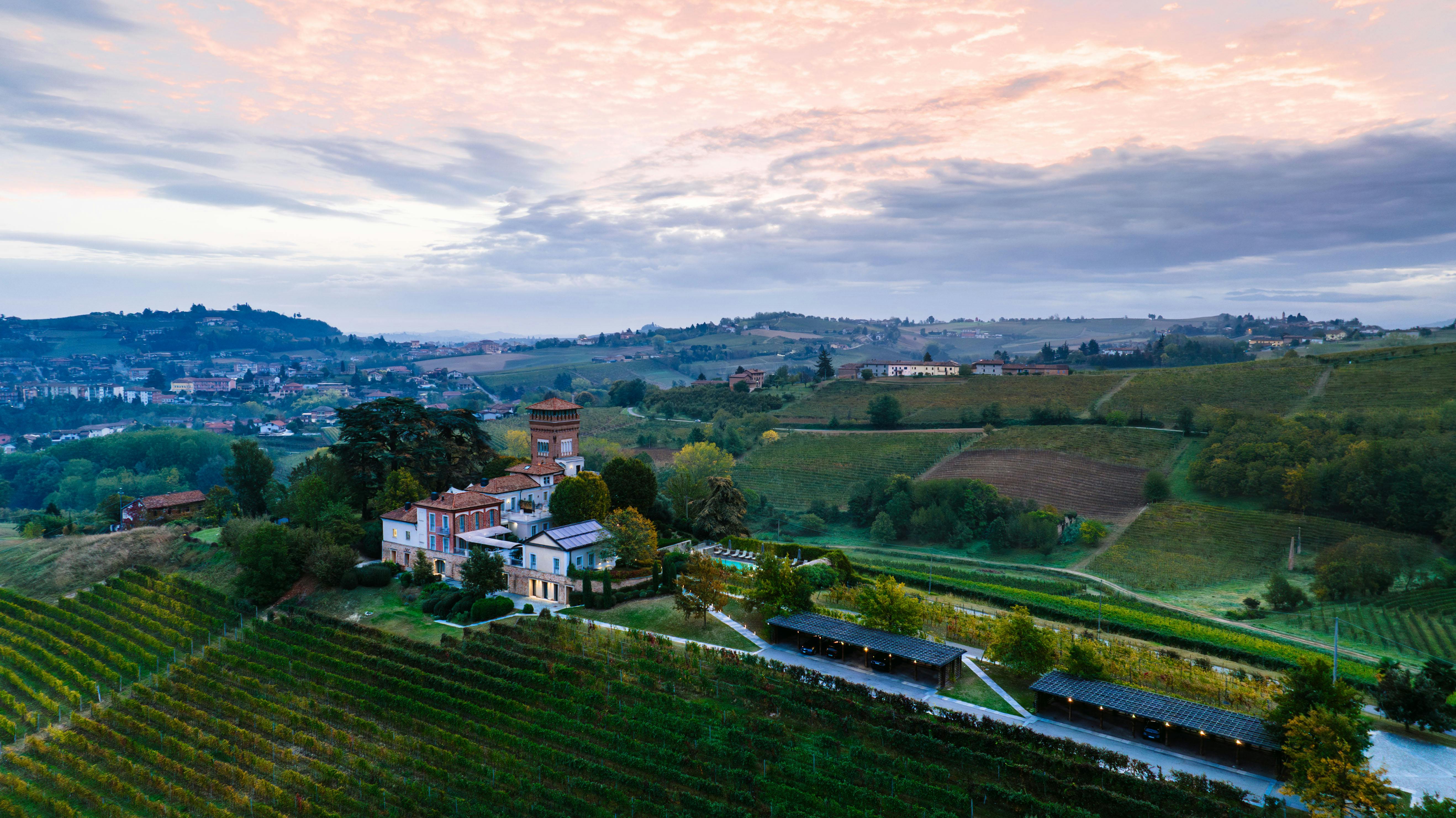
The World's 50 Best Vineyards is the most-cited wine-tourism ranking in the industry, and the only major wine list that doesn't judge wines. It judges the experience of visiting the estate: the hospitality, the tasting setup, the architecture, the food, the access to the vineyards themselves. That makes it structurally different from every other wine ranking in the world, and worth understanding on its own terms before treating it as a guide to anything.
The headline pattern is consistent across editions: heavy Italian, Spanish, Argentine, and South African representation. Modest French presence. The same names tend to recur in the top ten year after year: Bodegas Garzón in Uruguay, Catena Zapata in Argentina, Marqués de Riscal in Rioja, Antinori in Tuscany. The list rewards consistent excellence in the visitor experience, which is itself a strategic investment that takes a decade to build properly.
How the list is made
The voting structure is the first thing to understand. Roughly 500 voters (wine journalists, sommeliers, tour operators, and travel writers) are organised into about 20 regional academies covering all major wine continents. Each voter picks up to seven estates they have personally visited in the previous 18 months and ranks them in order. The lists are anonymised, audited by an external accounting firm (the same auditing model the World's 50 Best Restaurants list uses), and aggregated into the published ranking. The list is refreshed annually, usually announced in November.
The rules are designed to prevent the worst gaming. Voters can't vote for estates they have any financial interest in. Self-nomination is forbidden. Voters from a given country are explicitly restricted from over-voting for their home country's wineries. The voter rotation refreshes a meaningful percentage of the academy membership every year, which is meant to prevent the list from ossifying around the same names.
But the structural bias is unavoidable: voters can only vote for estates they have visited. An estate that doesn't open to the public, or that books out 18 months in advance, or that requires trade introductions, can't be voted for by most of the academy. The list is therefore structurally a ranking of visitable wineries, not great wineries. The two overlap but only partially.
The judging axis is also explicit. Voters are asked to consider hospitality, food and tasting quality, value, vineyard tours, architecture, and overall memorability. Wine quality is on the list of considerations but is weighted equally with the rest, and the assumption is that any winery on the list is at least competent at producing wine, which excludes the bottom tier but doesn't distinguish among the prestige tier.
The shape of the list
Every edition since 2019 has shown roughly the same regional shape. Italy and Spain typically supply 12-18 of the 50 between them. South America (Argentina, Chile, Uruguay) supplies another 8-10. South Africa supplies 4-6. Australia and New Zealand combined supply 3-5. The United States (Napa, Sonoma) typically supplies 3-5. France, despite being the world's largest prestige-wine producer, typically supplies only 3-6.
The Italian dominance has structural reasons. The country's wine tourism infrastructure is the most developed in the world. The Antinoris, the Frescobaldis, the Tenuta San Guido (Sassicaia), and the Avignonesi-tier producers built tasting rooms, hotels, and visitor experiences in the 1990s and 2000s as part of broader luxury-brand strategies. The Tuscan agriturismo model is now the global template for wine-region hospitality. The Bolgheri coast specifically (where prestige Cabernet-Merlot blends meet beachfront infrastructure) has produced several of the modern reference points for wine tourism; in our index, Biserno (Lodovico Antinori's coastal project), Masseto (the Merlot icon), and Tenuta di Trinoro (Bordeaux-blend in the wilder hills inland) sit at the prestige-critic peak of that cluster. From Toscana more broadly, Soldera is the canonical Brunello prestige name, and Brancaia, Talenti, Renieri, and Poggio Landi sit in the established Chianti Classico and Brunello tiers.
Spain shows a similar pattern, anchored by Marqués de Riscal in Rioja (the Frank Gehry-designed hotel and tasting facility), the Ribera del Duero estates (Vega Sicilia, Pingus), and the newer wave of Priorat producers. The Catalan Penedès wineries (the major Cava houses) have been wine-tourism destinations for decades.
South America's strong showing is a function of estate scale and architectural ambition. Argentine and Chilean wineries are typically large, well-funded properties (often family-owned conglomerates) that built modern visitor facilities from scratch in the 2000s and 2010s. Bodega Garzón in Uruguay, Catena Zapata in Mendoza, and the Casa Lapostolle clos in Apalta are the canonical examples: each is an architectural destination as well as a wine producer.
The French puzzle
The structural absence on the list, and the one that says the most about how the ranking actually works, is France. The world's most prestige-rated wine country, the source of the largest share of perfect-100 scores in our index (see The 100-Point Club), is consistently under-represented at the top of the visitor list.
The reason is cultural and structural rather than aspirational. French prestige producers (especially in Burgundy) are mostly small family estates, often farming under 10 hectares, with no real tasting-room infrastructure. The historical visitor model in Burgundy is trade-only: a wine buyer or sommelier arranges a visit through their importer, the estate opens a few bottles in a working cellar, the visit lasts 90 minutes, and the wine geek goes home. There is no architecture, no food, no formal hospitality program. The voters can't easily visit these estates as general consumers, so the estates rarely appear on the list.
Bordeaux is structurally different (the First Growth estates do receive consumer visitors and have invested in tasting facilities) but the Bordeaux properties that do receive consumer visitors tend to be the second-tier producers, who don't have the wine prestige to push them into the top 20. The First Growths themselves are notoriously hard to visit; you generally need a trade introduction to walk into Château Lafite or Château Margaux. Château Haut-Brion (covered in our 2018 Vintage Across Europe piece) is the most accessible of the First Growth properties for consumer visits and the cleanest example in our index of a Bordeaux estate that does both prestige wine and prestige hospitality.
Champagne is the French exception. The major Champagne houses (Moët, Veuve Clicquot, Taittinger, Pol Roger) all run mature visitor programs out of their Reims and Épernay headquarters, and they appear on the list with reasonable regularity. The grower-Champagne producers (the artisan tier that produces most of the interesting Champagne) generally don't.
The pattern is worth understanding because it tells you what the list is and isn't. The list is not a guide to "the world's best wines." It is a guide to "the world's best wine visits", and the world's best wines are often made by people who don't have any interest in hosting visits.
How to use the list
Treat the World's 50 Best Vineyards as a planning tool for a wine-region trip, not as a buying guide for a cellar. For trip planning, the list is genuinely useful: these are estates that have invested seriously in the visitor experience and are unlikely to disappoint. The architecture is real, the tasting flights are professionally structured, the food is good, the booking systems work in English.
For cellar building, cross-reference against the prestige-critic ratings instead. Some of the highest-rated wineries in our index never appear on the World's 50 Best list because they don't open to the public; some of the World's 50 Best wineries are at the mid-tier of prestige scoring rather than the peak. The overlap is real but smaller than the visitor-list framing suggests.
The smart move for a serious wine traveller is to use both lists in combination. Use the World's 50 Best for the day-anchor visits: the ones where you book 6-12 months in advance, plan the whole day around the appointment, and treat the visit as a destination. Use the prestige-critic data and the local trade introductions for the smaller producers in the same region: the ones that don't appear on any visitor ranking but whose wines actually fill the cellar.
What the list overlaps with
The list overlaps non-trivially with several patterns we've covered elsewhere. The Italian dominance shows up clearly in our Tuscany Wine Tour Guide: the Antinori, Frescobaldi, and Banfi properties that anchor that region also anchor the Italian section of the 50 Best every year, alongside the Bolgheri prestige cluster (Biserno, Masseto, Tenuta di Trinoro) in our index. The Portuguese contingent is anchored by the Douro producers: Quinta do Noval and Niepoort, both of whom run serious visitor programs at their Pinhão-area quintas alongside their prestige Vintage Port production, covered in our Douro Valley Wine Tour piece. The Argentine and Chilean cluster overlaps with the Apalta-and-Mendoza producers we covered in 10 Underrated Wine Regions: these are climbing prestige regions whose producers also invested in visitor infrastructure as part of their broader reinvestment. The Spanish cluster overlaps with the climbing-region data discussed in Regions on the Rise: Priorat, Rías Baixas, and the modern Ribera del Duero estates have all moved structurally upward on both the prestige-critic axis and the visitor axis simultaneously.
The Napa cluster shows up too: Hundred Acre and Abreu sit at the prestige peak of the Napa Cabernet hierarchy, both with serious visitor programs at their valley-floor estates (Napa Valley is the regional anchor). The pattern across all the overlaps: climbing producers often invest in visitor infrastructure as part of their broader reinvestment cycle. Replanted vineyards and new winemaking equipment are accompanied by new tasting facilities and hotel partnerships, because the same generational handover that produces better wine also produces better hospitality. The 50 Best list and the climbing-producer list aren't measuring the same thing, but they're both measuring downstream effects of the same upstream investment.
Where to start
For a long-weekend wine-region trip built around 50 Best estates: pick a region where 2-3 estates from the list cluster geographically. Tuscany (Antinori's Bargino estate, Frescobaldi's Castello di Nipozzano, and the Bolgheri cluster, Biserno, Masseto, Tenuta San Guido, Tenuta dell'Ornellaia, on the Tuscan coast) is the textbook choice; see our Tuscany Wine Tour Guide for the broader regional plan. Rioja with Marqués de Riscal as the anchor is the Spanish equivalent. Mendoza with Catena Zapata, Bodegas Salentein, and Zuccardi gives the South American option. For Portugal, the Douro makes for a strong long-weekend with Quinta do Noval and Niepoort as the anchor visits: covered in our Douro Valley Wine Tour.
For a one-time trip-of-a-lifetime: Bodega Garzón in Uruguay: the architectural and gastronomic peak of the list, isolated enough that the visit is its own destination, paired with the broader Punta del Este coast. Or Catena Zapata in Mendoza: the pyramidal-temple winery, the Adrianna Vineyard tour, the Andean backdrop.
For a day-trip from a major city: Marqués de Riscal in Rioja (Frank Gehry hotel attached, two hours by train from Madrid), the major Champagne houses (Reims is 45 minutes from Paris by TGV), or the Sonoma cluster (Schramsberg, the Hess Persson Estates' Stags' Leap property, 90 minutes from San Francisco).
The booking lead times for the top estates run 6-12 months in popular months (April-June, September-October). The wine-region shoulder seasons (March and November) are easier to book and often a better experience anyway: the staff have more attention to give, the crowds are smaller, and the vineyards in late autumn or just after bud-break are at their photogenic peak.
For the prestige-wine context the list itself doesn't capture, see The 100-Point Club for the producers whose wines score at the absolute peak (most of whom don't appear on the visitor list) and Wineries on the Rise for the producers whose recent reinvestment is most likely to lift them onto future editions of the 50 Best.