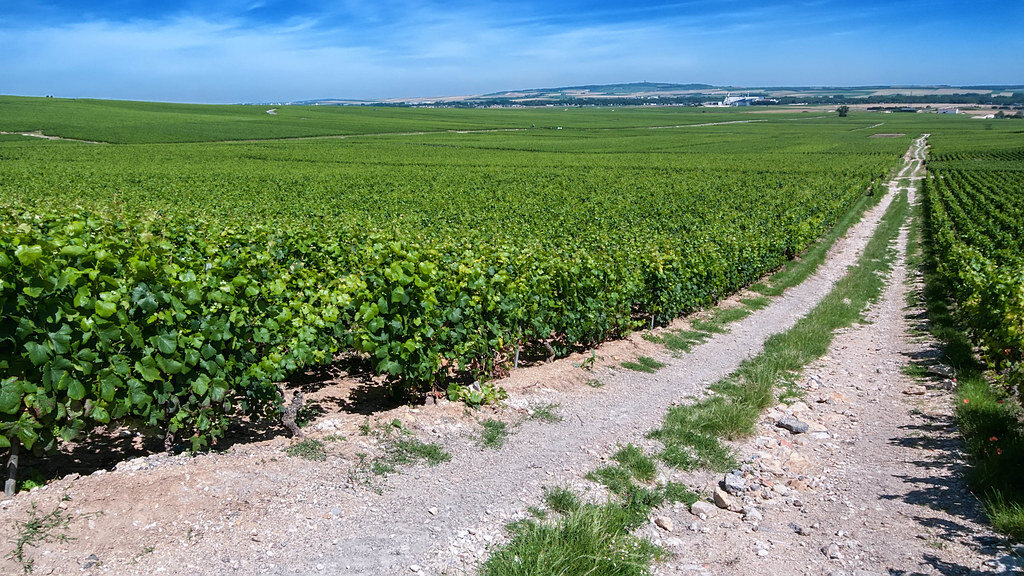
Champagne is the only wine region that runs a legally mandated emergency fund, and this is the year it earns its keep. Frost in spring, a June heatwave, then a dry stretch that ran into picking: this year's crop came in roughly half the size of the last one. Shelves will not empty. That is not luck, and it is not the weather being kinder than the headlines suggest.
The instrument is the réserve individuelle, and it behaves like a grain silo for wine. In generous years growers press more fruit than the appellation lets them sell, and the surplus goes into tank as still base wine, held under the appellation's authority rather than the grower's. The ceiling sits at the equivalent of 10,000 kilos of grapes per hectare, which is close to two whole harvests of stored insurance. Nobody draws on it privately. The CIVC, the trade body that runs the appellation, decides when the reserve opens and by how much.
What makes this year strange is that Champagne had already decided to shrink. Growers and houses cut the marketable yield before the weather did anything to them, the fourth year running they have done so, because the region has been selling less wine. Shipments slipped to 266 million bottles in 2025, a third consecutive annual fall from the post-pandemic high. A short crop reads very differently in a region trimming supply than it would in one trying to expand.
Champagne
Reserve wine was never only a safety net. It is the reason non-vintage Champagne tastes like itself from one release to the next, and the serious houses treat the stock as a library rather than a buffer. Krug holds a bank of individual base wines going back decades and builds Grande Cuvée out of them. Charles Heidsieck leans on a reserve component old enough and large enough that Brut Réserve reads as a vintage wine in everything except the label. For a house like that, a thin harvest is a withdrawal from a very deep account.
Krug
Growers who bottle their own fruit stand somewhere else entirely. A house buying across the whole appellation can spread a bad year thin. A vigneron farming a handful of parcels in one village has nothing to spread it across. Cédric Bouchard at Roses de Jeanne makes single-parcel wines from single vintages and keeps no blending reserve by design, which is the whole argument of the wines. In a generous year that choice reads as purity. In this one it reads as exposure.
So the reserve buys time rather than immunity, and it buys it for the bottle most people actually drink. Vintage Champagne gets no cushion at all. It can only be made from the year printed on the label, and it sits on its lees long enough that the verdict arrives late. Femente's critic data puts 2012 at the top of the past decade in Champagne. Whether 2026 ends up anywhere near them has nothing to do with the reserve and everything to do with what the halved crop tasted like in tank. We find out around 2033.