Cédric Bouchard makes Champagne by taking things away. He blends nothing: not villages, not vintages, not grape varieties. He adds no dosage, uses no oak, and neither fines nor filters. Champagne as a category was built on the opposite instinct, which is assembling a consistent house style out of hundreds of separate lots, and Bouchard has spent every year since founding Roses de Jeanne in 2000 pulling those levers out one at a time.
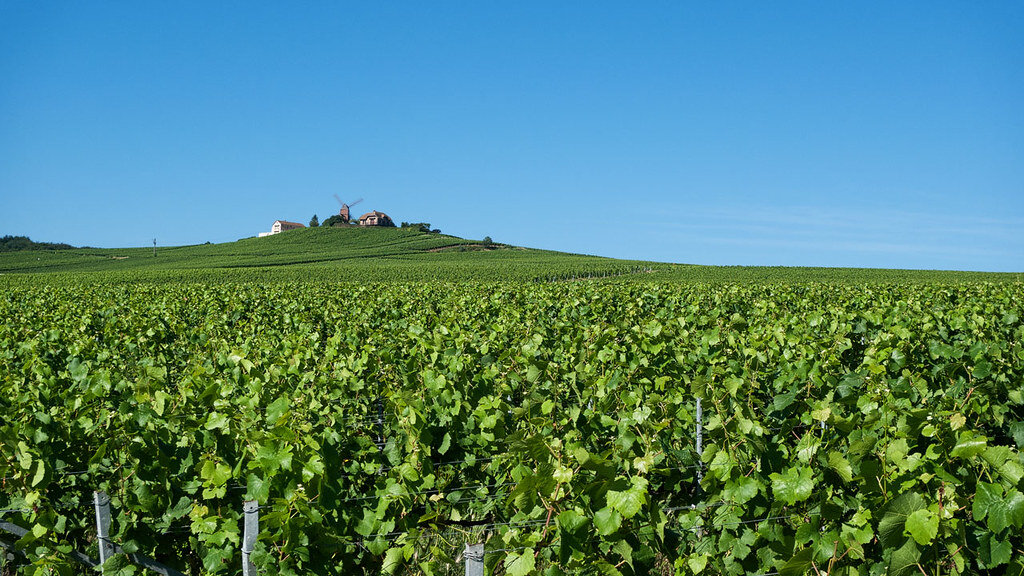
His vines sit around Celles-sur-Ource in the Côte des Bar, the far southern end of Champagne that spent most of the last century growing fruit for the big houses rather than putting its own name on a label. The holding runs to roughly four hectares. The parcel that made his reputation is next to his parents' house, planted by his father in 1974 on the same band of limestone that surfaces again under Chablis, an hour further south.
Roses de Jeanne
The wines come in around twelve and a half percent alcohol and at lower pressure than a standard Champagne, which is a decision rather than a shortfall. Less gas means the texture reads as wine first and sparkling wine second. Wine Advocate gave RDJ No 01 from 2018 a perfect hundred, for one parcel of Pinot Noir, undosed, off a village most drinkers could not find on a map.
That the subtraction works has a great deal to do with where he stands. A grower in Aÿ walking away from blending would be abandoning an asset that took generations to build. In the Côte des Bar there was no house style to protect and no grand cru ranking to forfeit, so the only thing left worth selling was the parcel itself. Bouchard did not reject Champagne's system so much as begin outside it and then decline the invitation in.