Germany's ripeness ladder describes the harvest, not the wine. Kabinett, Spätlese and Auslese record how much sugar was in the grapes when they were picked, and say nothing about how much survived fermentation. So an Auslese can arrive bone dry or thick as syrup, and the label gives a buyer no way to tell which. Markus Molitor stopped waiting for the law to catch up and moved the answer to the top of the bottle.
His capsules are colour-coded. White means the wine finished dry, green means it kept a little sugar in the feinherb style Mosel drinkers have always argued about, and gold means it is sweet. The legal wording stays exactly where it was, so a bottle can read Zeltinger Sonnenuhr Auslese and still be a dry wine, provided you look at the foil. Femente's catalogue carries the colour inside the wine names themselves, which is how thoroughly the code has been absorbed by the trade.
Mosel
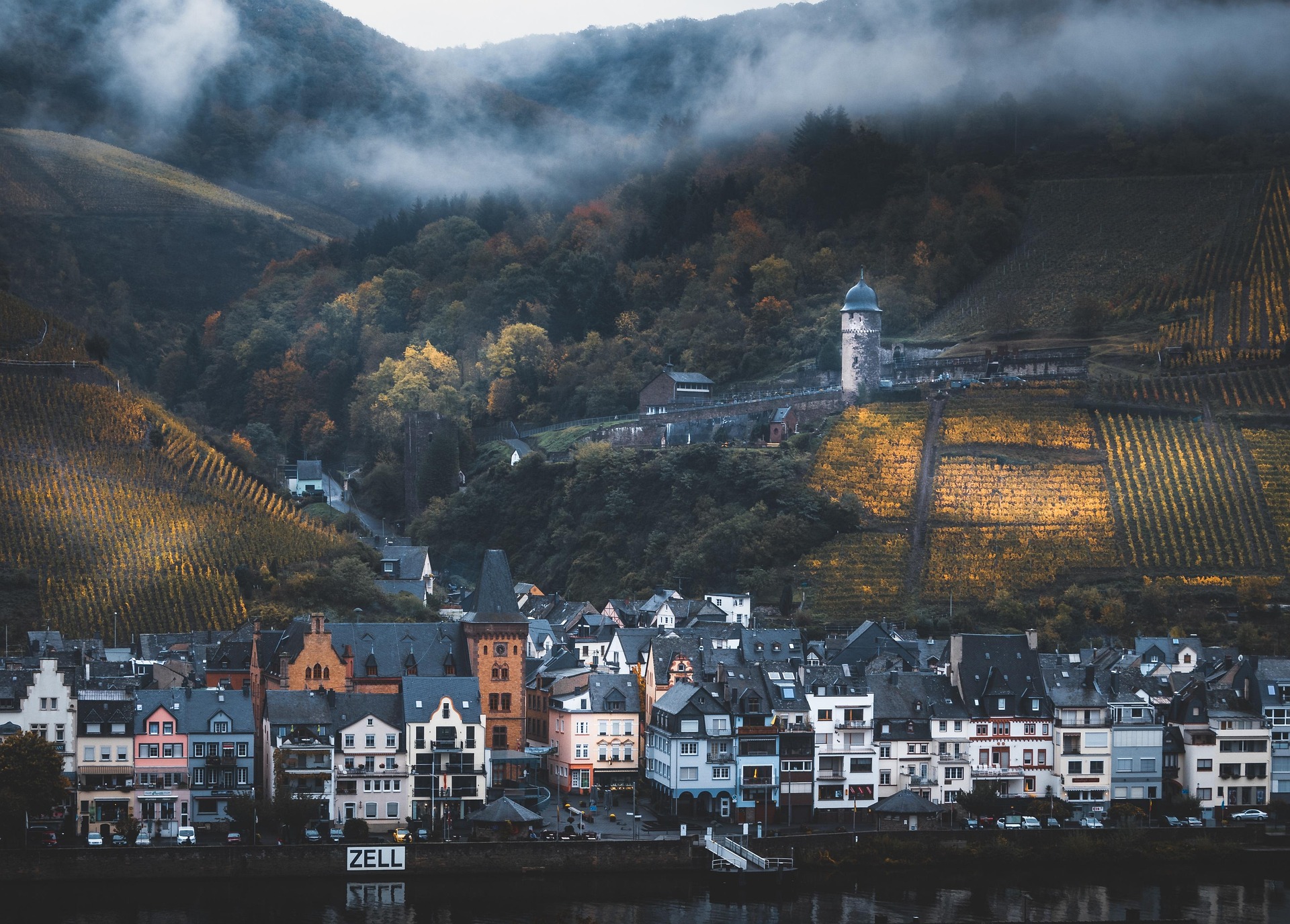
He needed the system because of how the estate grew. Molitor took over his father's holding in 1984 with a vineyard of a hectare and a half, and has since assembled roughly 120 hectares of steep slate along the Middle Mosel and the Saar. That much land in that many sites means the same slope can produce three different sweetness levels in one autumn, all wearing the same Prädikat. Layered on top he runs his own selection ladder of one, two or three stars inside a category, which German wine law never asked for either.
Critics have rewarded the precision rather than penalising the complication. Across Femente's rating data his 2019s average higher than any other recent vintage, and the highest-scoring bottles run right across the sweetness range instead of clustering at the sticky end. Molitor's labels are now among the most demanding in Germany to read, and among the few that answer the only question most buyers actually have. The country is still debating how to reform its classification. He built a private one and the market simply started using it.