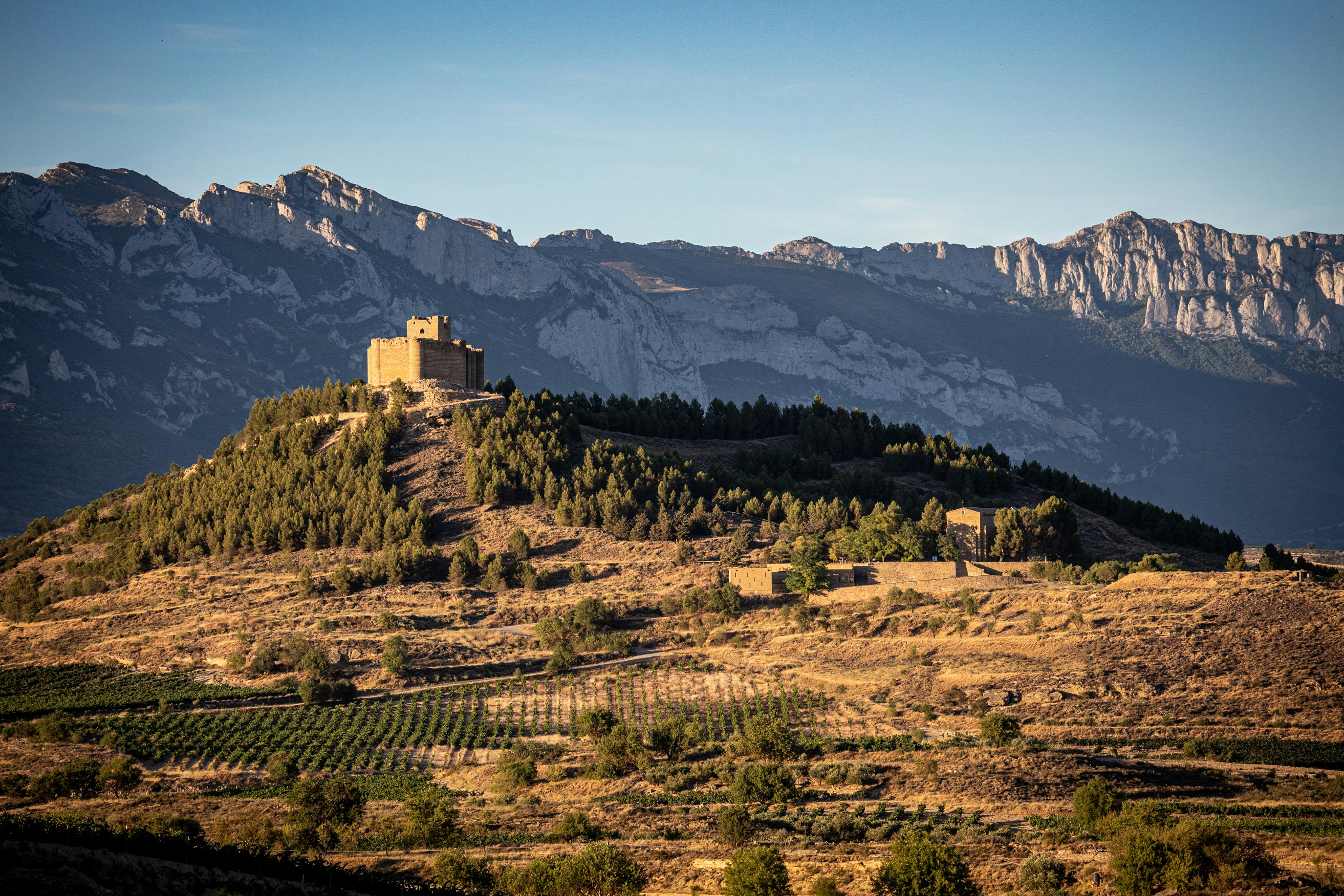
Rioja grades its wines by time rather than by place, and that is the region's oldest blind spot. Crianza, Reserva and Gran Reserva all describe what happened in a cellar: how long a wine sat in oak, how long it rested in bottle before anyone was allowed to sell it. None of them says anything about which slope the fruit came off. Growers who thought the slope was the more interesting fact had nowhere to put it on the label.
Gran Reserva, the top rung, asks for five years before release. That is a real commitment and it produces a real style, the pale, tobacco-edged red that built Rioja's export reputation. What the rung cannot do is separate fruit from old bush vines at altitude from fruit off young plantings on the valley floor. Tempranillo runs through roughly seven in ten Rioja wines in the Femente graph, so the grape is not the variable either. Both wines leave the cellar wearing the same word.
Rioja
Geography reached the bottle in 2017. Three place tiers went in alongside the ageing ones: a zone, a village, and a single vineyard. Viñedo Singular, the narrowest of the three, is also the strictest thing in the appellation. Vines have to be over 35 years old, picking has to be done by hand, yields are cut well under the regional ceiling, and a tasting panel has to judge the wine excellent before the term is granted. None of that can be arranged after harvest.
Critical scores have moved with the rules. Castillo Ygay, Marqués de Murrieta's Gran Reserva Especial, is the old system's showpiece and still rates among the region's best. It no longer rates there alone. Single-parcel wines now sit level with it, and Cuentaviñas bottles two of them off vineyards most drinkers would struggle to find on a map.
Bodega Contador
Two different questions now get answered on a Rioja label, and it is worth knowing which one you are reading. Reserva predicts how the wine will feel in the glass, how much oak and how much bottle age sit behind it. A village or vineyard name predicts what the producer was aiming at. When the Consejo Regulador renamed Vino de Municipio as Vino de Pueblo in 2024, it read like housekeeping. It was a signal about which of those two questions Rioja now wants to be judged on.