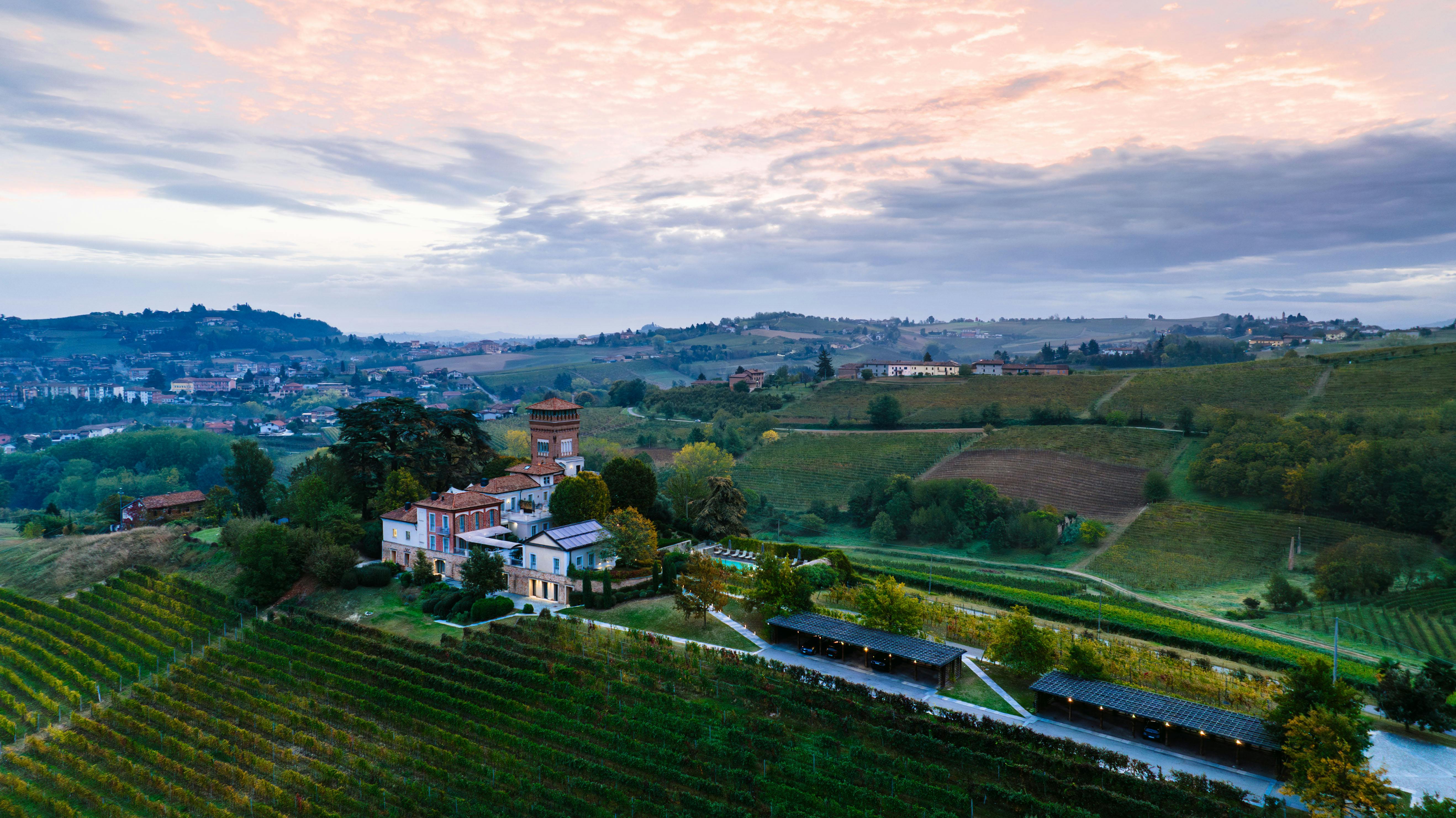
Roberto Voerzio finishes most of his winemaking in high summer. By the time fruit reaches the cellar the decisions that matter are behind him, because the bulk of the crop is already lying on the ground between the rows. Nebbiolo in the Langhe is normally cropped at around four kilos a plant. Voerzio works towards five hundred grams. Two rounds of green harvest thin the bunches through July and August, and shortly before picking the clusters that survive have their bottom halves cut away by hand.
All of it follows from a refusal to sort. He plants far denser than the Langhe standard, nets the whole estate against hail, and makes his selection out in the rows rather than at the winery door. The reasoning is blunt. A vine that grows good grapes grows only good grapes, so a sorting table is really an admission that the farming went wrong somewhere in June.
Piemonte
Since setting up on his own in 1986 he has pushed the logic harder rather than softening it. The bottling called RV 350 takes a few rows from a rotating pair of crus and crops them at three hundred and fifty grams a vine, a figure most growers would read as a typo. Fermentation runs plot by plot in steel, and nothing gets blended until each parcel has already done its time in wood.
What comes out sits awkwardly between the two camps that have argued over Barolo for a generation. It is not the austere, slow-opening style of the traditionalists, and the oak is too restrained for the modernist label either. Concentration is the signature. Sarmassa and Rocche dell'Annunziata Torriglione have both been scored at 100 points by critics tracked on Femente, and the density of fruit that gets them there is what you notice before the tar and dried roses turn up with age. The cellar is quiet because the wine was finished outdoors.