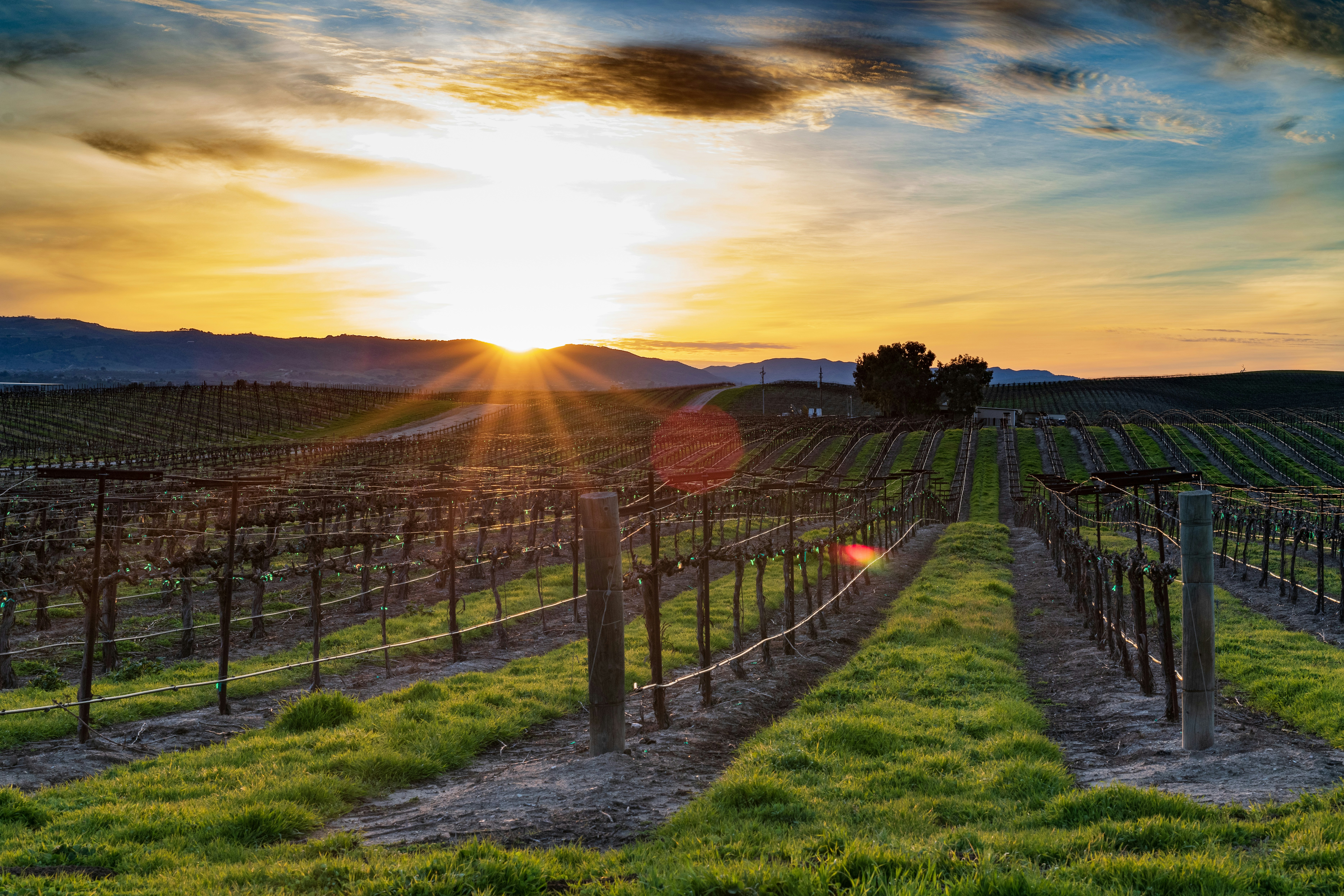
Paso Robles spent thirty years being sold on its warmth, which is the least interesting thing about the western hills. Saxum's wines come off ground that behaves more like Châteauneuf than like inland California: shallow, pale, chalky Linne Calodo soils sitting on eroded marine bedrock. Rock that alkaline keeps vine vigour down and acidity up. Heat alone would have given the region ripeness and nothing to hang it on.
Justin Smith did not choose the site. His parents planted James Berry Vineyard in 1981 on steep calcareous slopes in what has since been drawn as the Willow Creek District, and he grew up farming it before he had any interest in bottling under his own name. Saxum began in 2000 with fruit already in the ground and a vineyard's reputation to build rather than a brand's. That order of events explains the labels: Saxum bottlings are named for blocks and vineyards, not for grape varieties, because the blend follows the site rather than the other way round.
Paso Robles
Cool air helps as much as the rock does. Willow Creek sits where the Templeton Gap funnels Pacific air inland after dark, so the daily swing is severe even in a hot summer. Grenache and Mourvèdre planted on those slopes hold onto structure instead of collapsing into sweetness, and the whites Smith makes from Roussanne and Grenache Blanc come in tight rather than broad. Nothing about the finished wines reads as a warm-climate compromise.
Then came the 2007 James Berry, the first wine from Paso Robles ever awarded a hundred points, and Wine Spectator's wine of the year the following season. Femente's rating history still shows 2007 as the strongest vintage Saxum has made when averaged across critics. It gets remembered as the moment the appellation arrived, which undersells what actually happened. Buyers who followed the score went looking for hillside limestone, not for the valley floor, and Paso Robles has been planting differently ever since.