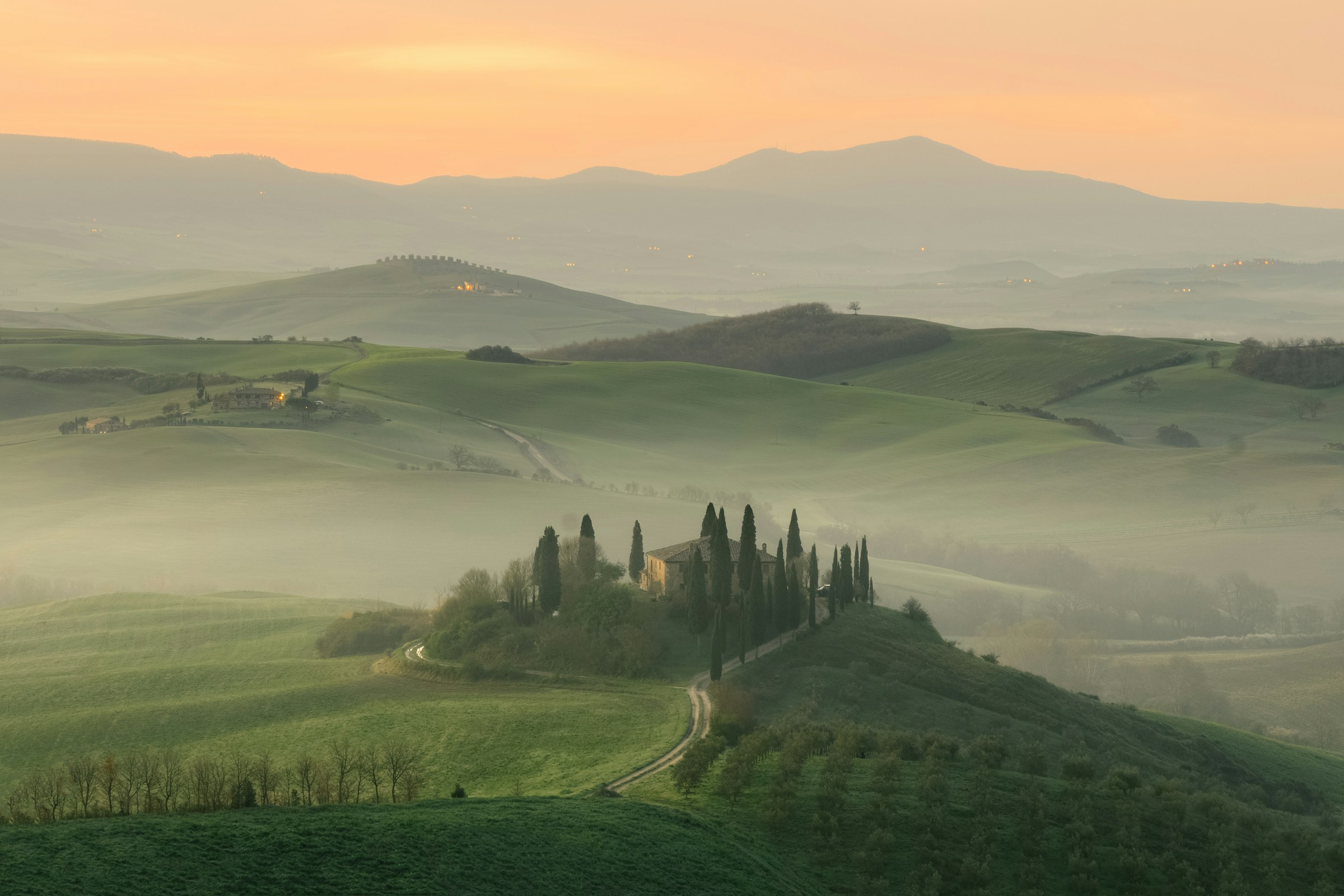
Tuscany is the wine region most American and British travelers reach for first when they think of Italian wine touring, and for good reason. The geography concentrates three world-class wine zones (Chianti, Brunello, Bolgheri) within a couple of hours of Florence, the food and accommodation infrastructure is built for visitors, and the variety of producer scales (small family estates to historic landmark wineries) gives you options from any travel style or budget. We pulled the prestige-critic data on Tuscany's top wineries and aligned it with what's actually tourable from a Florence-based itinerary.
The geography you need to know
Florence is the gateway. The historic city sits in the centre-north of Tuscany; the major wine zones spread south and west from there.
- Chianti Classico: starts about 30 minutes south of Florence, runs through the hills between Florence and Siena. The closest serious wine zone to the city. The historical original "Chianti" region; the Gran Selezione tier was added in 2014 as the new top of the appellation.
- Brunello di Montalcino: about 90 minutes south of Florence by car (or train via Buonconvento), centred on the hilltop town of Montalcino. The other flagship Tuscan red.
- Bolgheri / Costa Toscana: the coastal zone, about 90-120 minutes west of Florence. The home of the "Super Tuscans": Bordeaux-blend and Cabernet-led wines that broke from the traditional Sangiovese-only rules in the 1970s and 1980s.
- Vino Nobile di Montepulciano: about 90 minutes southeast of Florence, near Montepulciano. The third major Tuscan red appellation, sandwiched geographically between Chianti and Brunello.
For a one-week Tuscany trip, two of these regions plus Florence itself is realistic. For three days, Chianti only.
What to drink in each (the producer top tier)
Chianti Classico
Caggio, FEM 96, the highest-scoring Chianti Classico producer in our index. The Ipsus Chianti Classico Gran Selezione scored 97 from Wine Advocate. The Gran Selezione tier represents the regional ceiling for traditional Sangiovese.
The traditional Chianti producers also have serious top-tier offerings: Antinori's Tignanello, Castello di Ama, Felsina, Isole e Olena. Most are in our broader Toscana index even when not in the prestige top of the Chianti sub-zone specifically.
Brunello di Montalcino
Soldera, FEM 93, Brunello scored 98 from Wine Advocate. The producer's reputation is for some of the most age-worthy and traditional Brunellos in the region.
Talenti, Brunello di Montalcino at 95 from Falstaff and 100 from Wine Enthusiast on the Riserva. Talenti is one of the producers we profiled in our Barolo vs Brunello piece: classical Brunello, large-format aging, no shortcuts.
Poggio Landi, appears across three critics for the Brunello and the Riserva, with multiple 99-100 scores. One of the most consistently high-rated Brunello estates in our entire index.
Bolgheri / Costa Toscana (Super Tuscans)
Masseto, FEM 97, the highest-scoring producer in the entire Tuscan index. The Massetino (the second wine of the famous Masseto Merlot) scored 100 from Wine Advocate. Masseto's main-line Merlot is among the most expensive Italian wines made and routinely sells at the level of top Bordeaux.
Tenuta di Trinoro, FEM 93. The Bianco di Trinoro (the white wine, unusual for a producer that built its name on Cabernet Franc) scored 100 from Wine Advocate.
Biserno, FEM 93. The Lodovico (named for Lodovico Antinori, who founded both Ornellaia and Biserno) scored 99 from Wine Advocate. The producer is one of the newer Bolgheri-area projects making Bordeaux-blend reds at the top tier.
Practical logistics
Wine tours from Florence: most Florence-based half-day or full-day Chianti tours include 2-3 winery visits with tastings, lunch at one stop, and return to the city. Expect €100-200 per person for a quality small-group tour. Self-driving Chianti is straightforward but requires designating a driver who won't taste.
Brunello and Bolgheri: too far for half-day trips. Full-day tours work but are tight; an overnight in Montalcino (for Brunello) or Bolgheri (for the coast) is the better experience.
Best time of year: late April through early June, and late September through October. July and August are workable but hot and crowded; the post-harvest October vibe is when the working wineries are most interesting to visit. Many cellars close for vendemmia (harvest, typically late September) so check ahead.
Cellars by appointment vs walk-in: most prestige Tuscan estates require advance booking: Masseto, Soldera, and the cult Bolgheri producers don't take walk-ins. Booking 4-8 weeks ahead is normal for the high-prestige tier; the broader Chianti Classico tasting-room circuit is more flexible.
Where to start
Three Tuscan tour destinations, three different experiences.
For a Florence day trip: Chianti Classico, ideally with a stop at one of the Gran Selezione-tier producers. Caggio is the prestige top of the sub-zone in our data; the broader Chianti Classico tasting circuit is densely populated with quality producers.
For a multi-day extension: Brunello di Montalcino, with bookings at Soldera and Talenti (book well ahead) and an overnight in Montalcino itself.
For the modern Tuscan story: Bolgheri / Costa Toscana, where Masseto and the Super Tuscan generation (Sassicaia, Ornellaia, Tignanello, all in our broader Tuscan index) have rewritten what Italian wine can be.
For deeper reading on Tuscany's red-wine identity, see our Barolo vs Brunello piece, the data-grounded comparison of Italy's two flagship reds.