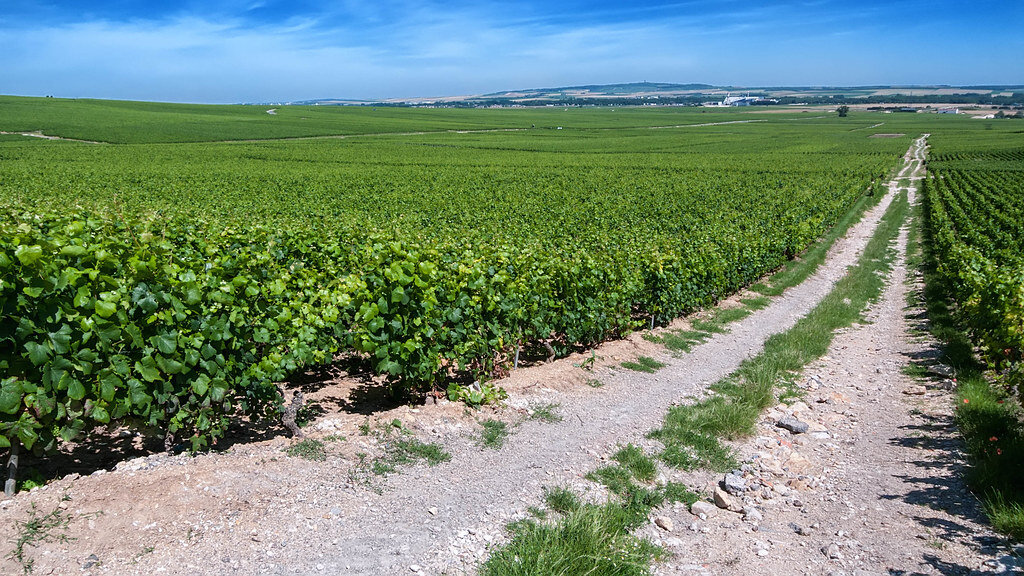
Pour a glass of Champagne and you are almost certainly drinking a wine made mostly from red grapes. That sounds like a contradiction, but it points at one of wine's most useful facts. A grape's colour lives in its skin, not its juice, and what a winemaker does with that skin decides whether the wine finishes red, white, pink or gold.
Cut open almost any wine grape, black or green, and the pulp inside is clear. The pigment that makes red wine red sits in the skin, and it only reaches the wine if the juice stays in contact with those skins during fermentation. Red wines steep on their skins for days or weeks. White wines are pressed straight away, the juice run off before it can pick up much colour or tannin.
Champagne
Champagne is the clearest proof. Of its three permitted grapes, two are black, Pinot Noir and Meunier, with only Chardonnay green. Nearly every bottle from the region is a pale sparkling wine, because those black grapes are pressed so gently that the juice slips off the skins before it can stain. A Champagne labelled Blanc de Noirs, meaning white from blacks, is exactly that, a white wine squeezed from red fruit.
The trick runs both ways. Leave white grapes on their skins, as a growing number of producers now do, and you get orange wine, amber and gently tannic and closer to a red in feel. Rosé comes from the other direction, red grapes resting on their skins just long enough to blush the juice pink before it is drained. Pinot Noir alone is the second most common grape in the world's sparkling wine, quietly making pale bubbles far more often than it makes red Burgundy.
Once you know this, colour stops being a clue to the grape and becomes a clue to the method. A jet-black Amarone and a barely-pink rosé can begin with similar-looking fruit and end up worlds apart, decided by how long the juice sat with the skins. Read a wine's shade and you are reading a choice the winemaker made, not the colour of the grapes they picked.