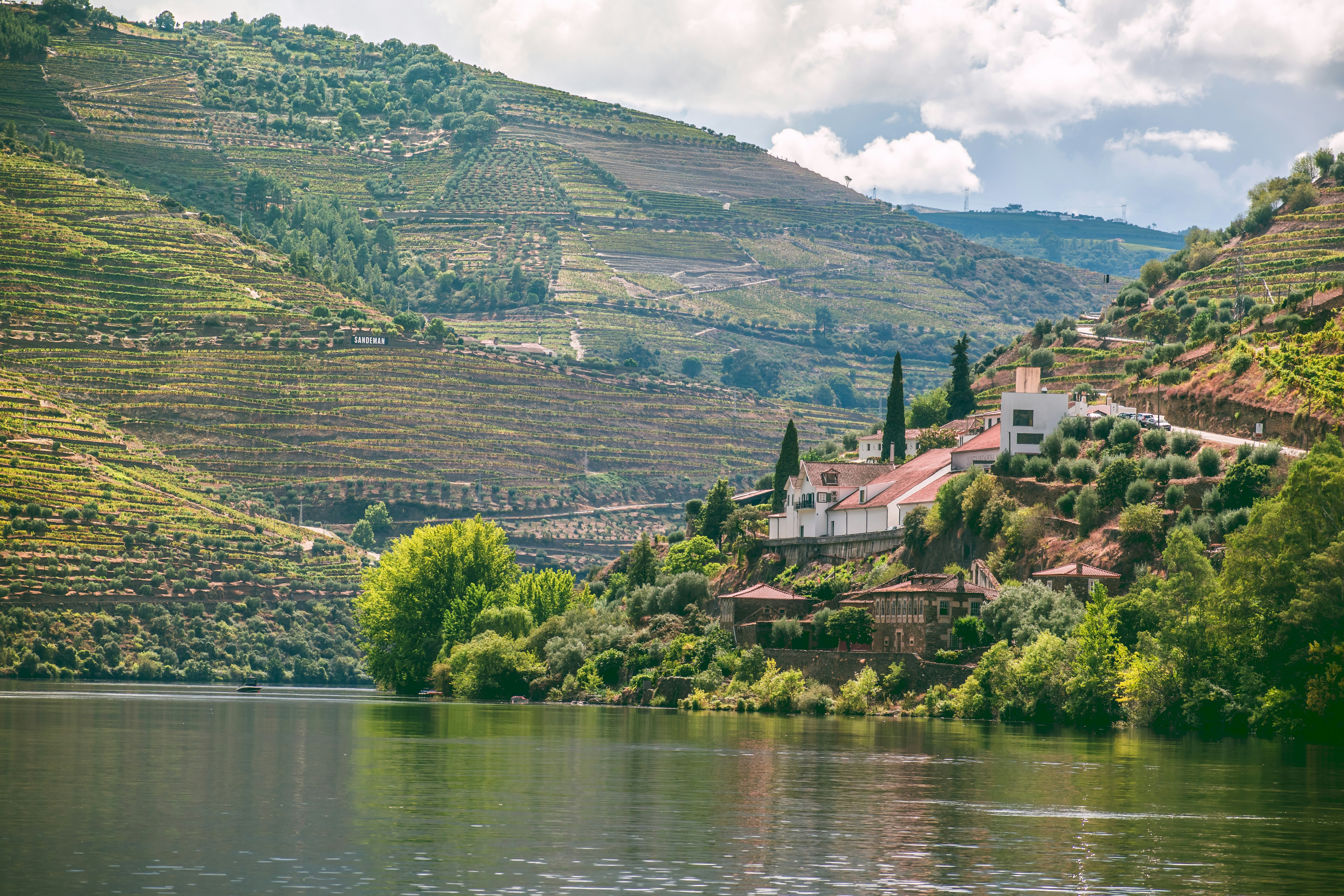
Douro's serious dry reds began as a disposal problem. Every year the region tells each grower precisely how much of their harvest may be turned into Port, and that licence is measured in casks, not in hectares. Fruit above the line has to become something else. For most of the twentieth century it became thin bulk wine sold cheap to the domestic market. It is now the reason the valley shows up on wine lists outside Portugal.
Rationing runs on a survey Álvaro Moreira da Fonseca drew up in 1948. Every registered parcel gets scored on altitude, gradient, soil, vine age and planting density, then graded from A down to F. That letter sets the parcel's benefício, the entitlement stating how many casks of must the grower may fortify each September. Grade A terraces receive the largest share. Fonseca's system existed to keep Port scarce and to reward the schist slopes that make it best.
Douro
What the survey never anticipated was Port falling out of fashion. Sales have slid steadily this century, and the IVDP has answered by tightening the licence, from 116,000 casks down to 75,000 for the 2025 harvest. Each cut strands more fruit on the wrong side of the line, including fruit off the highest-graded terraces. Casa Ferreirinha had shown generations earlier what those grapes could do unfortified, but Barca Velha stood almost alone for decades, a single proof of concept in a valley organised around fortification.
Wines that came out of the squeeze are field blends before they are varietal statements. Touriga Nacional leads the plantings, yet old Douro parcels were laid out mixed, with many varieties interplanted and picked together, and a good number of producers kept them that way rather than replanting to tidy single-variety rows. Niepoort built its name on exactly those plots. Further upriver in Douro Superior, where the gorge opens out and the summers turn punishing, the same approach gives something denser and less perfumed.
Niepoort
None of this reaches the label. Grades belong to parcels, not to bottles, and no dry Douro red has to declare whether its fruit came off an A terrace or an E one. That leaves the producer as the only reliable signal, which is why the valley's reputation has been rebuilt one estate at a time instead of by appellation. Classification still governs the region. It has simply stopped describing what most of the region now makes.